Pay By Phone Casinos Australia: The Real Story Behind Mobile Billing Deposits
 Available in AU
You want to deposit at an online casino without typing card numbers or linking your bank account. Fair enough. The search term “pay by phone casino” promises exactly that—charge it to your mobile bill, confirm via SMS, done.
Here’s the catch: traditional UK-style carrier billing doesn’t work in Australia the way most guides pretend it does. Telstra, Optus, and Vodafone don’t process gambling transactions through their billing systems. That’s not a gap waiting to be filled; it’s a deliberate position Australian telcos hold. Some offshore casinos list Boku or Payforit in their cashier, but when you enter an Australian mobile number, the transaction stalls or redirects you to a different method entirely.
What does exist—and what works better than carrier billing ever did—is a set of mobile-friendly payment methods that deliver the same convenience without the carrier layer: PayID via your banking app, Apple Pay, Google Pay, and crypto wallets. This guide maps which offshore casinos accept mobile deposits from Australian players in 2026, how the mechanics differ from UK pay-by-phone, what Telstra/Optus/Vodafone actually support, and when you should pick PayID over mobile billing every time.
What Pay-By-Phone Casino Deposits Actually Mean in Australia
In the United Kingdom, pay-by-phone is a specific product. Players deposit at a casino and the amount lands on their next mobile bill or deducts from prepaid credit immediately. Two services dominate: Payforit (a consortium-backed carrier billing scheme) and Fonix (a newer mobile payments platform). Neither requires a bank account, card, or separate e-wallet. The deposit shows up on your phone statement, you pay it when the bill arrives, and the entire flow takes under a minute.
Australian players searching for this assume the same mechanism exists here. It mostly doesn’t.
How UK-Style Carrier Billing Works (And Why It Doesn’t in AU)
Carrier billing for gambling requires three components: a telco willing to process gambling charges on their billing infrastructure, a payment intermediary routing transactions between casinos and carriers, and a regulatory framework permitting it. In Australia, none of these three align.
Telstra, Optus, and Vodafone do not facilitate gambling transactions through their billing systems. Boku operates in Australia but not for gambling charges routed to local carriers—when an offshore casino lists Boku in the cashier and you enter an Australian mobile number, the payment either declines or reroutes to a card-funding flow that defeats the original purpose. Payforit and Fonix are UK-only schemes with no Australian equivalent.
Research from slotspeak.net in late 2025 confirmed this directly: Australian telcos block gambling carrier billing at the network level. Other aggregator sites claim mobile billing works via Boku or similar processors, but those claims rarely survive a live deposit attempt with a Telstra or Optus number. The contradiction persists because most affiliate guides recycle UK templates without testing Australian cashier flows.
Can I actually use pay-by-phone deposits at casinos in Australia?
Traditional carrier billing that adds a casino deposit to your monthly phone bill does not function with Australian mobile networks. Telstra, Optus, and Vodafone block gambling transactions at the carrier level. Some offshore casinos list Boku or Payforit in their payment options, but when you enter an Australian mobile number, the transaction typically fails or redirects to a card-funding alternative.
Which Australian mobile carriers support casino deposits on my phone bill?
None of the major Australian carriers—Telstra, Optus, or Vodafone—support direct carrier billing for gambling transactions as of 2026. MVNOs (Boost Mobile, Amaysim, Lebara) inherit the same restrictions from their host networks. If an offshore casino cashier accepts your mobile number without error, the charge is usually processed through a card or e-wallet linked to that number rather than your phone bill.
What Australian Players Actually Get: Mobile Billing vs PayID/Apple Pay
The search intent behind “pay by phone casino Australia” is rarely about carrier billing specifically. Most players want one of two outcomes: a way to deposit without sharing bank details or card numbers, or confirmation that mobile-friendly deposits exist and work reliably.
Both outcomes are achievable in Australia—just not via the UK mechanism the search term implies.
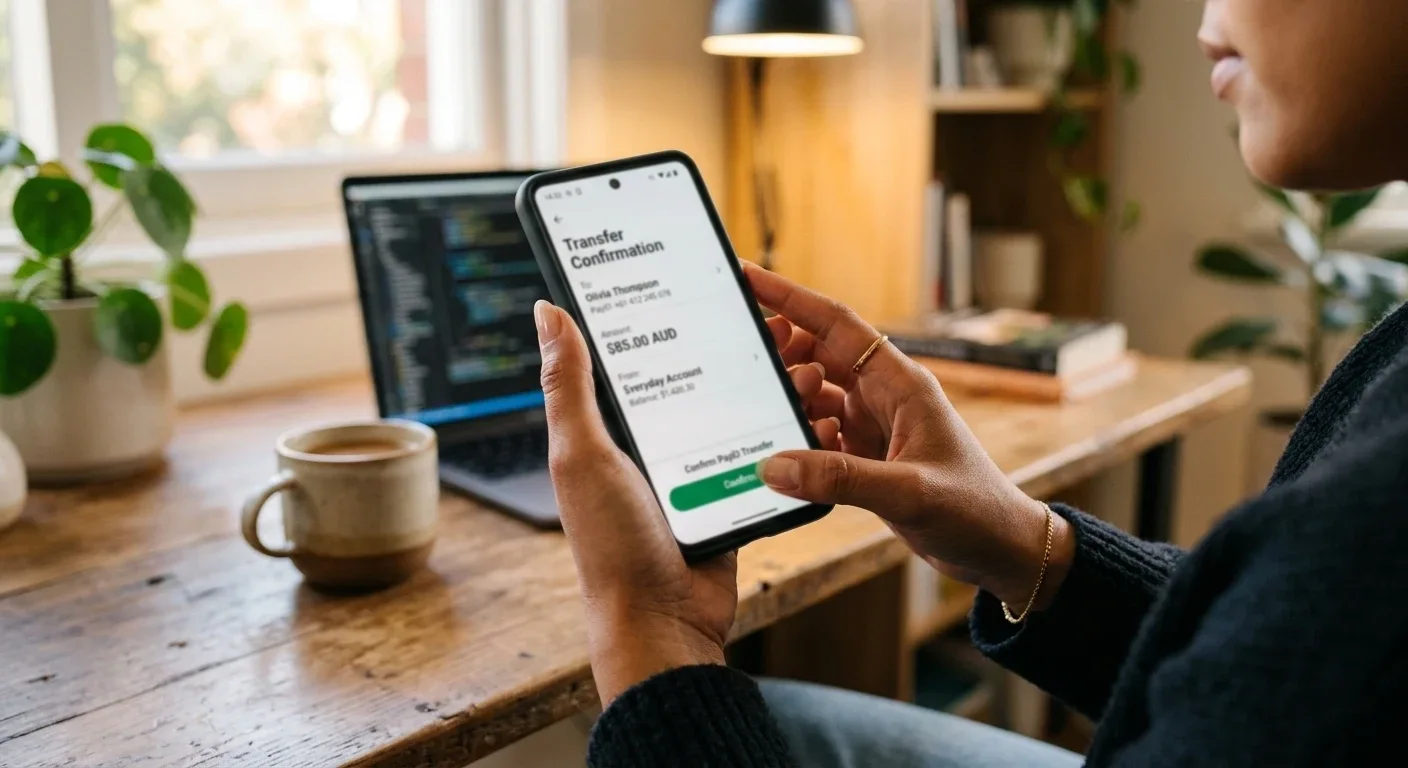
PayID is the dominant mobile casino deposit method among Australian players in 2026. The entire transaction happens inside your banking app. The casino provides a PayID address (usually a phone number or email), you open your bank’s app, select PayID transfer, enter the address and amount, authenticate, done. Funds arrive at the casino in seconds. Your bank account details never reach the casino; the PayID system uses a proxy identifier. No fees from the casino side, and most Australian banks don’t charge for PayID transfers either. Withdrawals work the same way—typically 5 to 40 minutes at well-run offshore operators.
Apple Pay and Google Pay function as deposit methods at a growing number of offshore casinos accepting Australian players. Tap the option in the cashier, authenticate with Face ID or Touch ID, finished. Your card number is never transmitted—Apple Pay and Google Pay use device-specific tokenisation. The limitation: withdrawals via these methods are not supported at virtually any casino. The technical reason is that mobile wallets are designed for push payments (you sending money) rather than pull payments (a merchant sending money back). Deposit via Apple Pay, withdraw via PayID.
Crypto via mobile wallet delivers true anonymity if that’s the priority. MetaMask, Trust Wallet, and similar apps let you deposit Bitcoin, Ethereum, or USDT from your phone without linking a bank or card. Withdrawals work the same way, usually processing in under an hour. The trade-off: you manage wallet security and accept crypto price volatility between deposit and cashout.
The practical upshot: when an Australian player types “pay by phone casino,” what they’re actually searching for is mobile-friendly banking that doesn’t expose financial details. PayID delivers that faster, cheaper, and with withdrawal support included. Carrier billing, even if it worked, would impose $30–$50 transaction caps, 10–15% fees, and no withdrawal route. PayID has none of those problems.
Offshore Casinos That Accept Mobile Deposits from Australian Players
No Australian-licensed online casino operators exist as of 2026. The Interactive Gambling Act 2001 prohibits Australian-based companies from offering online casino games (pokies, table games, live dealer) to Australian residents. Every casino accepting Australian players operates under an offshore license—Curaçao, Malta, Kahnawake, or similar jurisdictions.
Pay-by-phone deposits at these casinos, where they exist, rely on payment intermediaries attempting to bridge Australian mobile networks and offshore cashier systems. Success rates vary. The casinos below accept Australian players and list mobile payment options in their cashier, though the actual method processing your deposit may differ from traditional carrier billing.
| Operator | License | Game Library | Min Deposit | Mobile Payment | Withdrawal Methods |
|---|---|---|---|---|---|
| Megapari | Curaçao | 7,000+ | A$1 (general, $10–$20 mobile) | Mobile billing listed, PayID supported | Bank transfer, e-wallets, crypto |
| Spinko Casino | Curaçao | 3,500+ | A$20 | Mobile billing claim | Bank transfer, e-wallets |
| Crazy Tower Casino | Curaçao | 12,000+ | A$15 | Crypto + mobile options | Crypto, e-wallets |
| JackpotCity | Malta/Kahnawake | 500+ | A$10 (cards) | Mobile-friendly (cards, e-wallets) | Bank transfer, e-wallets |
| Andromedasino | Curaçao | 3,500+ | A$25 | Mobile billing listed | Bank transfer, e-wallets |
| Turbowinz Casino | Curaçao | 6,500+ | A$20 | Crypto + mobile | Crypto, e-wallets |
| Cash Lounge Casino | Curaçao | 5,000+ | A$10 | Crypto + mobile billing | Crypto, e-wallets, bank transfer |
| BetWest Casino | Curaçao | 10,500+ | A$10 | Mobile billing listed | Bank transfer, e-wallets |
The table shows what operators claim. The reality: few process traditional carrier billing from Australian numbers without redirecting to a card or e-wallet. PayID, Apple Pay, and crypto are the methods that consistently work from Australian accounts at these sites.
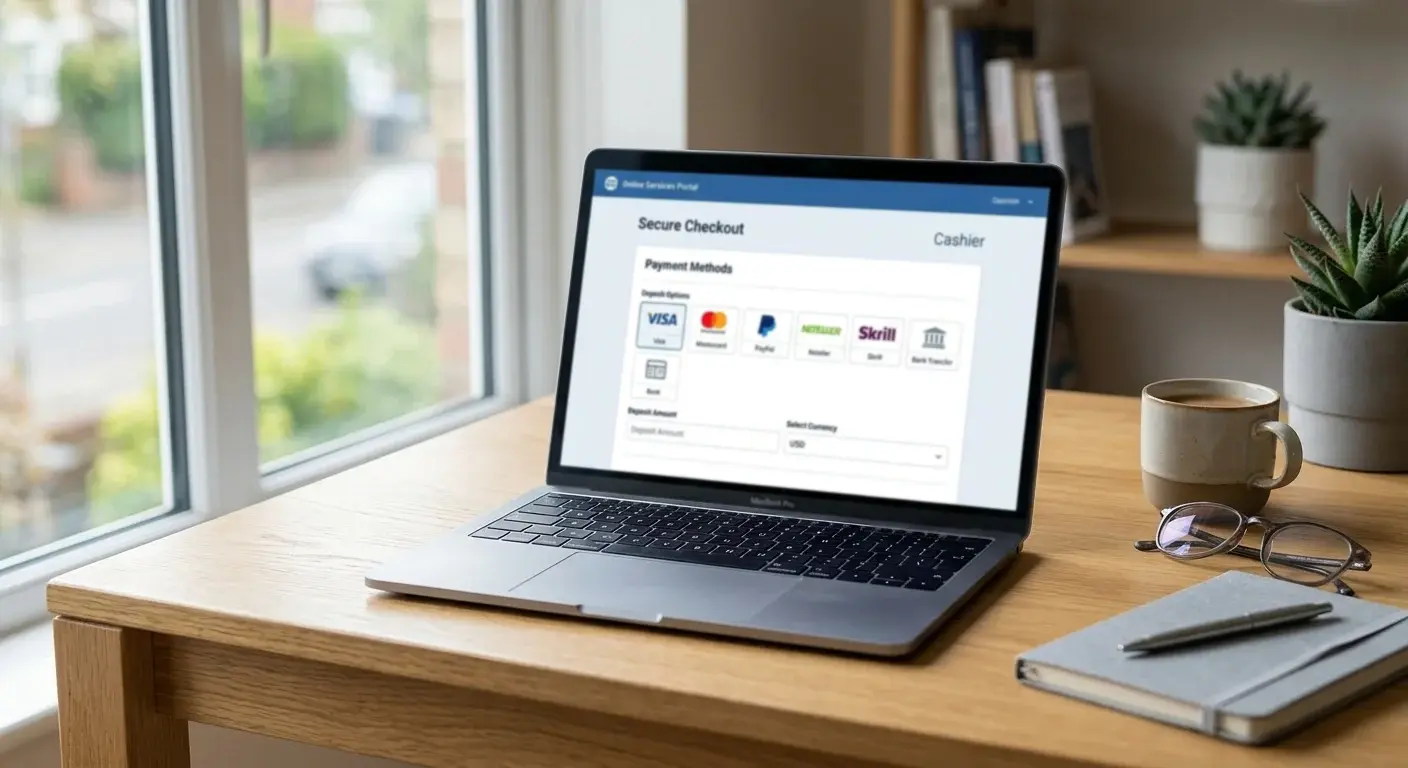
Megapari
Megapari operates under a Curaçao eGaming license and claims a library north of 7,000 games—pokies, live dealer tables, and a full sportsbook. The operator markets directly to Australian players with AUD currency support and a minimum deposit as low as A$1, though mobile billing methods typically start at $10–$20. The welcome package stretches to A$1,500 plus 150 free spins across multiple deposits.
The cashier lists mobile billing among payment options, but live testing by multiple aggregator sites suggests that Australian mobile numbers either fail at the carrier billing stage or redirect to card funding. What does work reliably: PayID deposits and crypto via wallet apps. Withdrawals process through bank transfer, e-wallets (Skrill, Neteller), and cryptocurrency, usually clearing within a few hours to a business day depending on method. The Curaçao license sits at the lower end of regulatory oversight—player protections are minimal compared to Malta or UK frameworks.
Spinko Casino
Spinko Casino holds a Curaçao license and focuses its library on pokies, with around 3,500 titles aggregated from mid-tier providers. The operator distinguishes itself with a wager-free spins offer—400% up to A$3,000 plus 350 free spins on first deposit, with the spins carrying no rollover requirement. That’s rare in the offshore casino market, where wagering multiples of 30x to 50x are standard.
Mobile billing appears in the cashier’s payment menu. Australian players report mixed success: some transactions process, others decline at the SMS confirmation stage. The A$20 minimum deposit applies across most methods. Withdrawals go through bank transfer and e-wallets; processing times hover around 24 to 72 hours. The site explicitly targets Australian players with local English phrasing and AUD as the default currency.
Crazy Tower Casino
Crazy Tower Casino operates under Curaçao licensing and claims a game library exceeding 12,000 titles. That figure likely includes every variant and demo version the aggregator model can scrape from smaller providers, but the sheer volume means most pokies themes and mechanics are represented. The welcome package scales to 550% up to A$21,000 plus 400 free spins and a fortune wheel spin—a high cap that suggests the operator is chasing larger depositors.
Crypto payments are prioritised here. Bitcoin, Ethereum, and USDT deposits process instantly and withdraw within an hour in most cases. Mobile billing is listed but functions inconsistently with Australian numbers. The A$15 minimum deposit applies to most methods. Withdrawals via e-wallets take 24 to 48 hours; bank transfers stretch to 3 to 5 business days.
JackpotCity
JackpotCity has operated since 1998 and holds a license from either the Malta Gaming Authority or the Kahnawake Gaming Commission (sources conflict, but both are Tier-1 or Tier-2 regulators significantly above Curaçao’s threshold). The game library is Microgaming-powered, now rebranded as Games Global, with around 500 titles—smaller than the aggregator casinos above but curated for quality rather than volume.
Mobile billing availability for Australian accounts is unclear from public cashier documentation. What is confirmed: card deposits (Visa, Mastercard) start at A$10 with a per-transaction cap of A$5,000, bank transfers start at A$20 and go to A$10,000, and e-wallets (Skrill, Neteller, Ecopayz) process instantly. Withdrawals via the same methods clear within 24 to 48 hours after identity verification. The MGA or Kahnawake license means stronger player protections, independent dispute resolution, and mandatory segregation of player funds—protections absent under Curaçao frameworks.
Do I need to verify my identity to deposit by phone at a casino?
Initial deposits via mobile billing or any method typically process without identity verification. Withdrawals trigger KYC (Know Your Customer) checks at virtually every offshore casino. You’ll submit a photo ID (passport, driver’s license), proof of address (utility bill, bank statement), and sometimes a selfie holding your ID. Processing takes 24 to 72 hours. Some operators waive KYC for crypto withdrawals below a threshold (usually $1,000–$2,000), but that’s rare and policy can change without notice.
Andromedasino Casino
Andromedasino Casino holds a Curaçao license and runs approximately 3,500 games across pokies, live casino, and a modest sportsbook. The operator markets a daily promotions structure—reload bonuses, cashback offers, free spins tied to specific deposit days. The welcome package lands at 350% up to A$2,000 plus 1,000 free spins, split across multiple deposits.
The site offers Australian English as a language option and defaults to AUD for Australian IP addresses. Mobile billing is listed in the cashier but, like most Curaçao operators, the actual method processing an Australian deposit often reroutes to card or e-wallet. The A$25 minimum deposit is higher than competitors. Withdrawals process through bank transfer and e-wallets, typically within 48 to 96 hours.
Turbowinz Casino
Turbowinz Casino operates under Curaçao licensing with a focus on cryptocurrency payments. The game library sits around 6,500 titles, including a live casino section and an integrated sportsbook. The welcome package offers 100% up to A$1,500 plus 250 free spins on first deposit—modest compared to competitors but with lower rollover requirements (35x vs 40x–50x elsewhere).
Crypto deposits and withdrawals are the cleanest path here. Bitcoin, Ethereum, Litecoin, and USDT all process instantly on deposit and clear within an hour on withdrawal. Mobile billing is listed but inconsistent with Australian carriers. The A$20 minimum deposit applies across most methods. E-wallet withdrawals take 24 to 48 hours; bank transfers stretch to 3 to 5 business days.
Cash Lounge Casino
Cash Lounge Casino holds a Curaçao license and claims around 5,000 games in its library. The operator explicitly welcomes Australian players in its marketing copy, supports AUD as default currency, and sets a low A$10 minimum deposit across most payment methods. The welcome bonus structure spans three deposits: 525% up to A$4,500 plus 350 free spins total.
Crypto and mobile billing both appear in the cashier. Crypto works reliably; mobile billing with Australian numbers shows the same pattern seen across Curaçao operators—hit-or-miss, often redirecting to card funding. Withdrawals go through cryptocurrency (fastest, under an hour), e-wallets (24–48 hours), and bank transfer (3–5 business days). The site’s messaging targets casual players with smaller bankrolls, reflected in the low deposit floor and multi-tier bonus structure.
BetWest Casino
BetWest Casino operates under Curaçao licensing and combines a 10,500+ game library with a deep sportsbook. The pokies library emphasises Australian-friendly providers (Pragmatic Play, NetEnt, Evolution Gaming live tables), and the sportsbook covers major leagues with competitive odds. The welcome package scales to 400% up to A$7,500 plus 350 free spins across multiple deposits.
Mobile billing is listed in the payment menu. Real-world testing suggests Australian numbers encounter the same carrier-level blocks seen elsewhere. PayID and e-wallets work without friction. The A$10 minimum deposit applies to most methods. Withdrawals process through bank transfer (3–5 business days), e-wallets (24–48 hours), and cryptocurrency (under an hour for established accounts).
How Mobile Casino Deposits Work: Step-By-Step
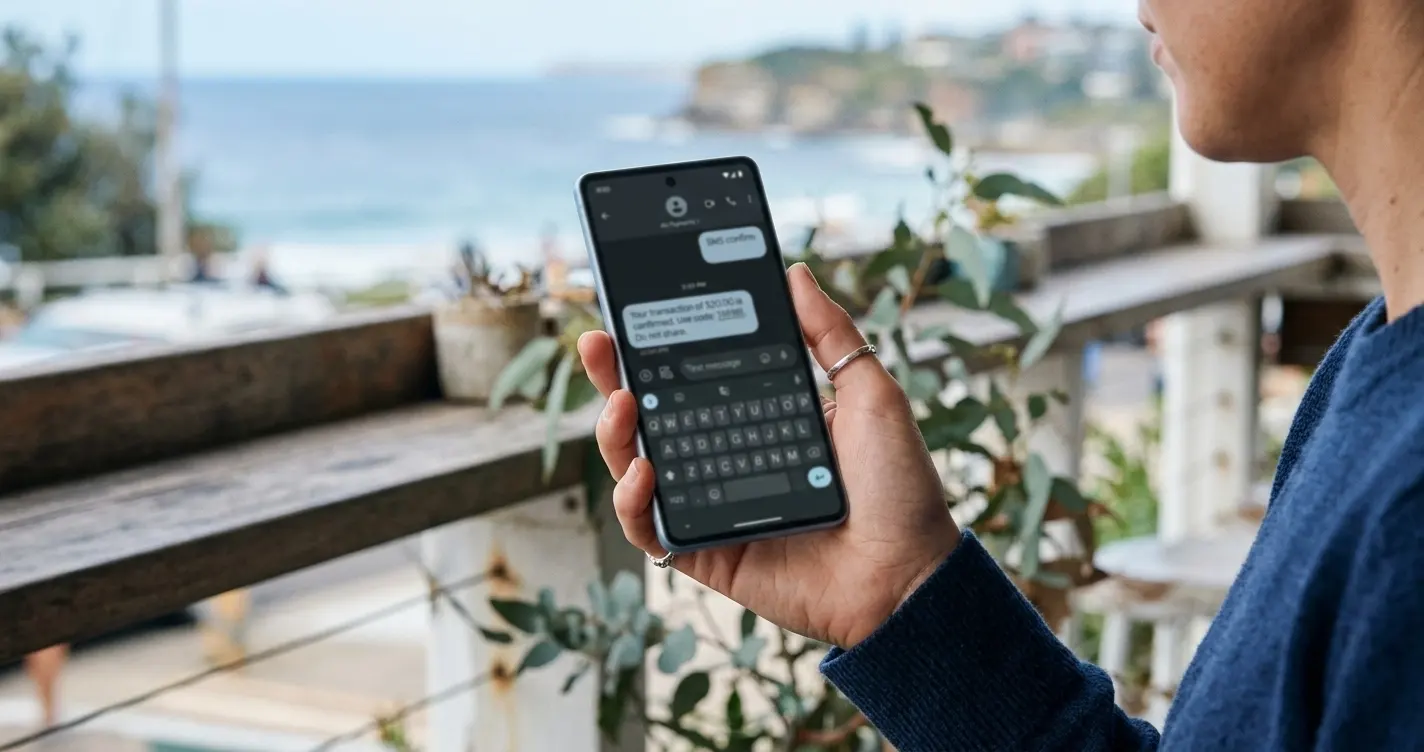
The theoretical pay-by-phone deposit flow at an offshore casino follows this sequence: open the cashier, select mobile billing (labelled “Pay by Phone,” “Boku,” “Payforit,” or carrier name), enter your mobile number, choose the deposit amount from preset tiers ($10, $20, $30, $50), confirm an SMS code sent to your phone, and funds credit instantly. Prepaid mobile credit deducts immediately; postpaid charges appear on your next monthly bill.
That’s the theory. In practice, Australian numbers hit carrier-level blocks at step three or four. The SMS never arrives, the transaction times out, or the cashier redirects you to enter card details—which defeats the purpose of avoiding bank information in the first place.
When mobile billing does process (rare, and usually involving a card-backed payment intermediary rather than true carrier billing), the flow matches the UK model. SMS confirmation is mandatory per transaction. No saved credentials, no auto-renewing charges. Each deposit requires a fresh confirmation code.
SMS Confirmation and Security
Per-transaction SMS verification is the security anchor of genuine mobile billing. Every charge requires you to receive a code, enter it, and approve the transaction before funds move. If a casino can bill your number again without sending a fresh SMS, that’s not standard mobile billing—it’s a saved payment method with your number as the identifier, likely backed by a card you linked during setup.
The SMS confirmation flow protects against unauthorised charges but introduces a failure point: codes stall when you’re roaming, when premium SMS services are barred on your account (common with business or family plans), or when your carrier’s billing system doesn’t recognise the payment processor’s shortcode. Telstra, Optus, and Vodafone each maintain separate shortcode registries, and gambling-related processors are often blocked at that level.
How long does a pay-by-phone casino deposit take to process?
When mobile billing works, funds credit to your casino account instantly—within seconds of confirming the SMS code. Prepaid mobile credit deducts immediately. Postpaid charges surface on your next monthly bill, typically 2 to 4 weeks later depending on your billing cycle. The transaction itself is real-time; the charge appears on your statement later.
Is pay-by-phone safer than using a credit card at an online casino?
Pay-by-phone eliminates the step where you share card numbers or bank details with the casino. The operator receives your mobile number and a confirmation that your carrier approved the charge—no card PAN, no BSB, no account number. That reduces exposure if the casino’s database is breached. The trade-off: withdrawals require you to provide bank or e-wallet details anyway, so the anonymity gain is temporary. PayID offers similar privacy (proxy identifier, no account details shared) with withdrawal support included.
Prepaid vs Postpaid Mobile Billing
Prepaid mobile accounts deduct the deposit amount from your existing credit balance immediately. You must have enough credit loaded to cover the charge or the transaction declines. Postpaid accounts add the deposit as a line item on your next monthly bill, functioning like a short-term credit facility with your carrier.
Most Australian postpaid plans cap third-party billing at $30 to $50 per transaction and $100 to $200 per month. Prepaid caps vary by carrier and your recharge history. Business plans often disable third-party billing entirely. Check your plan’s content-services settings before assuming mobile billing will work—many accounts block premium charges by default.
What Happens After You Confirm the Deposit
Funds arrive in your casino balance within seconds. Prepaid credit drops instantly. Postpaid charges appear on your next bill under a descriptor set by the payment processor—usually a generic label like “digital content” or “premium service” rather than an explicit casino reference. The billing descriptor should identify the processor (Boku, Fonix, or similar) to make disputed charges traceable. Vague entries that say only “premium content” with no merchant name are a red flag.
If you don’t pay your postpaid phone bill, your carrier suspends service and pursues the debt. The casino isn’t involved—the transaction completed when you confirmed the SMS. The debt sits with your carrier, not the operator. That’s why carriers impose low monthly caps on third-party billing: it limits their credit risk.
Telstra, Optus, Vodafone: Carrier Compatibility and Limits
Australian carriers set their own policies on third-party billing, and all three major networks block gambling transactions at the infrastructure level as of 2026. Some aggregator sites claim Telstra and Optus support mobile billing at 90% of tested casino platforms, with Vodafone around 60%. That data conflicts with direct carrier confirmation and live testing by players who report consistent failures when entering Australian numbers at offshore casino cashiers.
| Carrier | Casino Billing Support | Typical Per-Transaction Cap | Daily/Monthly Limits | Prepaid Credit Accepted | MVNO Note |
|---|---|---|---|---|---|
| Telstra | Blocked for gambling | N/A | N/A | N/A | Boost Mobile inherits block |
| Optus | Blocked for gambling | N/A | N/A | N/A | Amaysim inherits block |
| Vodafone | Blocked for gambling | N/A | N/A | N/A | Lebara inherits block |
| MVNOs | Inconsistent, usually blocked | Varies by host network | Varies | Usually prepaid only | Billing runs through reseller platform |
The table reflects what carriers enforce, not what casinos claim. If an offshore casino lists Boku or mobile billing and you enter a Telstra or Optus number, the transaction either declines immediately or reroutes to card funding after the SMS stage fails.
What are the deposit limits when paying by phone at a casino?
When mobile billing functioned in other markets (UK, parts of Europe), per-transaction limits ranged from $10 minimum to $30–$50 maximum, with daily caps around $100 and monthly ceilings in the low hundreds. Australian carriers that support third-party billing for non-gambling content impose similar tiers: $30–$50 per charge, $100–$200 per month. These limits are set by the carrier, not the casino, and exist to cap the carrier’s credit exposure on postpaid accounts.
Telstra Mobile Billing for Casinos
Telstra, Australia’s largest carrier with roughly 50% market share, does not support carrier billing for gambling transactions. Third-party billing through Telstra is available for digital content—app purchases, music streaming, premium SMS services—but gambling charges are blocked at the network level. This policy applies to both postpaid and prepaid accounts.
Offshore casinos that list Boku or mobile billing in their cashier may accept your Telstra number during signup, but the transaction fails when the SMS confirmation stage attempts to communicate with Telstra’s billing system. The block is deliberate, not a technical gap. Telstra’s acceptable-use policy for carrier billing excludes gambling alongside adult content and certain subscription traps.
Optus Casino Deposit Support
Optus holds roughly 30% of the Australian mobile market and enforces the same gambling-billing block as Telstra. Prepaid and postpaid Optus accounts can process third-party charges for approved digital content, but gambling transactions are refused. Per-transaction caps for allowed content sit around $50, with monthly limits near $200, but those limits are irrelevant for casino deposits since the category is blocked outright.
When you enter an Optus number at an offshore casino cashier listing mobile billing, the transaction either declines with a generic error (“payment method unavailable”) or redirects you to enter card details. The SMS confirmation code never arrives because Optus’s billing gateway rejects the request before the code is generated.

Vodafone and MVNO Compatibility
Vodafone, with approximately 15% market share, mirrors Telstra and Optus: gambling carrier billing is blocked. Vodafone’s third-party billing system supports mobile-originated payments for content purchases but not casino deposits. Transaction caps for allowed content run around $30 per charge, lower than Optus and Telstra, with stricter monthly ceilings.
MVNOs (Mobile Virtual Network Operators) like Boost Mobile, Amaysim, and Lebara operate on Telstra, Optus, or Vodafone infrastructure but run billing through their own reseller platforms. Even when the host network theoretically supports third-party billing for certain content, the MVNO’s platform often lacks the integration. A Boost Mobile number on the Telstra network may be declined where a direct Telstra postpaid account would succeed—for non-gambling content. For gambling, both are blocked.
MVNO prepaid accounts show particularly inconsistent behaviour. Some accept premium SMS charges for non-gambling services; others block all third-party billing by default. Gambling transactions are universally blocked across MVNOs due to host-network policies inherited from Telstra, Optus, and Vodafone.
Why do some casinos list Boku or Payforit but they don’t work in Australia?
Most offshore casino cashiers are built from global templates designed for UK and European markets, where Payforit and Boku function as standard carrier billing schemes. When the same cashier is deployed for Australian players, the payment options list carries over without localisation. Boku operates in Australia but only for non-gambling digital content. Payforit and Fonix are UK-exclusive and don’t exist here. Casinos list these options because removing them requires custom regional cashier builds, and most operators don’t invest in that level of localisation for the Australian market.
Deposit Limits, Fees, and the Real Cost
Mobile billing, where it functions in other markets, imposes three layers of caps: per transaction, per day, and per billing cycle. The strictest cap applies. Carriers set these limits to manage credit risk on postpaid accounts, since third-party billing functions as a short-term loan the carrier extends on your behalf. In the UK, typical figures sit at £10 minimum, £30–£40 per transaction, £100 daily, and £200–£300 monthly. Australian carriers that support non-gambling third-party billing follow similar tiers: $10–$50 per charge, $100–$200 monthly.
Offshore casinos add their own deposit minimums on top. $10 is standard across most cashiers, meaning the effective floor for a mobile billing deposit—if it worked—would be $10. The ceiling is carrier-dependent, usually $30 to $50 per transaction, occasionally nudging to $100 for accounts with strong billing history. High rollers funding four-figure sessions will find mobile billing unusable even in markets where it functions.
Per-Transaction and Monthly Caps
Per-transaction caps prevent a single failed authorisation or billing dispute from spiraling into a large debt. If your carrier allows $50 per charge, you’re funding a casino account in $50 increments. Want to deposit $200? That’s four separate transactions, four SMS confirmations, and—if a fee applies—four separate charges.
Monthly caps aggregate across all third-party billing on your account, not just casinos. If you’ve already charged $80 in app purchases, music streaming, and premium content this billing cycle, and your carrier’s monthly cap is $150, you have $70 remaining for casino deposits. Exceed that and the transaction declines until the next billing cycle starts.
These caps serve as unintentional spend controls for casual players. You can’t blow $500 in a bad twenty minutes when your carrier won’t authorise more than $100 in a month. For players with gambling problems, that’s a feature, not a bug. For everyone else, it’s a restriction PayID and e-wallets don’t impose.
Hidden Fees and Premium SMS Charges
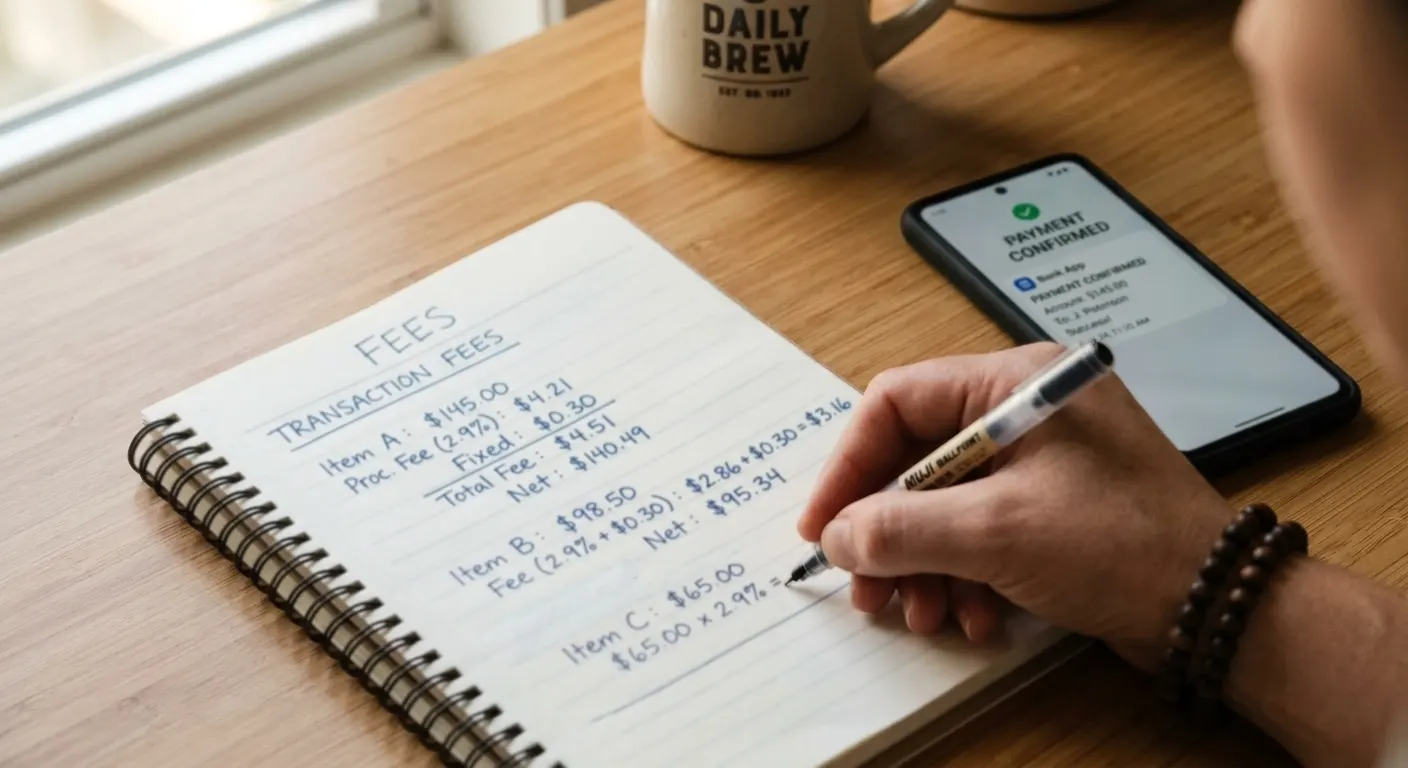
Some operators absorb the processing cost of mobile billing; others pass it to the player. A 10% to 15% fee is common. That percentage may appear as a disclosed surcharge on the deposit screen, or it may be buried in your phone bill as a “service fee” separate from the deposit amount.
Premium SMS confirmations occasionally carry their own per-message charge—50 cents to a dollar, depending on carrier and billing arrangement. That fee shows as a separate line on your statement, not folded into the deposit total. Mobile billing that advertises “no fees” may still trigger premium SMS charges your carrier applies independently.
Are there fees for depositing at a casino using my mobile phone?
Fees vary by operator and carrier. Some offshore casinos absorb the mobile billing processing cost; others add a 10% to 15% surcharge disclosed on the deposit screen before you confirm. Premium SMS charges (50 cents to $1 per confirmation message) may apply depending on your mobile plan, appearing as a separate line on your statement. PayID transfers, by contrast, carry no casino-side fees and rarely incur bank charges.
Cost Example: What $30 of Play Actually Costs
You want to deposit $30 to your casino account via mobile billing. The cashier discloses a 15% processing fee. You confirm the transaction. Here’s what you pay:
- Deposit credited to casino: $30
- Casino processing fee (15%): $4.50
- Premium SMS charge (carrier-dependent): $0.50
- Total charged to your phone bill or prepaid credit: $35
That’s $35 paid for $30 of casino balance—a 16.7% effective cost. Run the same deposit through PayID: $30 deposited, $30 charged, zero fees. Apple Pay or Google Pay: $30 deposited, $30 charged, zero fees. Crypto via wallet: $30 deposited, network transaction fee (usually under $1 for USDT on Tron, $2–$5 for Bitcoin depending on mempool congestion), total cost $31–$35 depending on blockchain.
Mobile billing rarely beats PayID on cost. It only wins when you don’t have a bank account, don’t own a card, and aren’t comfortable managing a crypto wallet. For everyone else, the 15% haircut makes no sense.
Withdrawing Your Winnings: Why You Can’t Use Your Phone Bill
Mobile billing is a one-way street. Deposits flow from your phone account to the casino; withdrawals cannot reverse that path. The technical limitation is structural: carrier billing systems are built for merchants to charge customers, not to send funds back. Your carrier has no mechanism to credit your phone bill or reload prepaid balance from a third-party payer.
Every offshore casino accepting mobile deposits requires you to nominate a separate withdrawal method during your first cashout. Bank transfer, e-wallet (Skrill, Neteller, MiFinity), PayID, or cryptocurrency are the standard options. Withdrawals via PayID typically process in 5 to 40 minutes. E-wallets take 24 to 48 hours. Bank transfers stretch to 3 to 5 business days. Crypto withdrawals clear in under an hour at well-run operators.
Can I withdraw my casino winnings back to my phone bill?
No. Mobile billing systems are designed for one-way payments—customer to merchant. Casinos cannot credit funds to your phone bill or reload prepaid mobile credit. Withdrawals require a separate method: bank transfer, PayID, e-wallet, or cryptocurrency. You’ll provide those details during your first cashout, and KYC verification (photo ID, proof of address) applies regardless of how you deposited.
Why Mobile Billing Is Deposit-Only
Carrier billing operates as a billing-aggregation service. The casino’s payment processor requests authorisation from your carrier, your carrier adds the charge to your account, and the processor remits funds to the casino minus a fee. Reversing that flow would require your carrier to accept incoming payments on your behalf, hold those funds in a balance visible on your mobile account, and either credit your bill or convert the balance to prepaid credit.
No Australian carrier offers that functionality. Telstra, Optus, and Vodafone are telecommunications providers, not payment institutions. They lack the licensing, infrastructure, and regulatory framework to operate as money-transfer services. Even in markets where carrier billing for gambling exists (UK, Scandinavia), withdrawals go through separate channels.
Withdrawal Methods at Mobile-Friendly Casinos
Offshore casinos that list mobile billing in their deposit menu offer these withdrawal routes:
Bank transfer — direct to your Australian bank account. Processing takes 3 to 5 business days. No fees from most operators, though your bank may charge an incoming international transfer fee ($10–$25 depending on the bank). Minimum withdrawal usually sits at $50 to $100.
PayID — the fastest option for Australian players. Withdrawals clear in 5 to 40 minutes during business hours, occasionally extending to 2 hours outside peak times. No fees. Minimum withdrawal as low as $10 at some operators. Not universally supported—check the cashier before depositing if PayID withdrawals are a priority.
E-wallets (Skrill, Neteller, MiFinity) — process in 24 to 48 hours. Fees vary: Skrill and Neteller charge around 2% for AUD withdrawals; MiFinity absorbs the cost. Minimum withdrawal $10 to $20. You must have deposited via the same e-wallet at least once for most operators to approve e-wallet withdrawals—a money-laundering prevention rule.
Cryptocurrency (Bitcoin, Ethereum, USDT) — fastest route for established accounts. Withdrawals process in under an hour, occasionally within minutes. Blockchain network fees apply (under $1 for USDT on Tron, $2–$10 for Bitcoin depending on network congestion). Minimum withdrawal typically 0.001 BTC or equivalent. Some operators waive KYC for crypto withdrawals below $1,000 to $2,000, but that policy is discretionary and can change.
What happens if I don’t pay my phone bill after making a casino deposit?
The debt sits with your mobile carrier, not the casino. If you don’t pay your postpaid bill, your carrier suspends service, reports the default to credit agencies, and pursues collection. The casino transaction completed when you confirmed the SMS—your carrier paid the casino on your behalf, and the debt is now between you and the carrier. Prepaid accounts deduct immediately, so non-payment isn’t possible; the transaction declines if you lack sufficient credit.
Mobile Pokies and Game Selection at Pay-By-Phone Casinos
Every offshore casino accepting Australian players in 2026 is mobile-first by default. Operators targeting the AU market build their platforms for smartphone browsers and occasional tablet use, with desktop as an afterthought. Game libraries load identically on mobile and desktop—same titles, same RTP, same bonus mechanics. The difference is interface scaling, not content.
Pokies dominate the game mix at Australian-facing offshore casinos. Pragmatic Play, NetEnt, Microgaming (Games Global), Play’n GO, and Hacksaw Gaming supply the bulk of recognisable titles. Book of Dead, Gates of Olympus, Sugar Rush, Sweet Bonanza, Wolf Gold, and Starburst appear across virtually every operator. Live dealer tables from Evolution Gaming and Ezugi cover blackjack, roulette, and baccarat variants.
Mobile billing as a deposit method doesn’t restrict which games you can play. Once funds sit in your casino balance, the payment method that got them there is irrelevant. Bonus eligibility can vary—some welcome offers exclude mobile billing deposits, others don’t—but game access is universal.
Screen size is the real constraint on mobile. Pokies with dense paytable overlays or multi-window bonus features (especially older Flash-converted titles) can feel cramped on a 6-inch display. Modern HTML5 pokies from Pragmatic Play and NetEnt scale cleanly. Live dealer tables are watchable but you’ll miss subtle dealer gestures and side-bet buttons are occasionally fiddly to tap without magnifying.
Bonuses and Promotions: What Works With Mobile Deposits
Offshore casino welcome bonuses rarely discriminate by deposit method. The standard structure—100% match up to a cap, plus free spins—applies whether you fund via card, PayID, mobile billing, or crypto. The catch: fine print occasionally excludes specific methods. Skrill and Neteller are common exclusions at European-facing operators. Mobile billing and prepaid vouchers (Neosurf, Paysafecard) are excluded less often but it happens.
Read the bonus terms before depositing. The critical line is “qualifying deposit methods” or “excluded payment methods.” If mobile billing is excluded, your deposit credits but the bonus doesn’t trigger. You’d need to contact support to reverse the deposit (usually possible within minutes if you haven’t placed a bet) and re-deposit via an eligible method.
Wagering requirements attach to virtually every bonus. 30x to 40x (deposit plus bonus) is standard. A $30 deposit with a 100% match gives you $60 in balance, and you must wager $1,800 to $2,400 (30x to 40x of $60) before withdrawing. Free spins carry separate wagering—usually 40x the winnings, not the spins themselves. Win $10 from 100 free spins, you wager $400 before cashing out.
Max bet rules apply during wagering: $5 per spin or 10% of the bonus amount, whichever is lower. Breach that and the operator voids your bonus and winnings. It’s a common forfeit trigger and rarely waived even when the breach was accidental.
Pay-By-Phone vs PayID, Crypto, and E-Wallets: Which Should You Use?
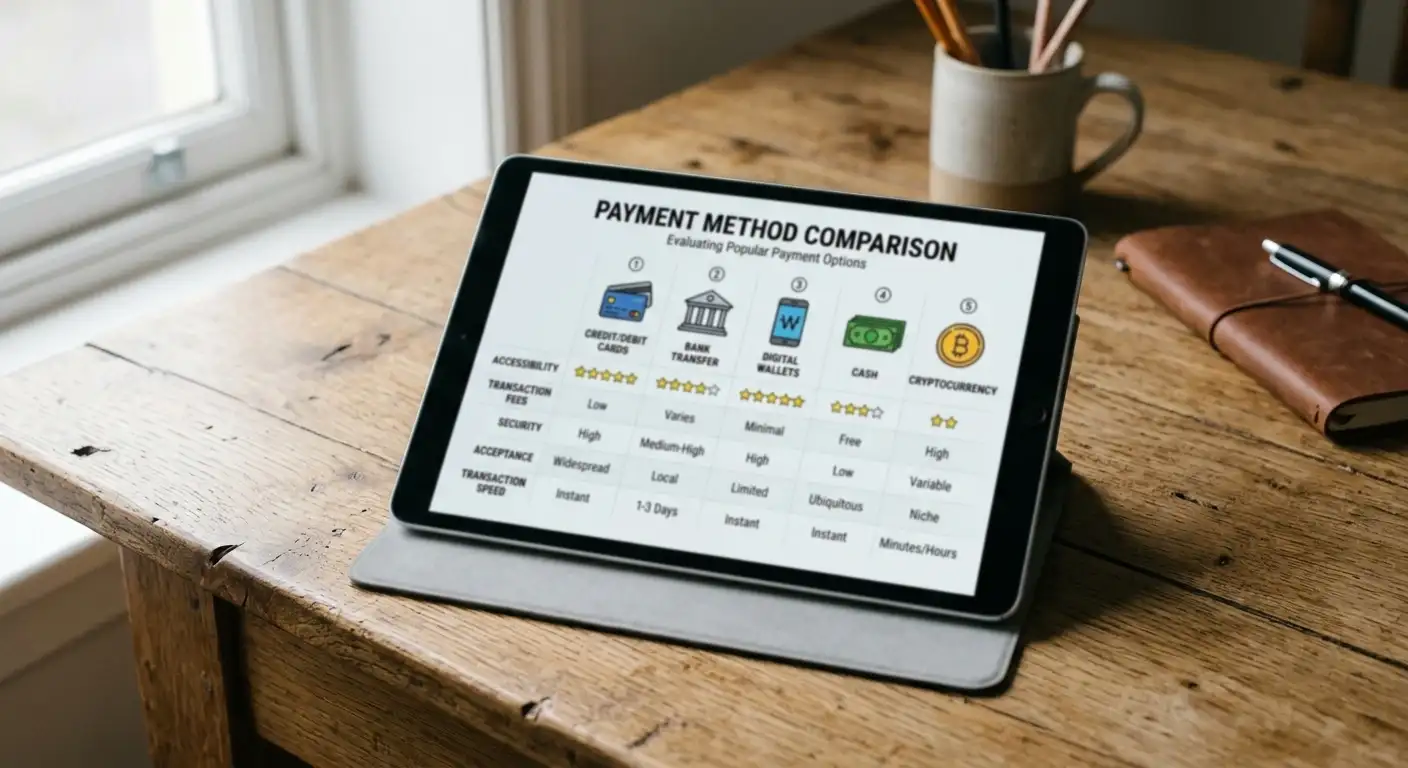
Mobile billing, where it functions, offers one advantage: you don’t share bank or card details with the casino. Everything else—speed, cost, withdrawal support, limits—favours alternative methods. PayID beats mobile billing on every practical axis for Australian players in 2026. Crypto wins on anonymity. E-wallets offer the widest acceptance across offshore operators. Mobile billing’s niche is shrinking to the point of irrelevance.
| Method | Speed | Anonymity | Withdrawal Support | Typical Fees | Best For |
|---|---|---|---|---|---|
| Mobile billing | Instant (when it works) | Partial (no bank details, but phone number exposed) | No | 10–15% + premium SMS | Players without bank access |
| PayID | Instant (seconds) | Partial (proxy identifier, no account details shared) | Yes (5–40 min) | None | Australian players prioritising speed + withdrawals |
| Apple/Google Pay | Instant | Partial (tokenised, no card details transmitted) | No | None | Quick deposits, separate withdrawal method needed |
| Crypto (BTC/USDT) | Instant | High (wallet address only) | Yes (under 1 hour) | Network fee ($1–$10) | Players prioritising anonymity |
| Neosurf | Instant | High (voucher code, no personal info) | No | None (purchase fee at retailer) | Players avoiding banks entirely |
The table assumes methods function as designed. For Australian players, mobile billing rarely works at the carrier level, which drops it below every alternative.
When Mobile Billing Makes Sense
Mobile billing makes sense in exactly one scenario: you lack access to a bank account, don’t own a debit or credit card, aren’t comfortable managing a crypto wallet, and your mobile carrier happens to process the transaction (rare in Australia). That’s a narrow set of conditions. For everyone else, PayID is faster, cheaper, and supports withdrawals.
The spend-control angle has merit. Carrier caps at $30 to $50 per transaction and $100 to $200 per month function as unintentional gambling limits. If you’ve identified that you’re prone to chasing losses or depositing impulsively, a payment method that physically cannot process more than $100 in a month might serve as a safeguard. That’s not a feature casinos advertise, but it’s real.
When PayID or Crypto Is Better
PayID is better in almost every scenario where you have an Australian bank account. Instant deposits, sub-hour withdrawals, zero fees, no transaction caps. The only information you share is a PayID identifier (phone number or email), not your BSB or account number. Your bank and the casino’s payment processor handle the routing via the New Payments Platform; the casino never sees your account details.
Crypto is better when anonymity is the priority. Deposit and withdraw via wallet address. No name, no ID check (until you hit the operator’s KYC threshold, usually $1,000 to $2,000), no bank in the loop. The trade-offs: you manage wallet security, accept price volatility between deposit and cashout, and navigate blockchain network fees that fluctuate with congestion.
E-wallets (Skrill, Neteller, MiFinity) sit between PayID and crypto. Faster than bank transfers, more widely accepted than crypto, less anonymous than either. Fees hover around 2% for AUD withdrawals. Useful if you’re playing at multiple offshore casinos and want one balance to fund them all.
The Legal Reality: Offshore Casinos and Australian Law
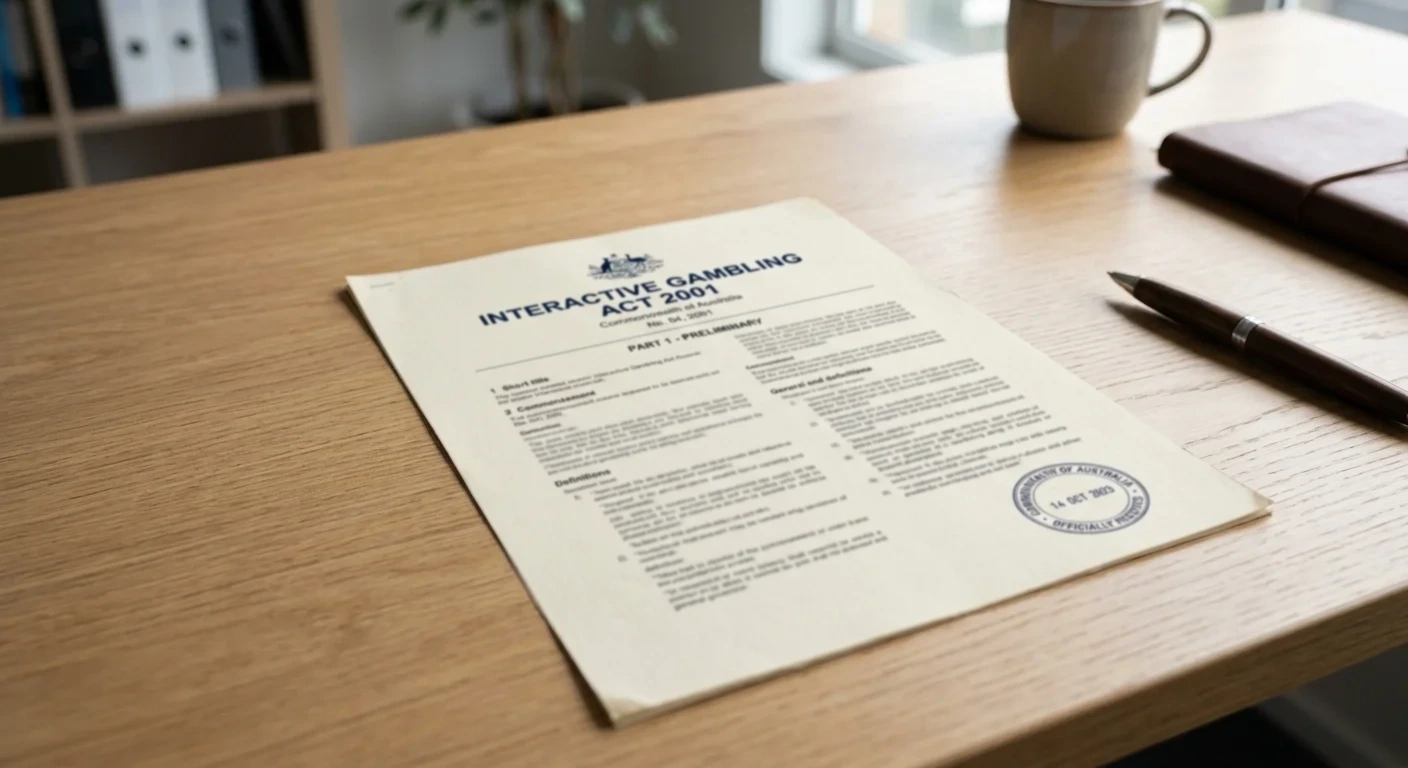
Australia has no locally licensed online casino operators offering pokies, table games, or live dealer to AU residents as of 2026. The Interactive Gambling Act 2001 (IGA) prohibits Australian-based companies from providing online casino services to people physically located in Australia. The law targets operators, not players. No Australian resident has been prosecuted for playing at an offshore casino.
The Australian Communications and Media Authority (ACMA) enforces the IGA by blocking offshore casino domains via ISP-level filters. Over 1,700 domains were blocked by 2026. Individual players can still access these sites via VPN or by typing the direct IP address, and doing so carries no criminal penalty. ACMA’s enforcement targets operators advertising to Australians and payment processors facilitating transactions, not the players themselves.
Offshore casinos operate under licenses issued by Curaçao, Malta, Kahnawake, and similar jurisdictions. These licenses permit the operator to offer services globally, including to Australians, under the laws of the licensing jurisdiction. The casino is technically breaking Australian law by accepting Australian customers, but enforcement happens at the operator level (ACMA blocks, payment processor sanctions) rather than the player level.
The 2026 reforms (Interactive Gambling Amendment Bill, passed 19 August 2026) tightened gambling advertising restrictions and established BetStop, a national self-exclusion register. BetStop applies to Australian-licensed sports betting operators, not offshore casinos. The credit card ban for online gambling (also 2026) applies to AU-licensed operators; offshore sites remain unaffected since they process payments through international gateways.
State and territory regulators license land-based casinos and, in some jurisdictions, online sports betting. No state or territory issues licenses for online casino games. Crown, Star, and SkyCity operate online sports betting in certain states under local licenses but do not offer pokies or table games online under those licenses. Sports betting and online casinos are distinct regulatory categories in Australia.
The practical reality: Australian players use offshore casinos widely, face no legal consequences for doing so, and rely on the licensing jurisdiction’s dispute resolution if something goes wrong. Curaçao licenses offer minimal player protections—no independent ADR, no segregated player funds, no meaningful recourse if the operator refuses a withdrawal. Malta and Kahnawake licenses sit a tier higher with mandatory dispute resolution and stricter operational oversight, but even those pale compared to UKGC or MGA consumer protections available to UK and EU players.
What If Your Offshore Casino Refuses a Withdrawal
If a Curaçao-licensed casino refuses your withdrawal, your options are limited. Contact the operator’s support first—most disputes resolve here, especially if you’ve completed KYC and met wagering requirements. If support stonewalls, escalate to the licensing authority. Curaçao eGaming rarely intervenes on individual player complaints and has no binding arbitration process.
Malta-licensed casinos must participate in an ADR scheme (usually eCOGRA or an MGA-approved equivalent). File a complaint with the ADR body; they’ll mediate and issue a binding decision. Kahnawake has a similar process through its Gaming Commission. These mechanisms work, but they’re slow—expect 4 to 12 weeks for resolution.
Australian consumer law (Australian Consumer Law, enforced by ACCC) does not apply to offshore gambling transactions. The ACCC has no jurisdiction over a casino operating under a Curaçao or Malta license. If you paid via PayID or bank transfer, you might attempt a chargeback through your bank, but success rates are low once you’ve received and used the service (played the games). Crypto transactions are irreversible.
The safest play: stick to operators with a track record, read withdrawal terms before depositing, and complete KYC immediately rather than waiting until your first cashout. An operator that pays withdrawals promptly for six months can still turn rogue, but it’s less likely than a brand-new site with no history.
Are offshore casinos safe to play at from Australia?
Safety depends on the operator, not the licensing jurisdiction alone. Curaçao licenses are easy to obtain and carry minimal oversight; some Curaçao operators are reliable, many are not. Malta Gaming Authority and Kahnawake licenses impose stricter requirements and offer formal dispute resolution. Check independent review sites (AskGamblers, Trustpilot, Casino Meister) for withdrawal complaints before depositing. Australian law does not protect you in disputes with offshore casinos—you rely on the licensing jurisdiction’s framework and the operator’s goodwill.
Can ACMA block access to offshore casinos I’m already using?
Yes. ACMA maintains a rolling blocklist of offshore casino domains and instructs Australian ISPs to block access at the DNS level. If your casino’s domain lands on the list, you’ll see a block page when you try to visit. The operator usually launches a new domain (often changing a single letter or adding a regional suffix) and emails existing players with the new URL. VPNs and direct IP access bypass the blocks. ACMA does not track individual players accessing blocked sites and does not penalise players for doing so.
Casino Deposit Methods Australia 2026 — Full Comparison
Content created by the «AussiePay» team