Bitcoin Pokies Australia 2026: Which Crypto Casinos Actually Work for Aussies?
 Available in AU
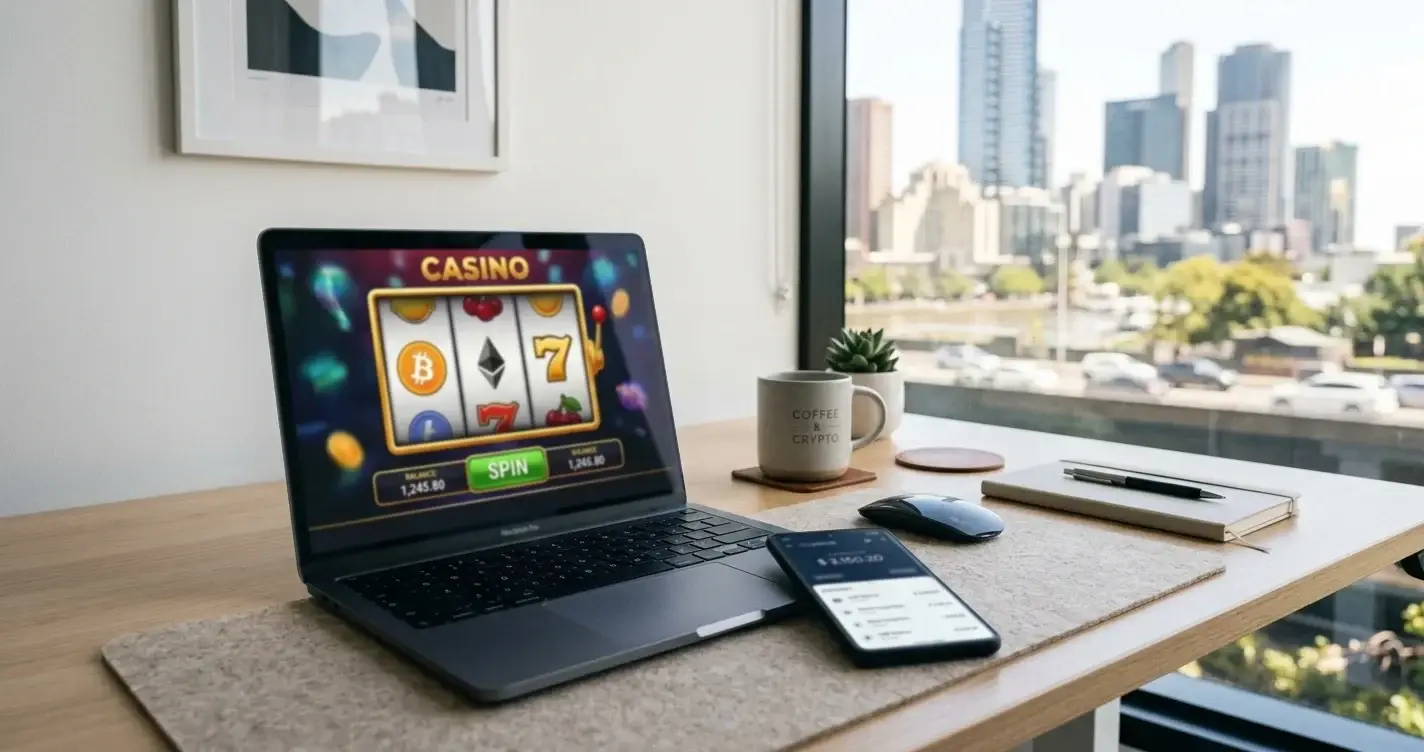
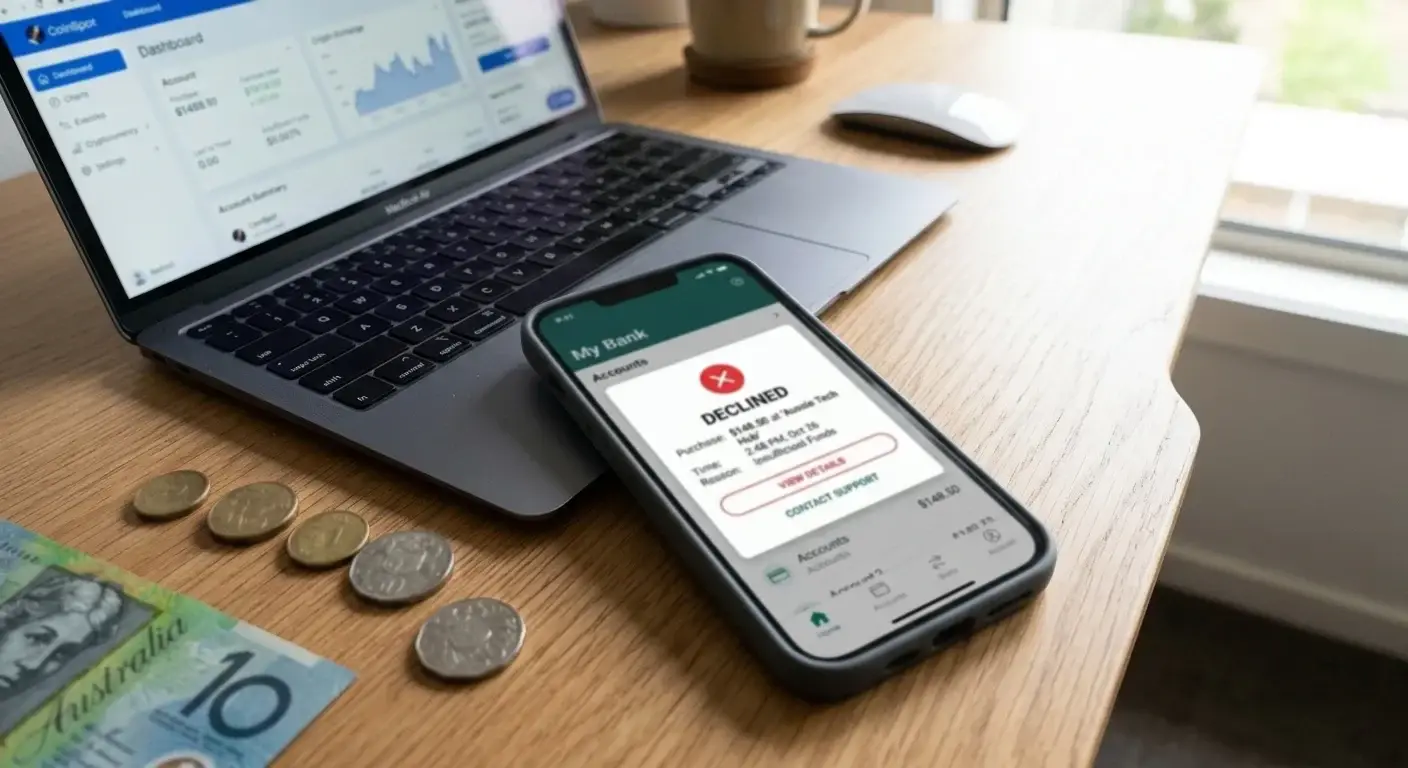
Australian banks don’t want you playing pokies online. CommBank declines the transaction. NAB flags it suspicious. Westpac reclassifies it as a cash advance and slaps on extra fees. The four major banks treat offshore casino deposits like money laundering, and they’ve got the merchant category code MCC 7995 to prove it.
Crypto casinos bypass this entirely. A Bitcoin transfer from CoinSpot to a casino wallet address is a blockchain transaction. No bank sits in the middle, no merchant code, no decline. That’s why a third of Australian adults now hold cryptocurrency, and why Bitcoin pokies have become the practical answer for millions of players who just want to spin without asking permission.
This guide covers which Bitcoin and crypto casinos accept Australian players in 2026, how to deposit via CoinSpot or Swyftx without losing funds to the wrong network, and which cryptocurrency actually makes sense for pokies. No theory. Just the operators that work, the coins that clear fast, and the legal reality under the Interactive Gambling Act.
Why Australian Players Choose Bitcoin Pokies in 2026
Three banks control most of Australia’s retail banking. All three have decided offshore casino transactions are high-risk. The mechanism is straightforward: gambling merchants carry MCC 7995 in the card network, and banks either decline these transactions outright or treat them as cash advances with punitive interest rates from day one.
NAB’s StraightUp card blocks gambling spending by design. CommBank, Westpac, and ANZ apply varying levels of restriction depending on the product, but international gambling transactions get flagged more aggressively than domestic ones. The bank sees the merchant code, runs it through its risk model, and declines the payment before you’ve even noticed the loading spinner.
Crypto deposits sidestep this completely. A transfer from your CoinSpot wallet to a casino’s Bitcoin deposit address is peer-to-peer. No intermediary bank inspects the merchant, no card scheme applies a category code, no algorithm flags it for review. The transaction clears in minutes, not because the casino is “faster” but because there’s no gatekeeper to slow it down.
Bank blocks on crypto exchange purchases are rising too. The Independent Reserve Cryptocurrency Index for 2026 found that 30 percent of crypto investors reported their bank preventing or delaying a transfer to an exchange, up from 19.3 percent the year before. The rate hits 37 percent among 25-to-34-year-olds, the core online gambling demographic. Banks are getting more aggressive, not less.
PayID helps. Both CoinSpot and Swyftx support PayID for instant AUD deposits, and because PayID transactions settle in seconds through the New Payments Platform, they’re harder for banks to selectively block without breaking legitimate payments too. Once the AUD is in your exchange account, converting to Bitcoin or USDT and moving it to a casino takes minutes.
Crypto adoption has reached critical mass in Australia. Thirty-three percent of adults hold cryptocurrency as of 2026, which translates to roughly 6.6 million people. Bitcoin is the most held coin, owned by 70 percent of Australian crypto investors. The infrastructure to use a Bitcoin casino is already in place for millions.
Can Australian banks block my crypto casino deposits?
No. Once your crypto is in a non-custodial wallet or ready to send from an exchange like CoinSpot, the bank has no mechanism to block the transaction. The transfer happens on-chain between your wallet and the casino’s wallet address. Banks can make it harder to buy crypto in the first place by blocking fiat-to-exchange transfers, but they cannot stop a cryptocurrency transaction that’s already queued.
Legal Status: Can You Play Bitcoin Pokies in Australia?
Australia’s Interactive Gambling Act 2001 makes it a criminal offence for operators to provide online casino services to people physically in Australia. The penalties are severe: up to 360,000 dollars per day for individuals, 1.8 million per day for companies. That’s why no Australian-licensed online casino exists. The law bans the provision of online pokies, table games, and live dealer content domestically.
The IGA explicitly targets providers, not players. The Department of Infrastructure states it plainly: the Act targets the providers of interactive gambling, not their potential or actual customers. No Australian has ever been prosecuted for playing at an offshore casino. There is no mechanism in the IGA to charge a player. The law penalises the operator for offering the service, not the person for using it.
Every Bitcoin casino an Australian can access is offshore. Typically licensed in Curaçao, Anjouan, or Malta, these operators know they’re breaking Australian law by accepting Australian players. They operate anyway because the IGA has no extraterritorial enforcement power, and because the market is large enough to justify the regulatory risk. For the player, the legal exposure is zero.
The Australian Communications and Media Authority enforces the IGA by ordering ISPs to block illegal gambling sites. Since November 2019, ACMA has blocked 1,455 illegal gambling and affiliate websites as of December 2026. Recent rounds targeted operators including Abu King, Power Up Casino, QuickWin, and Vegasino. The blocks are applied at the ISP level through DNS filtering and IP blocking.
Operators respond faster than ACMA can list them. A blocked casino often reappears under a mirror domain within days. Players notice when their usual site stops loading, check the operator’s social channels or email for the new URL, and continue playing. ACMA’s blocking strategy slows access but doesn’t stop it. The agency is playing whack-a-mole with offshore operators who have no Australian assets to seize and no local staff to prosecute.
The 2024 credit card and crypto ban gets misreported constantly. The Interactive Gambling Amendment (Credit and Other Measures) Act 2023, effective 12 June 2024, bans Australian-licensed wagering operators from accepting credit cards and cryptocurrency as payment. This applies to sports betting sites like Sportsbet and TAB. It does not apply to offshore casinos, which hold no Australian license and therefore fall outside the law’s scope. If you’re using a Bitcoin casino that isn’t licensed in Australia, the 2024 ban has no effect on your deposits or withdrawals.
Is it legal to play Bitcoin pokies in Australia?
Yes, for players. The Interactive Gambling Act 2001 makes it illegal for operators to offer online casino services to Australians, but it does not criminalise the player. No Australian has ever been charged or prosecuted for using an offshore casino. ACMA blocks offshore sites but does not penalise players who access them. The legal risk sits entirely with the operator, not the person spinning the pokies.

Top 10 Bitcoin Pokies Casinos for Australian Players
These ten casinos accept Australian players, process crypto deposits, and were not on ACMA’s blocked website register as of the most recent verification dates in August and September 2026. All are offshore operators licensed in Curaçao, Anjouan, or under similar jurisdictions. Verification was conducted through independent testing by Australian reviewers and cross-referenced against ACMA’s public block list.
| Operator | License | Withdrawal Speed | Min Deposit | Distinguishing Feature |
|---|---|---|---|---|
| Wild Tokyo | Curaçao (Dama N.V.) | 28 min (BTC tested) | AU$30 | Dual crypto + PayID, verified test data |
| Lucky Block | Offshore (jurisdiction undisclosed) | Under 5 min | $1 AUD equivalent | Lowest min deposit found, Telegram integration |
| 7Bit Casino | Curaçao 8048/JAZ2020-013 | 24 min (tested Aug 2026) | AU$20 | Operating since 2014, 10+ years |
| Jack.com | Offshore | 19 min (tested Aug 2026) | $50 for bonus | 16 cryptos + fiat, esports sportsbook |
| Bets.io | Offshore | 8 min (tested Aug 2026) | Not specified | 17,000+ games, automated cashier |
| Metaspins | Curaçao | Instant (claimed) | None | One-click signup, true no-KYC |
| Mega Dice | Licensed (jurisdiction undisclosed) | Instant (claimed) | 1 mBTC (0.001 BTC) | First licensed Telegram casino |
| ThunderPick | Offshore | 14 min total (tested Aug 2026) | Not specified | <5 min processing, fastest stage-1 |
| Winz.io | Offshore | 21 min (tested Aug 2026) | Not specified | 0× wagering on all rewards |
| BC.Game | Anjouan | Instant (claimed) | $30 AUD equivalent | 150+ cryptos, but AU restricted in T&Cs |
The table supplements the breakdowns below. Withdrawal speeds reflect total time including blockchain confirmation where test data was available. “Instant” indicates operator claim without independent verification. Minimum deposits vary by payment method and are listed where verifiable.
Wild Tokyo
Wild Tokyo operates under Dama N.V., a Curaçao-licensed parent company that runs multiple Australian-facing brands including 7Bit Casino. The platform targets the Australian market explicitly with native AUD support and a dual banking system that accepts both cryptocurrency and PayID fiat deposits. The casino carries somewhere between 8,000 and 10,000 games depending on the source, drawn from established providers including Pragmatic Play, Play’n GO, and BGaming.
The distinguishing feature here is verified withdrawal timing. An independent Australian reviewer tested both a Bitcoin withdrawal and a PayID withdrawal in the same session in August 2026. The BTC withdrawal cleared in 28 minutes. The PayID cleared in one hour and 48 minutes. Both work, but the crypto side delivers faster. Wild Tokyo’s welcome package offers 200 percent up to 5,300 Australian dollars plus 620 free spins with 35 times wagering. Minimum deposit sits at 30 Australian dollars across most methods.
This is one of the few casinos where you can compare crypto and fiat performance side by side without switching platforms. The cashier supports BTC, ETH, USDT, and LTC on the crypto side, and PayID on the fiat side. If your bank allows PayID to offshore casinos, you’ve got a fallback. If it doesn’t, the crypto rail still works. The casino wasn’t on ACMA’s blocked list as of August 2026, though that status can change.
Lucky Block
Lucky Block runs on a proprietary platform with no disclosed parent entity. The casino markets itself as crypto-first, meaning every layer from deposit to withdrawal was built around digital currency rather than bolted on after the fact. Australian players access the platform in AUD equivalent or in coins including Bitcoin and Ethereum. The game library passes 2,700 titles, and the integrated sportsbook covers more than 30 sports including AFL and NRL.
The standout here is the one-dollar minimum deposit. Most competitors set the floor at 10 to 30 dollars AUD equivalent. Lucky Block accepts a dollar, which makes it the lowest barrier to entry found in this research. The welcome offer is a 200 percent match up to 10,000 dollars AUD equivalent plus 50 free spins, with 35 times wagering. The casino also runs a Telegram integration for account management and notifications, which suits players who prefer not to juggle separate apps.
Withdrawal processing is claimed at up to five minutes, though independent verification of that speed wasn’t available across sources. No withdrawal fees apply, and there’s no cap on payout size. High rollers get access to 15 percent cashback. The casino emphasises that signup takes only an email address and password, with no ID upload required at registration. Identity verification typically triggers at the first withdrawal if the amount crosses the casino’s internal threshold, which most operators set somewhere between 2,500 and 5,000 Australian dollars equivalent.
7Bit Casino
7Bit launched in 2014, making it one of the oldest crypto casinos still accepting Australian players. The operator is part of the Dama N.V. network under Curaçao license 8048/JAZ2020-013, which also covers Wild Tokyo. The game library has grown to somewhere between 7,000 and 10,000 titles depending on whether you count every variant or collapse duplicates. Payment options include Bitcoin, Ethereum, USDT, Litecoin, and traditional AUD deposits via card or bank transfer.
The welcome package spans four deposits with a combined match of 325 percent up to 10,800 Australian dollars plus 250 free spins. An alternative offer provides 500 dollars plus 100 free spins as a no-deposit bonus, though the NDB comes with 45 times wagering. Minimum deposit ranges between 20 and 30 Australian dollars depending on the method. Tested withdrawal time in August 2026 came in at 24 minutes total for Bitcoin, which is competitive but not the fastest on this list.
A decade of operation doesn’t guarantee trust, but it signals the operator hasn’t exit-scammed and shut down overnight. That’s worth something in an offshore market where newer casinos fold without warning. 7Bit’s longevity also means it has weathered multiple ACMA blocking rounds and adapted to Australia’s regulatory environment. Players who value stability over the latest UI trends tend to stick with operators that have been around long enough to prove they’ll still be here next year.
Jack.com
Jack.com runs as an integrated casino and sportsbook with a strong esports focus. The platform carries 6,000-plus games covering slots, table games, jackpots, and live dealer content. The sportsbook extends beyond traditional sports into esports markets for StarCraft, Call of Duty, League of Legends, and Dota 2. Australian players who bet on both casino games and competitive gaming can consolidate their activity under one login instead of juggling multiple accounts.
Payment flexibility is a selling point. Jack accepts 16 cryptocurrencies including Bitcoin, Ethereum, Tether, and BNB, alongside traditional methods like Visa, Mastercard, Apple Pay, and Google Pay. That hybrid model means players who hold crypto can use it, and players who don’t want to learn blockchain mechanics can stick with a card. The welcome offer delivers 100 free spins on a first deposit of 50 dollars or more. The casino also operates a Rakeback VIP Club that returns a percentage of wagering activity to long-term players.
Tested withdrawal time in August 2026 clocked in at 19 minutes for a Bitcoin payout. That’s faster than Wild Tokyo but slower than ThunderPick and Bets.io. Processing speed matters most to players who cash out frequently. If you’re the type to deposit once, play for a week, and withdraw once, the difference between 19 minutes and eight minutes is negligible. If you’re moving funds in and out multiple times per session, every minute counts.
Bets.io
Bets.io markets itself on scale. The platform claims 17,000-plus games, which is the largest library found during this research. Whether a player actually needs 17,000 options is debatable, but the sheer size signals that most major providers and niche studios are represented. The casino accepts Bitcoin, Ethereum, USDT, and Dogecoin. The welcome bonus reaches 11,500 Australian dollars plus 225 free spins with 40 times wagering.
The distinguishing feature is the automated smart cashier. Most casinos with manual review queues process withdrawals in 30 minutes to several hours. Bets.io routes payouts through an automated system that skips human approval for amounts below a certain threshold. Tested withdrawal time in August 2026 came in at eight minutes total, the fastest verified result on this list. That’s stage-one processing plus blockchain confirmation combined. For players who prioritise speed, that eight-minute result puts Bets.io at the top.
Minimum deposit wasn’t specified across available sources, which usually means it defaults to the standard 10 to 30 dollars range. The 40 times wagering on the welcome bonus is higher than some competitors but lower than others. Bets.io wasn’t on ACMA’s blocked list at the time of the most recent check, though the casino’s large game library and aggressive bonus terms suggest it’s optimised for volume rather than niche positioning.
Metaspins
Metaspins launched around 2022 as a crypto-only casino with no fiat cashier at all. The platform runs under a Curaçao license and positions itself as Web3-native, meaning every function assumes the player holds cryptocurrency rather than treating it as an optional add-on. Registration takes one click. No email verification, no password setup, no identity documents required at signup. The casino generates a wallet-based account and you’re in.
The game library reaches 2,600-plus titles, with more than 2,000 slots and live dealer tables plus 74 provably fair originals. Metaspins accepts nine cryptocurrencies: Bitcoin, Bitcoin Cash, USDT, Dogecoin, Ethereum, Litecoin, Cardano, USDC, and TRON. The welcome offer is randomised. New players spin a wheel that lands on a deposit match, free spins, or cashback up to 60 percent. There’s no fixed wagering requirement because the bonus value itself is random.
This is one of the few casinos where “no KYC” actually means no KYC at signup. Most operators advertise no-KYC registration but trigger identity verification at the first withdrawal above a threshold. Metaspins defers KYC entirely unless something in the account’s activity pattern flags for manual review. That threshold isn’t publicly disclosed, but sources suggest amounts under 2,500 to 5,000 Australian dollars equivalent generally clear without documents. Players chasing anonymity gravitate here, though true anonymity is a myth once on-chain transactions enter the public ledger.
Mega Dice
Mega Dice operates entirely through Telegram, making it the first casino in this list that doesn’t have a traditional website you visit in a browser. The platform runs inside the Telegram app as a bot. Players join the channel, start a conversation with the bot, and the casino interface loads inside the chat. The operator emphasises that it holds a gaming license, positioning itself as the first licensed Telegram casino, though the specific jurisdiction wasn’t disclosed across available sources.
The welcome offer matches 200 percent up to one Bitcoin plus free spins. The wagering structure ties to loyalty points: 0.001 BTC per 150 points earned through play. Minimum deposit sits at one millibitcoin, which is 0.001 BTC or roughly 60 to 80 Australian dollars depending on Bitcoin’s price. The casino accepts Bitcoin, Litecoin, and Ethereum. Game content comes from established providers, and returning players access a VIP marketplace where loyalty points redeem for bonuses and perks.
The Telegram-native approach works for players who already live in messaging apps and don’t want to bookmark another casino URL. It’s also harder for ACMA to block. A traditional website has a domain that can be added to an ISP block list. A Telegram bot runs on Telegram’s infrastructure, and blocking it would require blocking the entire Telegram app, which Australia hasn’t done. Whether that makes Mega Dice more resilient to Australian enforcement or just a temporary workaround is an open question.
ThunderPick
ThunderPick brands itself as a crypto-first sportsbook with an attached casino. The platform accepts Bitcoin, Ethereum, Solana, and Litecoin. The inclusion of Solana is less common among competitors, and SOL’s sub-30-second confirmation times make it one of the fastest payment options available. The welcome package offers up to 600 Australian dollars plus 10 percent cashback with 35 times wagering.
The standout metric is stage-one processing time. Tested withdrawal in August 2026 showed under five minutes for casino processing before the transaction even hit the blockchain. That’s the fastest automated processing found across verified tests. Total time including blockchain confirmation came in at 14 minutes for Bitcoin. For players using Solana or USDT on TRC-20, total time would drop further because those networks confirm faster than Bitcoin’s ten-to-60-minute range.
ThunderPick’s sportsbook covers traditional sports and esports, similar to Jack.com. The casino side carries 10,000-plus games, though exact counts vary by source. The platform wasn’t on ACMA’s blocked list at the most recent check. For players who split their activity between sports betting and pokies and want the fastest possible cashouts, ThunderPick’s sub-five-minute processing delivers.
Winz.io
Winz.io runs a no-wagering model, which is rare enough in the industry to be the casino’s primary differentiator. Most welcome bonuses and reload offers come with 30 to 50 times wagering requirements. Winz.io applies zero times wagering on all rewards. That means whatever you win from a bonus is immediately withdrawable without needing to bet it through 30 or 40 times first. The trade-off is that the headline bonus amounts are smaller because the operator isn’t locking funds behind a high playthrough wall.
The casino uses a level-up progression system instead of traditional deposit bonuses. Players earn experience points through wagering, advance through levels, and unlock rewards at each tier. The system replaces front-loaded welcome packages with ongoing incremental perks. Winz.io accepts Bitcoin, Ethereum, USDT, and XRP. The game library reaches 5,000-plus titles. Tested withdrawal time in August 2026 came in at 21 minutes.
Zero wagering appeals to players who’ve been burned by bonus terms in the past. A 200 percent match up to 5,000 dollars with 40 times wagering requires 200,000 dollars in total bets before you can withdraw bonus winnings. At a typical return-to-player rate of 96 percent, you’ll lose roughly 8,000 dollars reaching that threshold. Winz.io’s approach eliminates that grind. The bonus is smaller, but what you get is yours.
BC.Game
BC.Game launched in 2017 and operates under an Anjouan iGaming license. The platform carries 10,000-plus games from more than 50 studios, plus 74 provably fair originals that run on cryptographic verification rather than traditional RNG. The casino accepts more than 150 cryptocurrencies, which is the widest payment support found during this research. That includes Bitcoin, Ethereum, and dozens of altcoins most competitors don’t touch. BC.Game also issues its own stablecoin, BCD, which players use for bonuses and in-platform transactions.
The welcome package is the largest by headline value: up to 220,000 dollars in BCD across the first four deposits, with a combined match of 740 percent. The first deposit alone offers 180 percent up to 20,000 BCD with 500 times wagering. That wagering requirement is punitive. Five hundred times means you’d need to bet 10 million dollars to clear a 20,000-dollar bonus. The number is so extreme it reads more as promotional theatre than a usable offer.
Here’s the problem. BC.Game lists Australia as a restricted market in its terms and conditions. The casino explicitly prohibits VPN use to bypass geo-restrictions, and accounts found doing so risk permanent closure and fund confiscation. That restriction was verified by an independent Australian review site in 2026. Despite this, BC.Game appears in multiple Australian-focused crypto casino rankings, often without the restriction mentioned. Some Australian players report accessing the site without issue, which suggests enforcement is inconsistent. Others have had accounts closed and funds held.
The inclusion of BC.Game on this list comes with that caveat. If you’re an Australian player, the operator’s own terms say you shouldn’t be there. Whether that’s enforced at signup, at withdrawal, or never depends on factors that aren’t publicly documented. The 150-plus crypto support and massive game library are legitimate strengths. The geo-restriction is a legitimate risk. Safer options exist higher on this list.
Do crypto casinos offer better bonuses than regular casinos?
Sometimes, but not always. Crypto deposits cost casinos less to process because there are no card scheme fees and no chargeback risk. Some operators pass that saving to players through higher deposit match percentages or lower wagering requirements. Others just use a bigger headline number with worse terms underneath. A 200 percent crypto bonus with 50 times wagering is functionally worse than a 100 percent fiat bonus with 30 times wagering. Always compare the full terms, not just the match percentage.
How to Deposit Bitcoin at a Crypto Casino from Australia
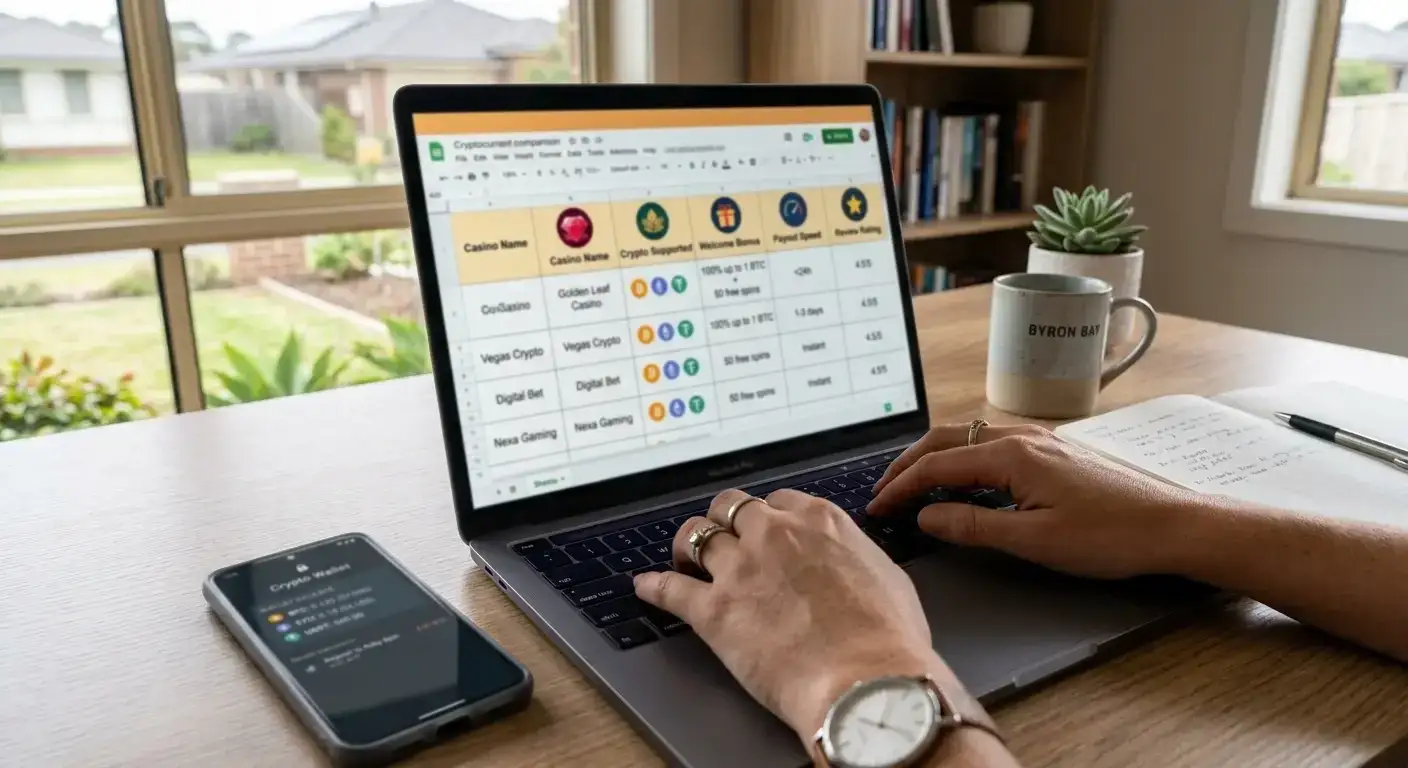
The full process from zero to spinning takes between five and 20 minutes depending on which coin you choose and how fast your exchange processes withdrawals. Every step requires precision. A wrong wallet address or wrong network selection means permanent loss of funds, and neither the casino nor the exchange can reverse it. This walkthrough assumes you’re starting with AUD in a bank account and no existing crypto holdings.
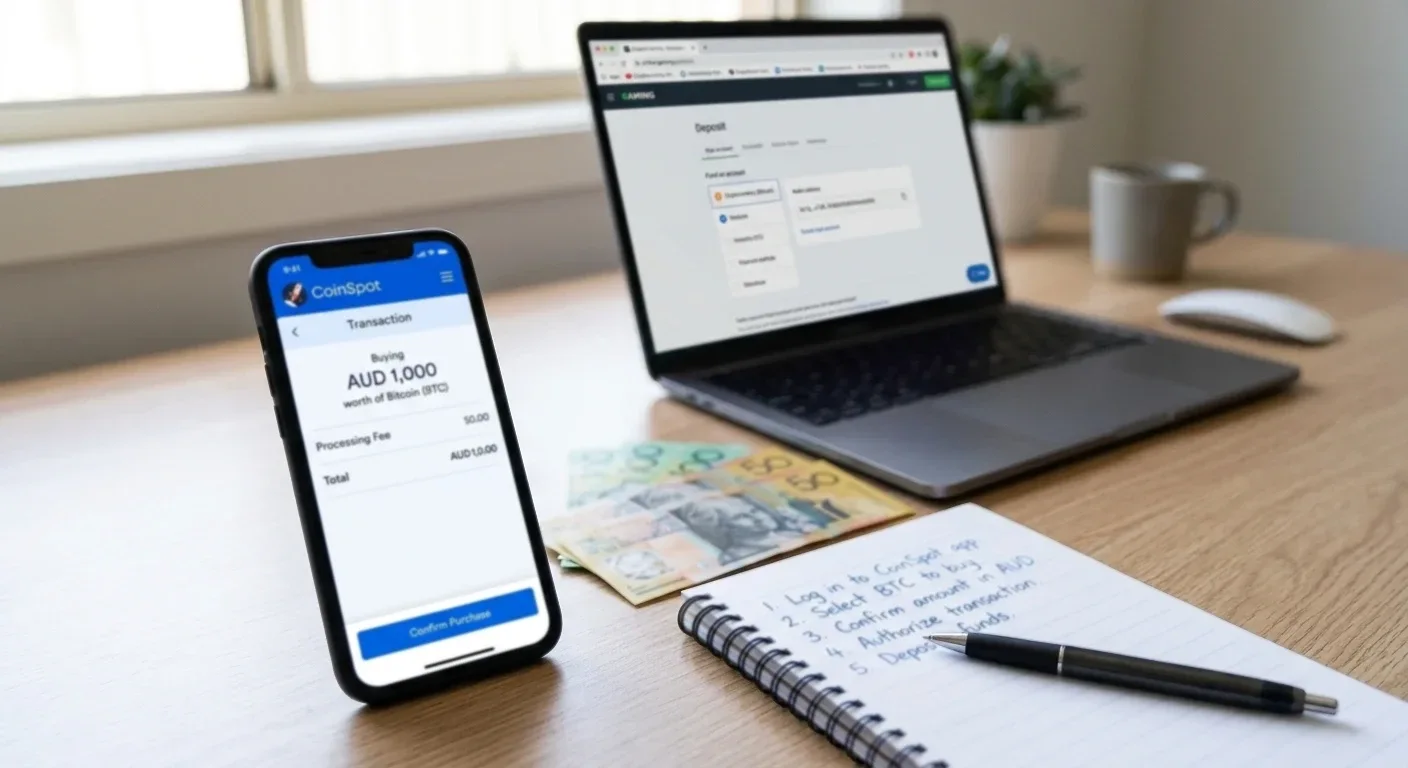
Step 1: Buy Crypto on CoinSpot or Swyftx
CoinSpot and Swyftx are the two most-used exchanges by Australian casino players. CoinSpot is Australia’s largest, founded in 2013, with more than 2.5 million users. Swyftx is Brisbane-based with around 1.5 million users. Both are AUSTRAC-registered, hold customer AUD in trust, and support PayID for instant funding. Either works. CoinSpot has wider coin selection. Swyftx has slightly lower fees on larger trades.
Open an account on your chosen exchange. Verification takes a few minutes: email, phone number, and a photo of your driver’s license or passport. Once verified, fund your account via PayID. Open your banking app, send a PayID payment to the exchange’s unique PayID address, and the funds land in your exchange account within seconds. CoinSpot and Swyftx both display a unique PayID for each user in the deposit section.
Buy the cryptocurrency you’ll use for the casino. The choice between Bitcoin, USDT, Ethereum, and Litecoin is covered in detail in the next section. For now, USDT on the TRC-20 network is the default recommendation for most players: stable value, under-60-second confirmation, fees under 50 cents. If you already hold Bitcoin, use Bitcoin. If you’re starting fresh, USDT on TRC-20 saves time and eliminates price risk.
Navigate to the “Buy” section in CoinSpot or Swyftx. Enter the AUD amount you want to convert. Select USDT from the coin list. Confirm the trade. The USDT lands in your exchange wallet instantly. You now hold cryptocurrency ready to send to the casino.
Step 2: Choose Your Cryptocurrency (BTC, USDT, ETH, LTC)
Not all cryptocurrencies behave the same at a casino cashier. The coin you choose determines deposit speed, withdrawal speed, network fees, and whether you’re exposed to price volatility between deposit and cashout. This section breaks down the practical differences for Australian players using CoinSpot or Swyftx.
| Coin | Network | Deposit Speed | Withdrawal Speed | Network Fee | Volatility | Best For |
|---|---|---|---|---|---|---|
| USDT | TRC-20 (Tron) | Under 60 sec | Under 5 min | | None (stablecoin) |
Speed + stable value |
|
| USDT | ERC-20 (Ethereum) | 2–5 min | 5–15 min | AU$5–$20 | None (stablecoin) | Stable value, acceptable speed |
| LTC | Litecoin | 2–5 min | Under 10 min | | Medium |
Speed + low fees |
|
| ETH | Ethereum | 3–10 min | 10–30 min | AU$3–$15 | High | Universal acceptance |
| BTC | Bitcoin | 10–60 min | 15–60 min | AU$5–$20 | High | Large amounts, universal |
| SOL | Solana | Under 30 sec | Under 2 min | AU$0.10 | High | Speed, where accepted |
| DOGE | Dogecoin | 5–10 min | 10–20 min | | High |
Fun play, not serious amounts |
|
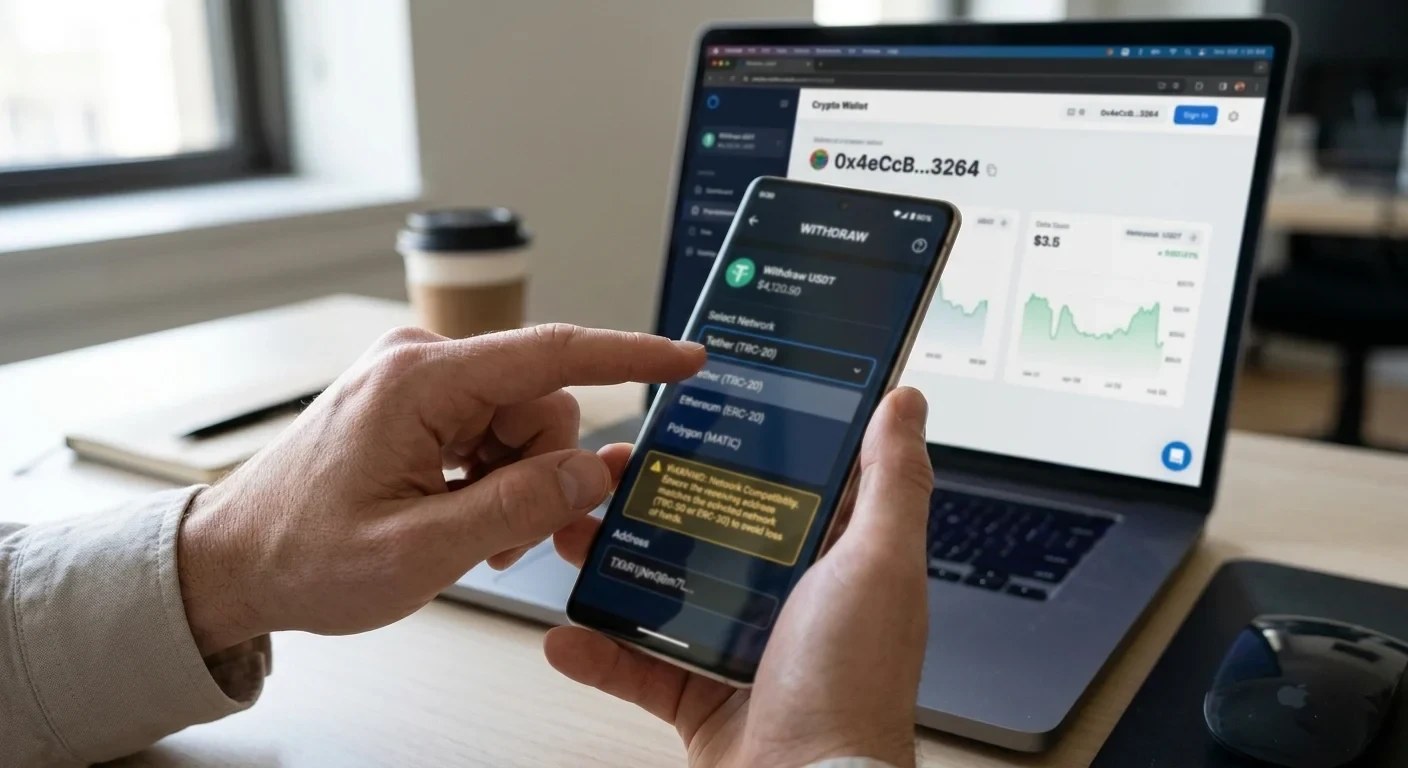
USDT on TRC-20 is the clearest choice for most Australian players. Fees under 50 cents. Confirmation in under 60 seconds. No price risk between when you cash out and when you sell back to AUD on your exchange. The catch is you must select TRC-20 both at the casino cashier and on your exchange. Selecting the wrong network sends your USDT into an irretrievable void. This is the single most critical step in the entire deposit process.
Bitcoin makes sense for large, infrequent withdrawals. For amounts above 1,000 Australian dollars, the one-percent network fee becomes negligible relative to the transaction size. For amounts below 500 dollars, USDT or LTC almost always makes more financial sense. Bitcoin’s main advantage is that it’s what most Australians already hold. If you have BTC sitting on CoinSpot and don’t want to convert to USDT first, using it saves the conversion step.
Ethereum sits in the middle. It’s universally accepted, confirms faster than Bitcoin, but costs more in network fees than USDT on TRC-20 or Litecoin. Ethereum makes sense when the casino doesn’t support USDT or when you’re already holding ETH and don’t want to trade it.
Step 3: Get Your Casino Deposit Address
Log into the casino. Navigate to the cashier or deposit section. Select the cryptocurrency you’re depositing. The casino displays a wallet address. This address is a long string of letters and numbers, usually 26 to 42 characters depending on the coin. Copy it exactly. Do not type it manually. One wrong character and the funds go to the wrong address permanently.
If you’re depositing USDT, the casino will ask you to select a network. The options typically include TRC-20, ERC-20, and BEP-20. Select TRC-20. This is the Tron network, and it’s the fastest and cheapest option. If you select ERC-20 by mistake, your deposit will still work but it’ll cost 5 to 20 dollars in fees and take longer to confirm. If you select the wrong network entirely and your exchange doesn’t support it, the funds disappear.
Some casinos display a QR code alongside the wallet address. If you’re depositing from a mobile wallet, scan the QR code. If you’re depositing from an exchange on desktop, copy the address as text. Either method works as long as the address and network match.
Step 4: Send Crypto from Your Exchange
Open CoinSpot or Swyftx. Navigate to the “Withdraw” or “Send” section. Select the coin you’re sending. Paste the casino’s deposit address into the recipient field. Double-check the first six characters and the last six characters of the address against what the casino displayed. This is your last chance to catch a mistake.
Select the network. If you’re sending USDT, you’ll see options for TRC-20, ERC-20, and possibly others. Select TRC-20 if that’s what the casino specified. If you’re sending Bitcoin, there’s usually only one Bitcoin network so no choice is needed. If you’re sending Ethereum, same thing.
Enter the amount you’re sending. CoinSpot and Swyftx both show an estimated network fee before you confirm. For USDT on TRC-20, the fee is typically under 50 cents. For Bitcoin, it ranges from 5 to 20 dollars depending on network congestion. Confirm the transaction. Your exchange will process the withdrawal, which takes anywhere from a few seconds to a few minutes depending on the exchange’s internal review process.
The transaction then moves to the blockchain. For USDT on TRC-20, confirmation happens in under 60 seconds. For Bitcoin, it can take anywhere from ten minutes to an hour depending on how congested the network is and what fee you paid. Higher fees get prioritised by miners. The casino credits your account once the blockchain confirms the transaction. Most casinos require one or two confirmations before the deposit becomes available to play.
Step 5: Verify the Network Before Sending
This step is so critical it gets its own section. Sending cryptocurrency to the wrong network is the most common way players lose funds permanently. The transaction goes through. The blockchain records it. But the casino never receives it because the address exists on a different network, and the funds sit in limbo forever.
USDT exists on multiple blockchains. TRC-20 is the Tron blockchain. ERC-20 is the Ethereum blockchain. BEP-20 is the Binance Smart Chain. These are three separate networks. A USDT address on TRC-20 looks almost identical to a USDT address on ERC-20. The only difference is the address format, which varies slightly but not enough to catch at a glance.
Here’s what TRC-20 and ERC-20 look like in practice. A TRC-20 address starts with a capital T. An ERC-20 address starts with 0x. If the casino gives you an address starting with T and you select ERC-20 on your exchange, the exchange will either reject the transaction or send it to an Ethereum address that doesn’t exist. Either way, the casino never receives it.
Before clicking confirm on your exchange, check three things. One: the coin matches. If you’re sending USDT, make sure USDT is selected on both the casino and the exchange. Two: the network matches. If the casino specified TRC-20, make sure TRC-20 is selected on the exchange. Three: the address matches. Copy the casino’s address, paste it into the exchange, and visually verify the first six and last six characters. If all three match, you’re clear to send.
If you’re unsure which network the casino is using, send a test transaction first. Deposit the minimum amount, wait for it to confirm, then send the rest. The test costs you one extra transaction fee, but it proves the route works before you commit a larger amount.
What happens if I send USDT to the wrong network?
The funds are usually lost permanently. Cryptocurrency transactions are irreversible. If you send USDT on the ERC-20 network to an address expecting TRC-20, the transaction completes on Ethereum but the casino never receives it because they’re monitoring the Tron blockchain. Some casinos offer a recovery service where they manually retrieve cross-chain deposits for a fee, typically 50 to 100 dollars. Most don’t. The safest approach is to verify the network twice before sending.
How long do Bitcoin casino withdrawals take in Australia?
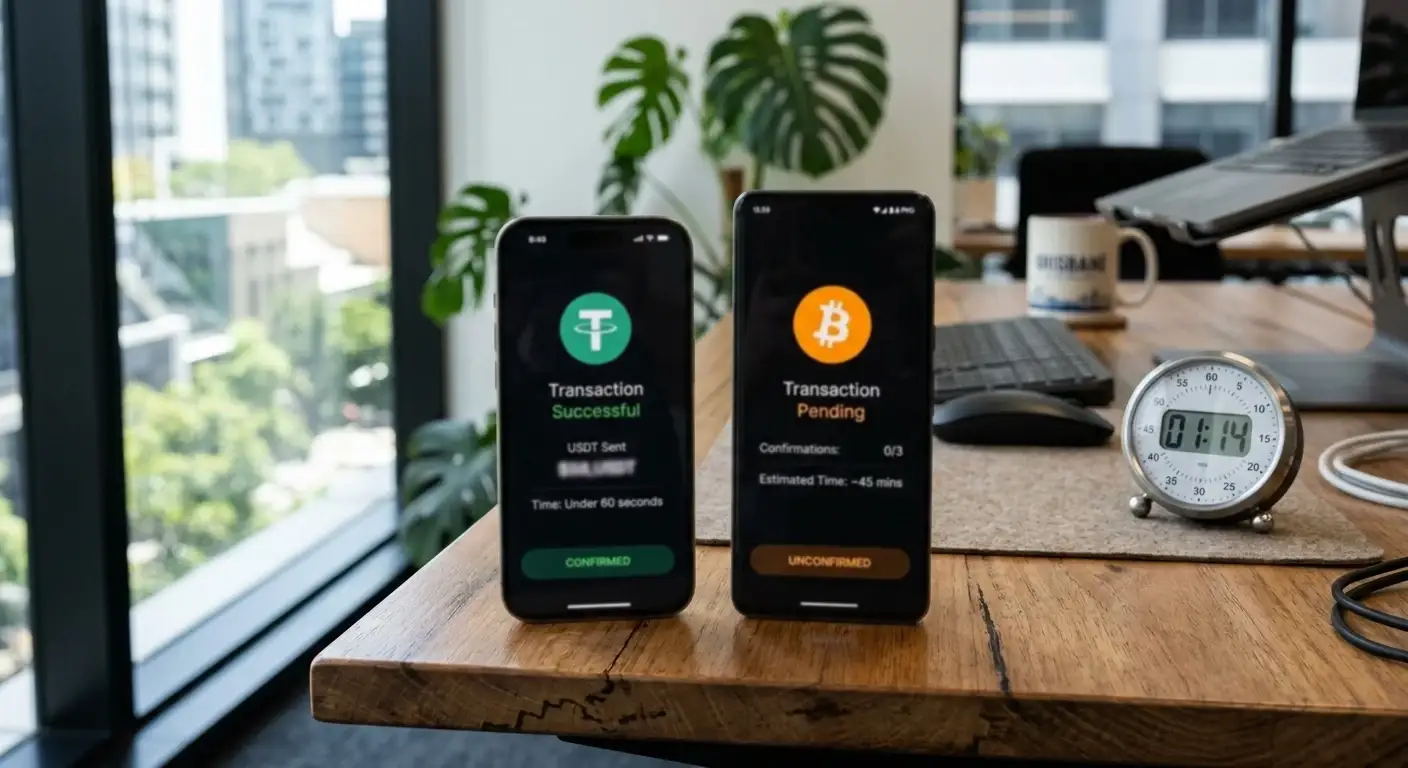
Most crypto casino withdrawals clear in under an hour, split between casino processing and blockchain confirmation. Casino processing ranges from under five minutes at automated casinos like ThunderPick to 30 to 60 minutes at sites with manual review queues. Blockchain confirmation depends on the coin: USDT on TRC-20 confirms in under five minutes, Bitcoin takes ten to 60 minutes, Ethereum takes ten to 30 minutes. Total time for a Bitcoin withdrawal typically lands between 20 and 90 minutes.
Which Cryptocurrency Should You Use for Pokies?
The default answer for most Australian players is USDT on the TRC-20 network. It’s the fastest stablecoin option with the lowest fees. Confirmation happens in under 60 seconds. Network fees sit below 50 cents. Price doesn’t move between deposit and withdrawal because USDT is pegged to the US dollar. You deposit 300 dollars equivalent, you withdraw 300 dollars equivalent, no exchange-rate risk.
Bitcoin makes sense in two scenarios. One: you’re depositing or withdrawing a large amount, typically above 1,000 Australian dollars. At that scale, Bitcoin’s five-to-20-dollar network fee becomes negligible as a percentage of the transaction. Two: you already hold Bitcoin on your exchange and don’t want to convert it to USDT first. The conversion costs time and a small trading fee, so if you’re sitting on BTC anyway, just use it.
Volatility is the hidden cost of using Bitcoin for pokies. Deposit 500 dollars worth of Bitcoin on Monday. Play through the week. Withdraw on Friday. Bitcoin drops 15 percent during that time. Your 500-dollar deposit is now worth 425 dollars when you sell it back to AUD. The casino didn’t take it. The blockchain didn’t take it. The market took it. Stablecoins eliminate that risk entirely.
Ethereum occupies the middle ground. Faster than Bitcoin, slower than USDT on TRC-20. More expensive than TRC-20, cheaper than ERC-20. Universally accepted. If the casino doesn’t support USDT or if you’re already holding ETH, it’s a solid fallback. But it’s rarely the optimal choice when USDT on TRC-20 is available.
Litecoin is underrated. Two-to-five-minute confirmation, fees under 20 cents, medium volatility. It’s faster and cheaper than Bitcoin but less widely held by Australian players, which means an extra conversion step. If your exchange charges low fees and you’re optimising for speed without stablecoin stability, LTC works.
Solana is the fastest option where accepted. Sub-30-second confirmation, ten-cent fees. The catch is fewer casinos support it. ThunderPick does. Most others don’t. If speed is the priority and the casino accepts SOL, it’s the clear winner. If the casino doesn’t list it, you’re back to USDT or Bitcoin.
Real-world scenario: depositing 300 Australian dollars. With USDT on TRC-20, you pay under 50 cents in fees and wait under 60 seconds for confirmation. With Bitcoin, you pay five to ten dollars in fees and wait ten to 60 minutes. With Ethereum, you pay three to 15 dollars and wait three to ten minutes. The USDT route saves time and money unless you’re already holding Bitcoin and don’t want to convert.
Real-world scenario: withdrawing 3,000 Australian dollars. With Bitcoin, you pay roughly 20 dollars in fees, which is 0.67 percent of the withdrawal. With USDT on TRC-20, you still pay under 50 cents, which is 0.02 percent. At large amounts, the percentage difference shrinks but USDT still wins on cost. Bitcoin’s advantage at scale is acceptance: every casino takes it, whereas some smaller operators don’t support USDT yet.
The price-risk scenario: you deposit 500 dollars worth of Bitcoin. It drops 20 percent before you withdraw. You now have 400 dollars worth of Bitcoin. You didn’t lose money gambling. You lost it holding a volatile asset. Stablecoins remove that variable. USDT pegged to the dollar means 500 dollars in is 500 dollars out, regardless of how long you hold it in the casino.
Which cryptocurrency is best for playing pokies — Bitcoin or USDT?
USDT on the TRC-20 network is better for most players. It confirms in under 60 seconds, costs under 50 cents in fees, and holds stable value so you don’t lose money to price swings. Bitcoin works for large withdrawals above 1,000 dollars where the higher fee becomes negligible, or when you already hold BTC and don’t want to convert. For deposits under 500 dollars, USDT is faster and cheaper.
Bitcoin Pokies Game Types and Providers
Crypto casinos stock the same slot titles and table games Australians recognise from land-based venues and offshore fiat sites. The difference is the cashier, not the content. Pragmatic Play, Play’n GO, BGaming, Hacksaw Gaming, Nolimit City, Endorphina, and NetEnt appear across most platforms. RTPs sit between 94 and 97 percent for well-known titles, typically higher than physical pokies in pubs and clubs.
Provably fair games are crypto-native. Traditional pokies run on random number generators certified by third-party testing labs. You trust the lab’s audit. Provably fair games use cryptographic hashing so players can verify each result themselves. The casino publishes a seed before the round, you provide your own seed, the game hashes them together, and the outcome is deterministic. After the round, you can recompute the hash and confirm the result wasn’t manipulated. Crash games, dice, and Plinko typically use provably fair mechanics. Standard video pokies usually don’t.
| Game Type | What It Is | Best For |
|---|---|---|
| Video Pokies | 5-reel slots with bonus features, free spins, multipliers | Most players, widest variety |
| Megaways Pokies | Dynamic reel structure offering up to 100,000-plus ways to win | High-volatility sessions with big win potential |
| Jackpot Pokies | Progressive or fixed jackpots that build across play | Players chasing a large single win |
| Bonus Buy Pokies | Purchase the bonus round directly, skipping the base game | Instant action without base game grind |
| Classic Slots | Traditional 3-reel slots with straightforward mechanics | Casual play and lower complexity |
| Live Dealer Tables | Human dealers streamed live for blackjack, roulette, baccarat | Authentic casino experience from browser |
| RNG Table Games | Digital blackjack, roulette, baccarat with faster gameplay | Quick table game sessions |
| Crash Games | Multiplier rises until it crashes, cash out before it does | Fast-paced, short-session play |
| Instant Win | Scratchies, Plinko, dice, similar instant-win formats | Very short sessions with simple mechanics |
Live dealer tables at crypto casinos run on the same Evolution Gaming and Pragmatic Play Live infrastructure as fiat casinos. The croupier deals real cards in a real studio. The only difference is you funded the account with Bitcoin instead of a Visa card. Stakes range from one dollar to several thousand per hand depending on the table. High-roller rooms with 10,000-dollar-plus maximums exist but typically require account approval.
Megaways slots dominate the high-volatility category. The mechanic was developed by Big Time Gaming and licensed to dozens of other studios. Each spin generates a random number of symbols per reel, creating anywhere from hundreds to hundreds of thousands of ways to win. Bonanza, Extra Chilli, and Gonzo’s Quest Megaways are the most-played titles in Australia. Variance is extreme. Long dry spells punctuated by occasional large hits.
Bonus buy slots let you purchase the free spins feature for a fixed multiple of your bet, typically 50 to 100 times. Want to skip the base game and jump straight to free spins? Pay 50 dollars, get the feature. It’s a time trade-off. You burn through bankroll faster, but you also hit features more frequently. Australian players gravitate toward bonus buy because it compresses the session. Land-based pokies in pubs don’t offer this, so it’s a crypto-casino-specific draw.
Are Bitcoin pokies rigged or provably fair?
Standard video pokies at crypto casinos use the same random number generators as fiat casinos, certified by labs like eCOGRA, iTech Labs, or GLI. The casino can’t manipulate individual spins. Provably fair games go further: they use cryptographic hashing so you can verify each result yourself after the round. Both systems are legitimate. Provably fair is transparent, RNG is audited by third parties. Either way, the house edge is built into the game’s maths, not rigged spins.
Crypto Casino Bonuses and Wagering Requirements
Welcome bonuses at Bitcoin casinos range from 100 percent to 740 percent deposit matches, with wagering requirements between 30 and 500 times. The headline percentage is marketing. The wagering requirement is the real cost. A 200 percent bonus with 40 times wagering requires 80 times your deposit in total bets before you can withdraw bonus winnings. At a 96 percent RTP, you’ll lose roughly four percent of that wagered amount, which works out to 3.2 times your deposit just to clear the bonus.
Crypto bonuses are not inherently better than fiat bonuses. The industry claim is that crypto deposits cost casinos less to process because there are no card scheme fees and no chargeback risk, so operators pass the savings to players. Some do. Others just stick a bigger number on the same underlying terms. A 300 percent crypto bonus with 50 times wagering is worse than a 100 percent fiat bonus with 30 times wagering. You’d need to wager 150 times your deposit to clear the crypto bonus versus 30 times for the fiat one.
The exceptions are no-wagering offers. Winz.io applies zero times wagering to all rewards. What you win is immediately withdrawable. The trade-off is smaller bonus amounts because the operator isn’t locking funds behind a high playthrough requirement. Most casinos don’t run true no-wagering models because the bonus abuse risk is too high. Players deposit, claim the bonus, make a single large bet, withdraw if they win, and move to the next casino.
Wagering contributions vary by game type. Pokies contribute 100 percent. Bet 100 dollars on slots, and 100 dollars counts toward clearing the wagering requirement. Table games like blackjack and roulette typically contribute ten to 20 percent. Bet 100 dollars on blackjack, and only ten to 20 dollars counts. Live dealer games often contribute zero percent. The casino does this because skilled blackjack players can get close to even money over enough hands, which would let them clear bonuses without significant risk.
Max bet limits apply during wagering. Most casinos cap the bet size per spin at five dollars or five percent of the bonus amount, whichever is lower. Bet above the limit and the casino voids the bonus and any winnings derived from it. This rule exists to stop players from making one 500-dollar spin, hitting a large win, and withdrawing without completing the playthrough. The casino wants you to spin hundreds of times at small stakes so the house edge grinds you down.
Bonus expiry is typically seven to 30 days. Claim the bonus, and you’ve got that window to meet the wagering requirement. Miss the deadline and the bonus plus any associated winnings vanish. For high-wagering bonuses like BC.Game’s 500 times first deposit, the time limit makes the offer nearly impossible to clear. Five hundred times wagering on a 1,000-dollar deposit means 500,000 dollars in total bets. At 30 days, that’s 16,666 dollars wagered per day, or roughly 1,111 dollars per hour if you play 15 hours a day. The maths doesn’t work unless you’re betting far above recreational stakes.
The practical approach: ignore the headline bonus percentage. Calculate total wagering required. Multiply by the house edge of the games you’ll play, typically four percent. That’s your expected cost to clear the bonus. If the expected cost exceeds the bonus value, skip it and deposit without the bonus. You’ll have lower theoretical losses and full control over your funds from the first spin.
Withdrawal Speeds at Bitcoin Casinos
Every crypto withdrawal has two stages. Stage one is casino processing, which is the time between submitting a withdrawal request and the casino broadcasting the transaction to the blockchain. Stage two is blockchain confirmation, which is determined by network conditions and which coin you’re using. The casino controls stage one. Nobody controls stage two.
Stage-one times vary wildly. Automated casinos like ThunderPick and Bets.io process withdrawals in under five to ten minutes. Manual-review casinos can take 30 minutes to several hours. The difference is whether a human checks the withdrawal or an algorithm approves it automatically. Automated systems are faster but stricter. They flag anything that doesn’t match the expected pattern and route it to manual review. Manual systems are slower but more flexible.
Stage-two times are blockchain-dependent. Bitcoin confirmation takes ten to 60 minutes. USDT on TRC-20 confirms in under five minutes. Ethereum takes ten to 30 minutes. Litecoin takes under ten minutes. Solana takes under two minutes. You can’t speed up stage two by choosing a better casino. You can only speed it up by choosing a faster coin.
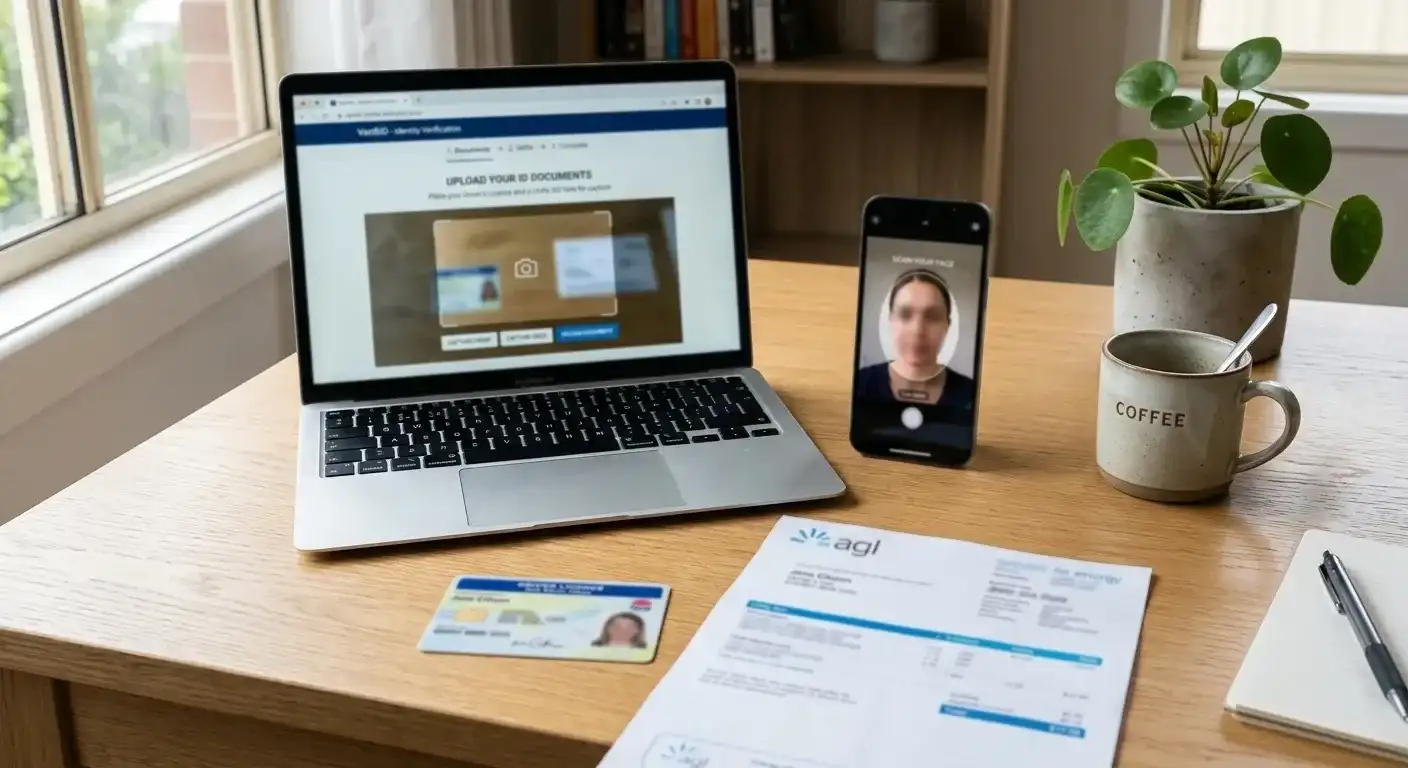
KYC delays sit outside both stages. Most casinos trigger identity verification at the first withdrawal above a threshold, typically 2,500 to 5,000 Australian dollars equivalent. Submit your ID, wait for approval, then the withdrawal processes. Approval takes anywhere from a few minutes to 24 hours depending on the casino’s workload. Some players report instant approval. Others wait a day. Upload clear photos of your ID and a recent utility bill at signup, even if the casino doesn’t ask yet. That way, when KYC triggers at withdrawal, the documents are already on file and approval happens faster.
Large withdrawals trigger additional checks regardless of whether you’ve cleared KYC before. Casinos flag withdrawals above 10,000 to 20,000 dollars for manual review even on verified accounts. The operator wants to confirm the win is legitimate and the gameplay didn’t violate terms. This adds hours to days depending on how backed up the compliance team is. If you’re withdrawing a large win, expect delays. It’s not necessarily a red flag. It’s standard procedure.
KYC and Identity Verification at Crypto Casinos
No-KYC marketing is everywhere. One-click signup, no documents required, anonymous play. The reality is more nuanced. Most crypto casinos defer KYC until the first withdrawal above an internal threshold. You can deposit and play without identity verification. You cannot withdraw significant amounts without it.
The threshold varies by operator. Metaspins and Lucky Block advertise no-KYC but don’t disclose the exact trigger point. Industry standard sits somewhere between 2,500 and 5,000 Australian dollars equivalent. Below that, withdrawals often clear without documents. Above that, the casino asks for ID. Some casinos set the threshold higher, 10,000 dollars or more. Others set it lower. The number isn’t advertised because casinos don’t want players to game it by withdrawing just under the limit repeatedly.
What KYC requires: government-issued photo ID, proof of address, and sometimes a selfie holding your ID. Driver’s license or passport for the ID. Utility bill, bank statement, or council rates notice for the address. The document must be recent, typically within the last three months. The casino’s compliance team reviews the documents, cross-checks the name and address against the account, and approves or rejects within hours to days.
Rejections happen for mismatched names, expired documents, unclear photos, and address discrepancies. If your casino account lists a nickname but your ID shows your legal name, that’s a mismatch. If your utility bill shows a different address than the one you registered with, that’s a discrepancy. Fix these before submitting. Upload clear, well-lit photos where all text is readable. Blurry phone shots get rejected and delay approval.
Anonymous play is a myth once KYC triggers. The casino now has your legal name, address, date of birth, and a photo of your face. The blockchain transaction history is public. Anyone with your wallet address can see every deposit and withdrawal you’ve made. True anonymity would require using a privacy coin like Monero, registering with fake details, staying under the KYC threshold, and withdrawing to a fresh wallet every time. That’s not practical for ongoing play, and most casinos don’t accept Monero anyway.
The advantage of crypto casinos isn’t anonymity. It’s pseudonymity until you hit the threshold, and speed after KYC clears. Fiat casinos ask for documents at signup. Crypto casinos defer it. That’s the difference. Once you’re verified, both types of casinos know who you are.
Do I need to verify my identity (KYC) at crypto casinos?
Eventually, yes. Most crypto casinos let you deposit and play without KYC, but they require identity verification at the first withdrawal above a threshold, typically between 2,500 and 5,000 Australian dollars equivalent. Below that, many withdrawals clear without documents. Above that, expect to submit a government-issued ID and proof of address. Casinos that advertise no-KYC usually mean no-KYC at signup, not no-KYC forever.
Safety and Licensing: Are Bitcoin Pokies Sites Trustworthy?
Every casino on this list operates under an offshore license, typically Curaçao or Anjouan. These jurisdictions issue licenses with minimal oversight compared to stricter regulators like the UK Gambling Commission or Malta Gaming Authority. A Curaçao license costs the operator a few thousand dollars per year and requires basic compliance checks, but the regulator doesn’t actively monitor gameplay, investigate complaints, or enforce consumer protection with the same rigour as Malta or the UKGC.
That doesn’t mean Curaçao-licensed casinos are scams by default. It means the burden of due diligence falls on the player. Check how long the operator has been running. 7Bit Casino has been live since 2014. BC.Game launched in 2017. Operators that have survived multiple years without exit-scamming have demonstrated some level of trustworthiness. New casinos with no operating history are higher risk.
SSL encryption is table stakes. Every casino reviewed here uses HTTPS and encrypts data between your browser and the server. That protects your login credentials and transaction details from interception. It doesn’t protect you if the operator itself is malicious. A scam casino can have perfect encryption and still refuse to pay out your winnings.
Game fairness comes in two forms. Traditional pokies and table games use random number generators tested by independent labs like eCOGRA, iTech Labs, or GLI. The lab certifies that the RNG produces statistically random results and that the casino can’t manipulate individual spins. Provably fair games use cryptographic hashing so you can verify results yourself. Both systems work. RNG is audited third-party trust. Provably fair is player-verifiable maths.
Responsible gambling tools vary by operator. Most casinos offer deposit limits, loss limits, session time limits, and self-exclusion. The quality of implementation ranges from robust to token. Some casinos let you set daily, weekly, or monthly limits that lock in immediately. Others let you increase limits with no cooling-off period, which defeats the purpose. Look for operators that enforce limits strictly and offer self-exclusion periods from one month to permanent.
Withdrawal disputes are the most common complaint. Player wins, requests withdrawal, casino delays or refuses payout citing bonus abuse, multiple accounts, or terms violation. Some disputes are legitimate: the player genuinely violated terms. Others are pretextual: the casino doesn’t want to pay and invents a reason. Offshore licenses provide limited recourse. You can escalate to the regulator, but Curaçao and Anjouan enforcement is weak. The practical approach is to avoid large deposits at unproven casinos and withdraw frequently rather than letting balances build.
Responsible Gambling Tools at Crypto Casinos
Deposit limits let you cap how much you can deposit per day, week, or month. Set a 500-dollar weekly limit, and the casino blocks further deposits once you hit that threshold. The feature works if the limit locks in immediately and increases require a cooling-off period, typically 24 to 72 hours. Some casinos let you raise limits instantly, which renders the tool useless.
Self-exclusion locks you out of your account for a set period. Options typically range from 24 hours to six months to permanent. Once activated, you can’t log in, deposit, or play until the period expires. Better operators enforce this across all brands they operate. Dama N.V., which runs Wild Tokyo and 7Bit Casino, should apply self-exclusion network-wide if requested. Smaller operators with single brands only exclude you from that one site.
BetStop is Australia’s national self-exclusion register for online wagering. It covers Australian-licensed sports betting and racing sites. It does not cover offshore casinos because those operators aren’t registered in Australia and therefore can’t be compelled to check the register. If you exclude yourself via BetStop, it won’t block access to any casino on this list. For offshore casinos, self-exclusion is per-site and voluntary.
Reality check features pop up at timed intervals to show how long you’ve been playing and how much you’ve won or lost. The notification interrupts the session and forces you to acknowledge the stats before continuing. The feature works if the intervals are short, 15 to 30 minutes. If the casino sets it to two hours or makes it optional, the tool loses effectiveness.
Loss limits cap how much you can lose in a session, day, week, or month. Lose 300 dollars in a day, and the casino locks you out until the next day. This is harder for casinos to implement correctly because “loss” isn’t always straightforward. If you deposit 500 dollars, run it up to 1,000, then drop back to 700, have you lost 300 or are you still up 200? Different casinos calculate it differently.
If gambling is causing harm, Australian support is available through Gambling Help Online at 1800 858 858, a free 24-hour counselling service. The service is government-funded, confidential, and staffed by counsellors trained in gambling issues. Problem gambling affects roughly one percent of Australian adults directly and many more through family and financial ripple effects. Self-exclusion and limits are tools. Counselling addresses the underlying pattern.
Crypto Casino Australia 2026 — Bitcoin, Ethereum, Solana, USDT
Content created by the «AussiePay» team