$1 Minimum Deposit Pokies Australia 2026: Where Your Dollar Goes and What It Buys
 Available in AU
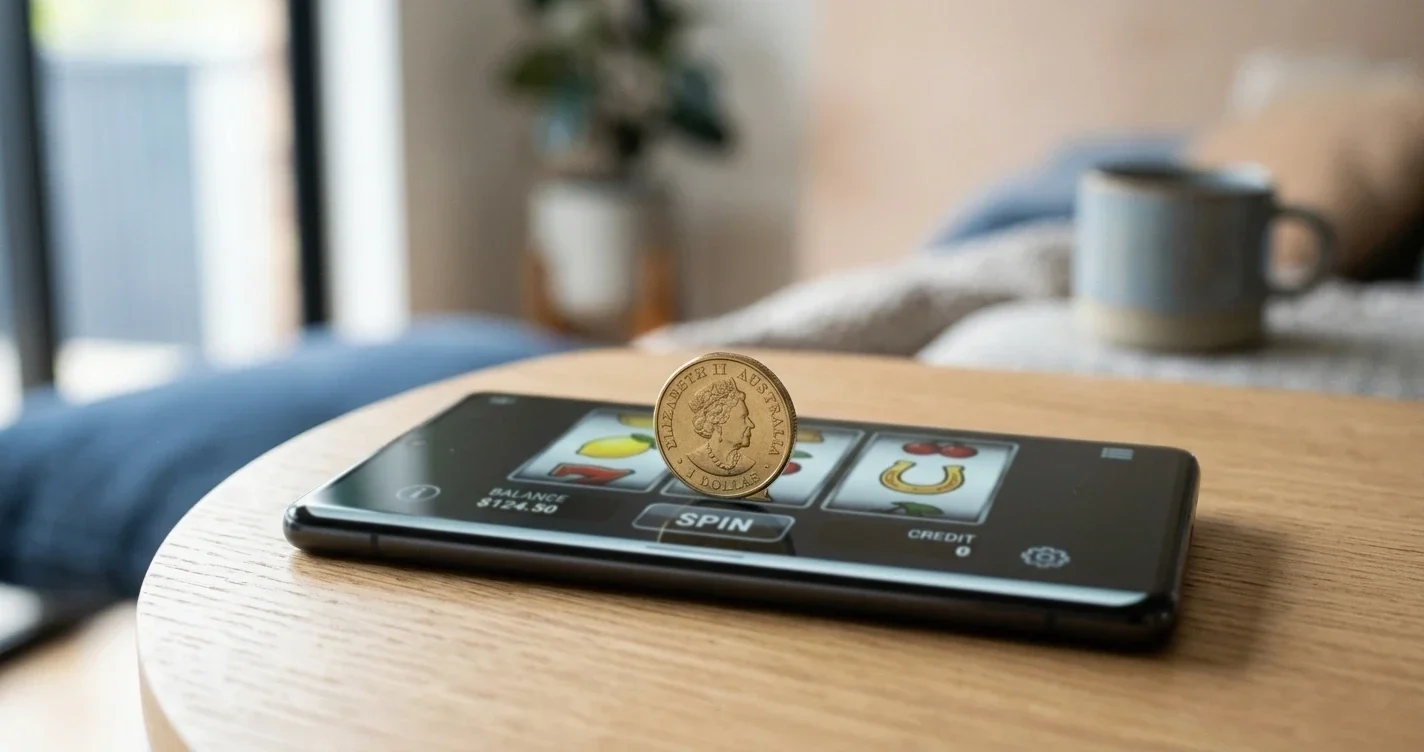
A dollar buys you a seat at the table, not a bankroll. That line separates myth from reality in Australia’s offshore pokies market. The $1 minimum deposit exists, but it works differently than the banners suggest. No Australian-licensed operator offers it—the Interactive Gambling Act killed that option in 2001. What remains are offshore sites licensed in Curaçao, Malta, or similar jurisdictions, each setting deposit minimums by payment method and promotional calendar. One dollar through PayID is rare. One dollar through a prepaid voucher or a promotional e-wallet window happens more often. The catch is universal: that dollar alone won’t carry you far, and the path from deposit to cashout is longer than the deposit itself.
This guide strips the gloss. You’ll see which eight offshore operators accept $1 deposits from Australians, through which payment methods, and what bonuses (if any) activate at that threshold. You’ll also see the math competitors skip: how many spins a $1 deposit actually buys at different bet levels, what withdrawal minimums trap micro-deposits, and why PayID—despite being instant and fee-free—rarely works at the $1 threshold. By the end, you’ll know whether a $1 deposit suits your goal (testing a platform, playing a handful of spins for entertainment) or whether you’re better off starting at $10 and skipping the friction.
What a $1 Minimum Deposit Actually Buys You in 2026
Think of it as a cover charge, not a playing stake. One Australian dollar at an offshore casino secures account access and unlocks the cashier, but the practical playing time depends entirely on the pokies you choose and the bets you place. A pokie with a $0.10 minimum bet gives you ten spins. A $0.20 minimum bet halves that to five. A $0.50 minimum bet delivers two spins and pocket change. Session length follows the same math. Ten spins on a high-volatility pokie can evaporate in under two minutes if no wins land. Five spins on a medium-volatility title might stretch to three minutes if small returns trickle in. Two spins leave you staring at the deposit screen again before you’ve seen the game’s features.
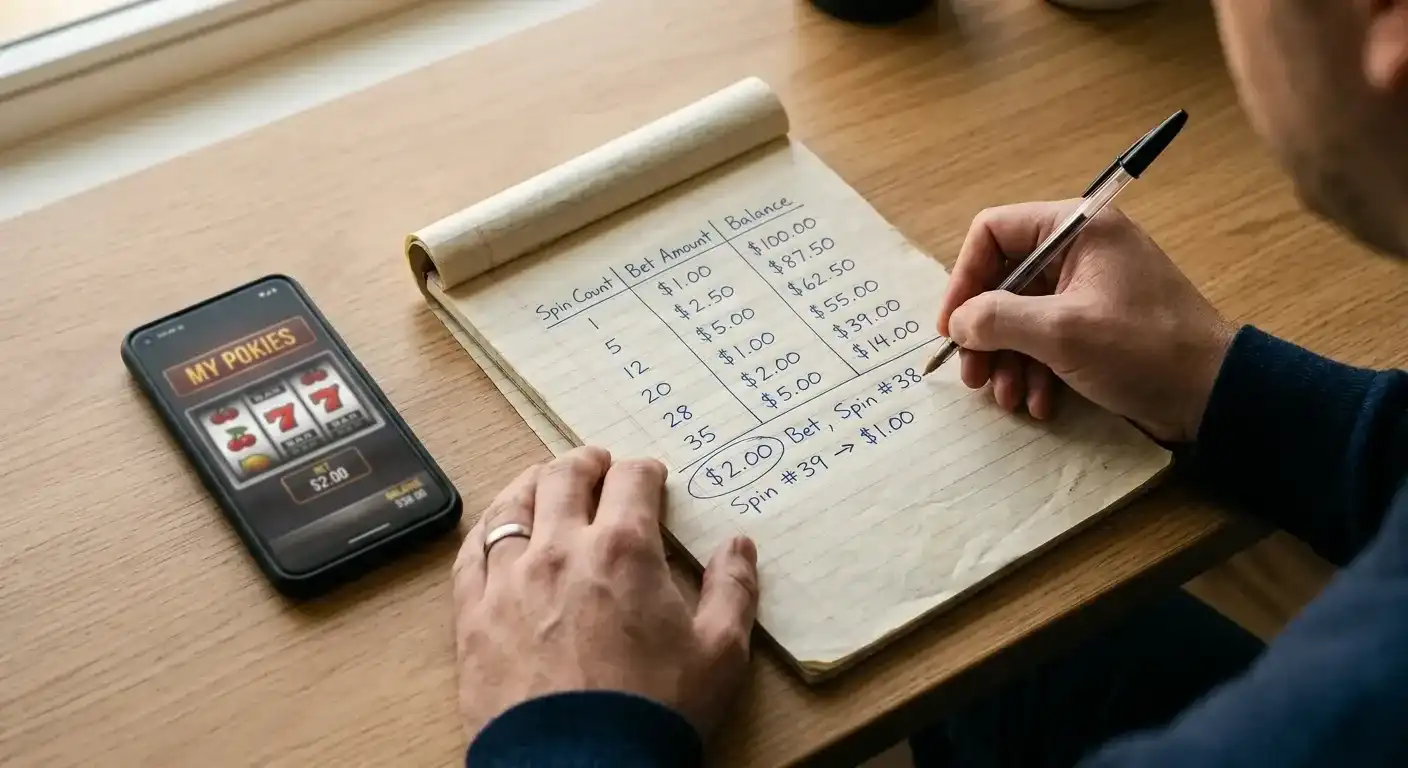
Volatility amplifies the disparity. Low-volatility pokies pay frequently but modestly—your $1 might limp through fifteen to twenty spins via reinvested mini-wins of $0.10 or $0.20. High-volatility pokies pay rarely but heavily—your $1 typically dies in three to six spins with nothing, or spikes to $5–$10 if a feature triggers early. Medium-volatility pokies sit in between: you’ll see enough small wins to stretch the session to eight or twelve spins, but big multipliers remain uncommon. The user testing a platform or sampling a new pokie benefits from low volatility and a $0.10 bet minimum. The user chasing a feature or a multiplier needs to accept that $1 on high volatility is a coin flip lasting ninety seconds.
RTP (return to player) percentages don’t save micro-deposits. A 96% RTP means the pokie returns $96 for every $100 wagered over millions of spins. On a $1 bankroll, the sample size is statistically irrelevant. You’re operating in pure variance territory. Two players can deposit $1 each, play the same pokie at the same bet, and one walks away with $8 after twelve spins while the other exits with nothing after four. RTP governs long-term averages, not short-term outcomes on tiny stakes. The practical implication: treat a $1 deposit as a disposable trial run, not a value proposition.
Bet sizing dictates everything. The table below models realistic spin counts at three common bet levels, assuming zero wins (worst case) and 50% reinvestment from small wins (typical case for low-medium volatility).
| Bet per Spin | Spins (No Wins) | Spins (50% Reinvest) | Session Length (Estimate) |
|---|---|---|---|
| $0.10 | 10 | 15–20 | 3–5 minutes |
| $0.20 | 5 | 8–12 | 2–3 minutes |
| $0.50 | 2 | 3–5 | 60–90 seconds |
The “50% reinvest” column assumes low-medium volatility pokies where minor wins occur every third or fourth spin, returning 20–50% of the bet. High-volatility pokies collapse closer to the “no wins” column because dead spins dominate. The session-length estimate includes load times, spin animations, and typical player pacing (three to five seconds per spin). A $1 deposit at $0.10 bets delivers a coffee-break diversion. At $0.50 bets, it delivers two clicks and a reload prompt.
How many pokies spins does a $1 deposit buy?
Between two and twenty, depending on bet size and whether wins land. At $0.10 per spin with no feature triggers, you get exactly ten spins. If small wins return 30–40% of your stake across those ten spins, reinvestment stretches the count to fifteen. At $0.50 per spin, you’re done in two spins unless a multiplier or scatter combo appears early. The median outcome for most players sits around eight to twelve spins at $0.20 bets on medium-volatility pokies, factoring in typical reinvestment from base-game wins. Anything beyond that requires either sustained luck or switching to $0.10 bets and low-volatility titles where hit frequency keeps the session alive longer.
The 8 Offshore Casinos That Accept $1 Deposits from Australians
True $1 minimums are promotional windows, not standing policy. Most offshore casinos serving Australian players set standard minimums at $10 or $20, then run occasional $1 deposit offers tied to specific payment methods, promo codes, or new-player onboarding. The eight operators below have either advertised $1 minimums or processed $1 deposits through niche methods (prepaid vouchers, certain e-wallets, promotional codes). None are licensed in Australia—they operate under Curaçao or similar offshore licenses, which means ACMA blocks their domains periodically and players have no legal recourse if disputes arise. That disclaimer out of the way, these are the brands with a track record of accepting AUD, processing PayID (in most cases), and honouring withdrawals to Australian bank accounts.

| Operator | License | Min Deposit | Payment Methods | Distinguishing Feature |
|---|---|---|---|---|
| Ricky Casino | Curaçao 8048/JAZ2020-013 | $20 standard, $1 promo | PayID, cards, crypto, Neosurf | PayID withdrawals under 24 hours |
| Neospin | Curaçao | $10 standard | PayID, crypto | Weekly pokies library updates |
| SkyCrown | Curaçao | $10–$30 by method | PayID, cards, crypto | Higher withdrawal limits for mid-rollers |
| Bizzo Casino | Curaçao | $10 standard, $1 promo | PayID, cards, crypto | Quick KYC verification |
| 7Bit Casino | Curaçao | $10 AUD, crypto lower | Crypto-primary (BTC, ETH, LTC) | Operational since 2014, crypto-native |
| Katsubet | Curaçao | $1 promo (code), $10 standard | PayID, crypto | 50 free spins for $1 with promo code |
| King Billy | Tobique + Curaçao | $10 standard | PayID, Skrill, Neteller, crypto | 6-tier loyalty program, 3–13% cashback |
| Playfina | Curaçao | $20 standard, $1 promo | PayID, cards, crypto | 740+ live dealer games |
The table shows what you’re actually dealing with. Only Katsubet runs a standing $1 promotional offer (requires entering a promo code at signup, unlocks 50 free spins on one specific pokie, 50x wagering applies). Ricky Casino and Bizzo Casino occasionally drop $1 promotional deposits via Neosurf vouchers or e-wallet campaigns, but these are not permanent features—they rotate in and out. The other five sit at $10 minimum or higher for standard methods. For most Australian players, the practical entry point is $10 via PayID, not $1.
Can you really deposit $1 at Australian online casinos?
Yes, but only at offshore operators with promotional offers or niche payment methods. No Australian-licensed casino offers online pokies—the Interactive Gambling Act prohibits it. The offshore casinos listed above operate under Curaçao or similar licenses and occasionally accept $1 deposits through promotional codes (Katsubet), prepaid vouchers (Neosurf at Ricky or Bizzo during promos), or certain e-wallets. The catch: $1 minimums are rare, usually time-limited, and often tied to bonus conditions that make the deposit less flexible than it sounds. The standard minimum across most offshore sites serving Australians is $10–$20 for PayID and card deposits. If you see a $1 offer, check the fine print—it’s likely promotional, method-specific, or attached to wagering requirements that negate the low-deposit advantage.
Ricky Casino—PayID Withdrawals Under 24 Hours
Dama N.V. operates this offshore site under Curaçao Master License 8048/JAZ2020-013. Launched in 2021, Ricky Casino built its Australian reputation on two pillars: an AUD-native ledger (no hidden FX spread on deposits or withdrawals) and fast PayID processing. The standard minimum deposit is $20 for most methods, including PayID, Visa, Mastercard, and POLi. The $1 entry point appears sporadically via Neosurf voucher promotions or e-wallet campaigns—these are not permanent fixtures, they rotate in and out of the promotional calendar. When active, the $1 deposit unlocks account access but rarely triggers the full welcome package, which spans ten deposits and caps at $7,500 plus 550 free spins.
The pokies library sits at 3,000+ titles from NetEnt, Pragmatic Play, Microgaming, and Evolution for live dealer tables. Withdrawal speed is the operational standout. PayID withdrawals processed during business hours typically land in Australian bank accounts within 12 to 24 hours, which outpaces most offshore competitors still running 24–48 hour manual review queues. Crypto withdrawals clear faster (under 12 hours for Bitcoin), but PayID dominates Australian traffic because it’s instant on the deposit side and faster than international bank wires on the withdrawal side. Verification (KYC) is mandatory before the first withdrawal—passport or driver’s license plus a recent utility bill. Processing time for verification documents averages 24 hours if submitted during weekday business hours. The casino has no withdrawal minimum listed in its terms, but players report practical thresholds around $20–$30 for PayID due to bank transfer overhead.
Neospin—Weekly Pokies Library Updates and $10 Entry
Curaçao-licensed, ownership details not publicly disclosed. Neospin targets the Australian market with a $10 standard minimum deposit across PayID, bank transfer, and crypto. No standing $1 promotional offer, but the platform distinguishes itself through aggressive game-library curation. New pokies from Pragmatic Play, NetEnt, and Push Gaming appear weekly, sometimes within days of global release. The welcome package scales to $10,000 plus 300 free spins across multiple deposits, with 40x wagering on the bonus amount and 50x on free-spin winnings. The high wagering load means most players skip the bonus and deposit without opting in.
The 5,000+ game count includes standard pokies, Megaways variants, and a growing live dealer section (Evolution Gaming and Pragmatic Live). PayID deposits clear in under 60 seconds. Withdrawals via PayID are processed within one to two hours during peak times, extending to four to six hours overnight or on weekends. Crypto withdrawals (Bitcoin, Ethereum, Litecoin) clear faster—typically under one hour. The minimum withdrawal is $50 AUD, which creates friction for micro-deposit players: depositing $10 and winning $40 leaves you $10 short of cashout eligibility unless you either keep playing or add another deposit. Verification is standard (ID plus proof of address), turnaround averages 12–24 hours.
SkyCrown—Higher Withdrawal Limits for Mid-Rollers
Another Curaçao licensee, SkyCrown sets deposit minimums by payment method: $10–$20 for PayID, $30 for cards (Visa, Mastercard), $20+ for crypto. No $1 promotional track. The casino positions itself slightly above the micro-deposit tier, aiming for players who start small but graduate to $50–$100 deposits once they settle on a platform. The 6,000+ game library includes nearly 40 live dealer tables (Evolution Gaming, Pragmatic Live, Ezugi), which is higher than most competitors in the low-deposit bracket. The welcome package structures across multiple deposits, capping around $4,000 plus 400 free spins depending on the active promotion.
Withdrawal limits separate SkyCrown from pure low-deposit casinos. Where many micro-deposit sites cap weekly withdrawals at $2,000–$3,000, SkyCrown allows up to $7,500 per week for verified accounts, scaling higher for VIP tiers. E-wallet and crypto withdrawals process in 0 to 1 hour. PayID withdrawals take 1 to 3 hours during business hours, extending to 6 to 12 hours overnight. Minimum withdrawal is $100 AUD, which is high for players starting at $10—realistic cashout path requires either sustained wins or additional deposits to cross the threshold. Verification is mandatory, processing time 24–48 hours. The higher withdrawal limits and live dealer depth make this a better fit for players testing the low end before scaling up, not for strict $1 bankroll experimenters.
Bizzo Casino—Quick KYC and Reliable AUD Payouts
Novatrix S.R.L. (Costa Rica) operates Bizzo under a Curaçao license issued in 2021. Standard minimum deposit is $10 across PayID, cards, and crypto. Occasional $1 promotional deposits appear, usually tied to e-wallet methods or seasonal campaigns—not a permanent feature. The welcome package spans four deposits, capping at $3,550 plus 175 free spins, with 40x wagering on bonus funds. Game count varies by source but typically exceeds 3,000 titles from mainstream providers (Pragmatic Play, NetEnt, BGaming, Red Tiger).
Verification speed is the operational edge. Bizzo processes KYC documents faster than most offshore competitors—player reports consistently cite 6 to 12 hour turnaround for ID and proof-of-address submission, compared to 24 to 48 hours elsewhere. That speed matters for micro-deposit players who want to test a withdrawal without waiting days for account approval. PayID deposits are instant. PayID withdrawals process in 12 to 24 hours post-verification. Minimum withdrawal is $50 AUD, which sits in the middle range—lower than SkyCrown’s $100 but higher than the $20–$30 informal thresholds at Ricky. The $10 entry point combined with quick KYC makes Bizzo a practical choice for players who want to deposit, play a session, and test a small cashout within 24 hours.
7Bit Casino—Crypto-Native Since 2014
Dama N.V. operates 7Bit under Curaçao licensing. Launched 2014, which makes it the oldest brand on this list by a comfortable margin. The longevity matters in an industry where most offshore operators fold, rebrand, or vanish within three years. 7Bit survived by focusing on cryptocurrency: Bitcoin, Ethereum, Litecoin, Tether, and several altcoins. Fiat options exist (cards, e-wallets) but are secondary. The minimum deposit is $10 AUD equivalent for fiat, lower for crypto depending on network fees—practically $5 to $10 worth of Bitcoin clears without issue, while smaller amounts get eaten by miner fees.
The welcome package scales to $10,800 AUD plus 350 free spins across four deposits, with 40x wagering. The 10,000+ game library is one of the largest among Australian-facing offshore casinos, covering pokies, table games, and live dealer. Crypto withdrawals are same-day (often under 12 hours). Fiat withdrawals (bank transfer, e-wallet) take 24 to 48 hours. Minimum withdrawal is $20 AUD or crypto equivalent. Verification is required for fiat withdrawals and crypto withdrawals above certain thresholds (typically $2,000–$3,000 cumulative). The 12-tier VIP program offers up to 20% cashback on losses, which is unusually high for offshore operators. For Australian players comfortable with crypto wallets, 7Bit delivers lower effective minimums (via crypto) and faster cashouts than PayID-only competitors. For players unfamiliar with crypto, the platform’s fiat options work but aren’t its strength.
Katsubet—True $1 Promo with 50 Free Spins
Curaçao-licensed, ownership details sparse in public records. Katsubet runs the clearest $1 promotional deposit on this list: enter promo code “1BET” during signup, deposit $1 via PayID or e-wallet, receive 50 free spins on a specific pokie (title rotates, currently locked to one game). The spins carry 50x wagering on winnings, and maximum cashout from the promotion is $50 AUD. Standard minimum deposit without the promo code is $10. The welcome package extends to $6,000 plus 100 free spins across multiple deposits, with 40x wagering.
The interface uses an anime-style visual theme (bright colours, stylized characters, Japanese design cues), which differentiates branding but doesn’t affect functionality. Game library size is mid-range (several thousand titles from Pragmatic Play, NetEnt, Microgaming). PayID and crypto are supported for deposits and withdrawals. Live chat support operates 24/7 and is consistently faster than email support (response time under five minutes for chat, 6 to 12 hours for email). Withdrawal minimum is $50 AUD. PayID withdrawals process in 1 to 3 hours post-verification. The $1 deposit promotion is the draw—if you’re testing whether a dollar gets you anywhere, this is the most explicit option. The 50x wagering on free-spin winnings means clearing the bonus requires $2,500 in wagers if you win $50 from the spins, which is steep but standard for no-risk promotions.
King Billy—Loyalty Program Built for Low-Rollers
Novatrix S.R.L. operates King Billy under dual licensing: Tobique Gaming Commission (Canadian First Nation regulator, e-Gaming License No. 0000002) and Curaçao (via Dama N.V. / Antillephone structure). Launched 2017. The dual-license setup is unusual for offshore casinos serving Australians—most carry only Curaçao. The Tobique license doesn’t change operational reality (still offshore, still outside Australian jurisdiction), but it adds a second regulatory layer that some players read as additional legitimacy.
Standard minimum deposit is $10 across PayID, Skrill, Neteller, and crypto. No $1 promotional track. The 5,000+ game library covers mainstream providers (NetEnt, Microgaming, Pragmatic Play, Evolution live dealer). The loyalty program is the standout feature. Six tiers: Citizen, Villager, Knight, Baron, Duke/Duchess, King/Queen. Weekly cashback scales from 3% (Citizen) to 13% (King/Queen) on net losses. King’s Coins are earned on every wager (1 coin per $10 wagered at lower tiers, higher ratios at VIP levels), and coins exchange for bonus cash at rates that improve with tier progression. For low-rollers depositing $10–$20 frequently, the weekly cashback and coin system deliver more tangible value than one-time welcome bonuses with 40x wagering. Withdrawal minimum is $20 AUD. PayID withdrawals process in 1 to 2 hours. Verification turnaround is 24 to 48 hours.
Playfina—740+ Live Dealer Games
Curaçao-licensed, ownership undisclosed. Playfina differentiates through live dealer depth: 740+ live tables from Evolution Gaming, Pragmatic Live, and Ezugi. That count is the highest among the eight operators on this list. If live blackjack, roulette, baccarat, or game shows (Deal or No Deal, Crazy Time) are priorities, Playfina’s live section is the main reason to choose it over competitors. The total game count exceeds 11,000 (pokies, table games, live dealer, instant-win games), which is also the highest on this list.
Standard minimum deposit is $20 for most methods, including PayID. Occasional $1 promotional deposits appear (method-specific, usually tied to e-wallets or prepaid vouchers), but these are not standing policy. The welcome package structures around $1,000 plus 100 free spins, though higher-value variants appear depending on the promotional calendar. PayID deposits are instant. Withdrawals via PayID take 1 to 3 hours during business hours, 6 to 12 hours overnight. Minimum withdrawal is $50 AUD. Verification is mandatory, processing time 24 to 48 hours. For players entering at $10–$20 who want the broadest live dealer selection and the highest raw game count, Playfina fits. For strict $1 deposit experimentation, the $20 standard minimum and $50 withdrawal floor create friction.
PayID, Crypto, and Cards—Which Payment Methods Work for $1 Deposits
PayID dominates the Australian deposit landscape because it’s instant, fee-free, and built into most bank apps. For $1 deposits, however, PayID rarely works. The reason is operational overhead: banks processing PayID transfers incur backend costs even on small amounts, and offshore casinos pass those costs along by setting minimums at $10 or $20. The exception is promotional windows where the casino absorbs the overhead to onboard new players. Crypto can drop lower—Bitcoin or Litecoin deposits of $5 to $10 equivalent clear without casino-side minimums, but network fees eat a chunk. A $1 Bitcoin transfer might cost $0.50 in miner fees during high network congestion, leaving $0.50 to play with. Cards (Visa, Mastercard) face similar minimums to PayID ($10–$20) plus the added friction that Australian banks increasingly block gambling transactions at the card-network level.
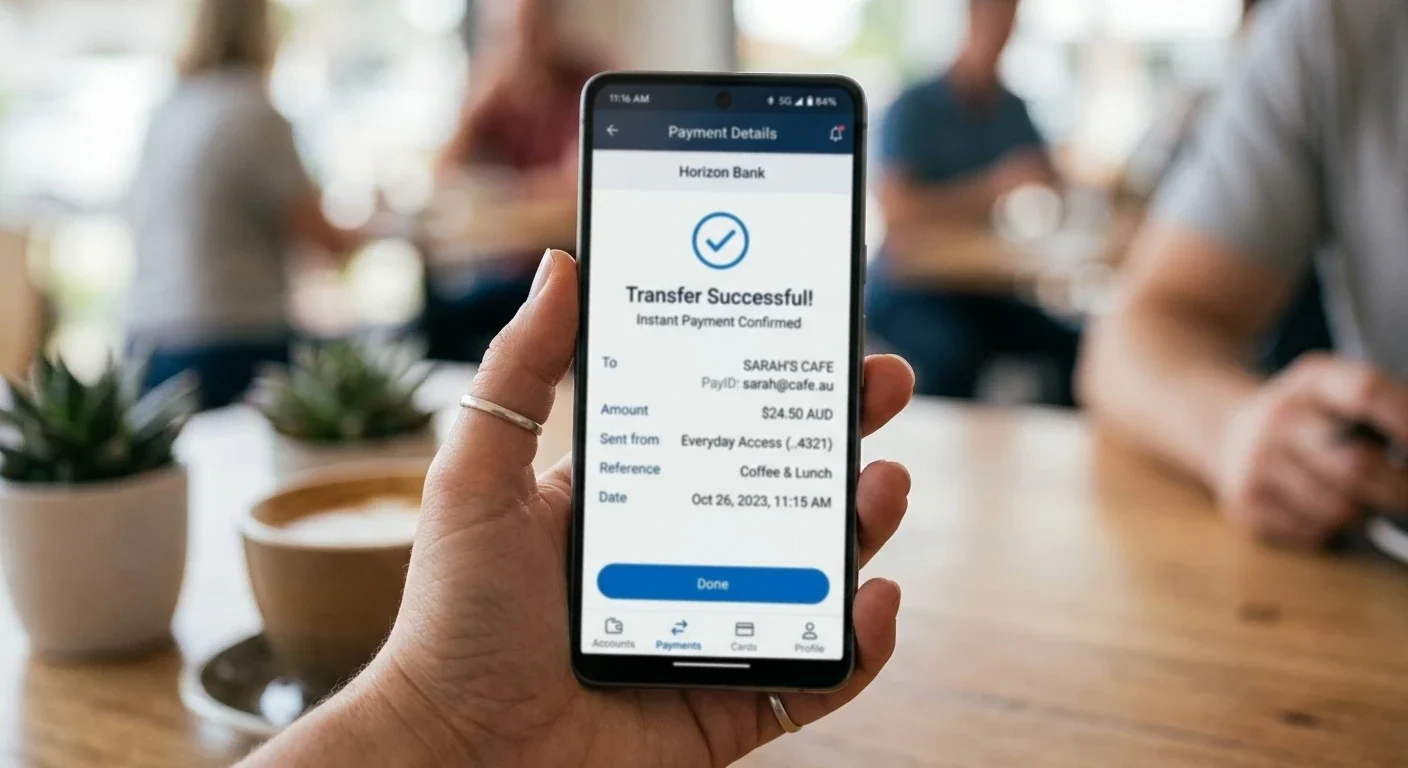
The table below compares practical net costs for a $1 deposit across the four main methods Australian players use.
| Payment Method | True Minimum | Fee (Typical) | Speed | Net Cost for $1 Deposit |
|---|---|---|---|---|
| PayID | $10–$20 standard, $1 promo rare | $0 | Instant | $1 (if promo active) |
| Crypto (BTC) | $5–$10 equivalent | $0.20–$0.80 network fee | 10–30 min | $0.20–$0.80 (high congestion eats 50%+) |
| Crypto (LTC) | $5–$10 equivalent | $0.05–$0.20 network fee | 5–15 min | $0.80–$0.95 |
| Cards (Visa/MC) | $10–$20 | $0 (sometimes 2–3% FX if offshore processor) | Instant | Blocked by many AU banks |
| E-wallets (Skrill, Neteller) | $10 standard, $1 promo occasional | $0–1% | Instant | $1 (if promo active) |
PayID is the cleanest option when it works, but it works at $1 only during promotional windows. Litecoin offers the lowest effective fee for small deposits, but you need a crypto wallet and basic understanding of blockchain transfers. Bitcoin’s fees are too high for $1 deposits during peak network times. Cards are blocked by enough Australian banks that they’re unreliable. E-wallets (Skrill, Neteller) occasionally unlock $1 promotional deposits but aren’t common among Australian players—most prefer PayID’s simplicity.
PayID for $1 Deposits (Reality Check)
PayID itself has no minimum—you can send $0.01 if you want. The casino sets the minimum based on transaction cost overhead. Processing a PayID transfer costs the operator a small fixed fee (estimates vary, but $0.10 to $0.30 per transaction is typical), plus compliance and fraud-monitoring overhead. A $1 deposit means the casino nets $0.70 to $0.90 after fees. A $10 deposit nets $9.70 to $9.90. From a business perspective, the $1 deposit is marginal unless it’s part of a customer acquisition campaign. That’s why most offshore operators set PayID minimums at $10 or $20 for standard accounts and drop to $1 only during promotional pushes tied to new-player onboarding or seasonal campaigns.
Is PayID available for $1 deposits at Australian casinos?
Technically yes, practically rare. PayID works at offshore casinos serving Australians, but the $1 minimum is promotional, not standard. Most operators set PayID minimums at $10 or $20 to cover transaction overhead. The exceptions are time-limited offers (new player promos, seasonal campaigns) where the casino absorbs the cost to acquire customers. If you see a $1 PayID deposit advertised, check the terms—it’s likely tied to a promo code, restricted to first deposits, or attached to bonus conditions that limit flexibility. For ongoing deposits, the standard PayID minimum is $10 across the offshore operators listed in this guide.
Crypto: Lower Minimums but Network Fees Eat Your Dollar
Bitcoin, Litecoin, Ethereum, and Tether are accepted at most crypto-friendly offshore casinos (7Bit, Katsubet, SkyCrown, others). The casino-side minimum for crypto deposits is often lower than fiat—$5 or $10 AUD equivalent is common, and some casinos accept amounts as low as $1 equivalent. The problem is network fees. When you send Bitcoin from your wallet to the casino’s address, miners process the transaction and charge a fee based on network congestion. During low-traffic periods, a Bitcoin transaction might cost $0.20. During high traffic (weekends, market volatility), fees spike to $0.50, $1.00, even $2.00 for priority confirmation.
Sending $1 of Bitcoin when network fees are $0.50 means the casino receives $0.50. You’ve paid $1 total ($1 deposit + $0 fee from your perspective, but the $0.50 fee is deducted from the transfer amount), and your playing balance is $0.50. That’s not a casino scam—it’s how blockchain transactions work. Litecoin and Tether (TRC-20) have lower fees, typically $0.05 to $0.20, which makes them more viable for micro-deposits. Ethereum fees are high (often $1–$5), so Ethereum is not practical for $1 deposits. If you’re comfortable with crypto and already hold a wallet, Litecoin or Tether deliver the lowest net cost for deposits under $10. If you’re new to crypto, the learning curve (setting up a wallet, buying coins, understanding fees) outweighs any benefit of a $1 deposit—stick with PayID at $10.
Cards and E-Wallets
Visa and Mastercard are accepted at most offshore casinos, but Australian banks block gambling transactions at increasing rates. Commonwealth Bank, Westpac, ANZ, and NAB all have policies that flag or decline offshore gambling merchants. The block rate isn’t 100%—some cards go through, others don’t—but it’s high enough that cards are no longer reliable for Australian players. When a card does work, the minimum deposit is typically $10 or $20, same as PayID. Some offshore processors add a 2–3% FX spread even when you’re depositing AUD, which is hidden in the exchange rate rather than shown as a line-item fee.
E-wallets (Skrill, Neteller, PayPal) are less common among Australian players because PayID handles the same use case (instant bank transfer) without requiring a third-party account. Skrill and Neteller are accepted at offshore casinos and occasionally unlock $1 promotional deposits. PayPal is rare at offshore casinos because PayPal’s terms prohibit gambling transactions in many jurisdictions. If you already have a Skrill or Neteller account, they work reliably, but most Australians don’t set them up solely for casino deposits—PayID is simpler.
Bonuses at the $1 Threshold—What You Can Claim and the Wagering Trap
Most welcome bonuses don’t activate at $1. The typical structure: “100% match up to $500, minimum deposit $10 or $20.” Depositing $1 either excludes you from the bonus entirely or triggers a scaled-down version (e.g., five free spins instead of fifty). The exception is purpose-built $1 promotions like Katsubet’s 50 free spins for $1 with promo code, which are designed as loss-leaders to get you through the door. Even when a $1 deposit unlocks a bonus, the wagering requirement makes it largely symbolic. Wagering requirements—typically 40x to 50x the bonus amount—mean you must wager $40 to $50 before you can withdraw any winnings from a $1 bonus. That’s 40 to 50 spins at $1 per spin, or 200 to 500 spins at $0.10 per spin, all meeting the contribution rules (pokies usually count 100%, table games 10% or excluded).

The math: deposit $1, receive $1 bonus, face 40x wagering. You need to wager $40 total. If you bet $0.10 per spin, that’s 400 spins. If your $1 deposit bought you ten spins initially, you’re 390 spins short. The only way to clear the wagering is to either win enough to fund the remaining spins or deposit more money. The bonus has effectively locked you into grinding or adding funds. This is why experienced players at micro-deposit levels often skip the bonus and play with the raw $1 deposit instead—it’s over faster, but at least withdrawal restrictions don’t apply.
Free spins are the more practical bonus at the $1 level. Katsubet’s 50 free spins for $1 gives you 50 spins at a preset bet (usually $0.10 to $0.20 per spin) on one specific pokie. You don’t choose the game, and you can’t change the bet size. The spins play out, any winnings land in your bonus balance, and 50x wagering applies to those winnings. If you win $5 from the 50 spins, you need to wager $250 before you can cash out. If you win $50 (the promotional maximum at Katsubet), you need to wager $2,500. The $2,500 wagering requirement on a $50 win is steep, but it’s better than starting from zero with a $1 deposit and no bonus. Most players don’t clear the wagering—they either lose the bonus balance during playthrough or hit the maximum cashout cap and stop.
The “free” in free spins is in quotes for a reason. Nothing here is a gift. The casino gives you 50 spins because the statistical return on that promotion is negative for the player and profitable for the house. The combination of game RTP (usually 94–96% on free-spin-eligible pokies), wagering requirements (50x), and maximum cashout caps ($50 typical) ensures that most players either lose the bonus during playthrough or cash out a small amount that costs the casino less than the customer acquisition value. If you’re depositing $1 to test a platform, the free spins extend your playing time and give you a chance to see features without additional funding. If you’re depositing $1 expecting to turn it into withdrawable cash via a bonus, the math doesn’t support that outcome.
What bonuses can you claim with a $1 deposit in Australia?
Typically none, unless the casino runs a specific $1 promotional offer. Most welcome bonuses require $10 or $20 minimum deposits. The exceptions are promotional free spins (Katsubet’s 50 free spins for $1) or scaled-down bonus structures where a $1 deposit qualifies you for a tiny match (e.g., $1 match) or a handful of spins. Even when a bonus activates, wagering requirements (40x to 50x) make it nearly impossible to clear on a $1 bankroll without additional deposits. The practical outcome: most $1 deposits are played without bonuses, either because the player opts out or because the deposit amount doesn’t meet the bonus threshold.
The Withdrawal Minimum Trap—Why $1 In Doesn’t Mean $1 Out
Deposit $1, win $50, try to withdraw, and hit a wall: minimum withdrawal $100. This is the most common trap in micro-deposit casinos. The casino accepts your $1 deposit to get you through the door, but the withdrawal minimum is set high enough that small wins can’t be cashed out. You’re stuck with three options: keep playing and risk losing the $50, deposit more money to reach the $100 threshold, or walk away and forfeit the winnings. The third option isn’t really an option—nobody forfeits $50. The first two options mean the casino has successfully converted your $1 deposit into either extended play (where the house edge grinds you down) or an additional deposit (which was the goal all along).
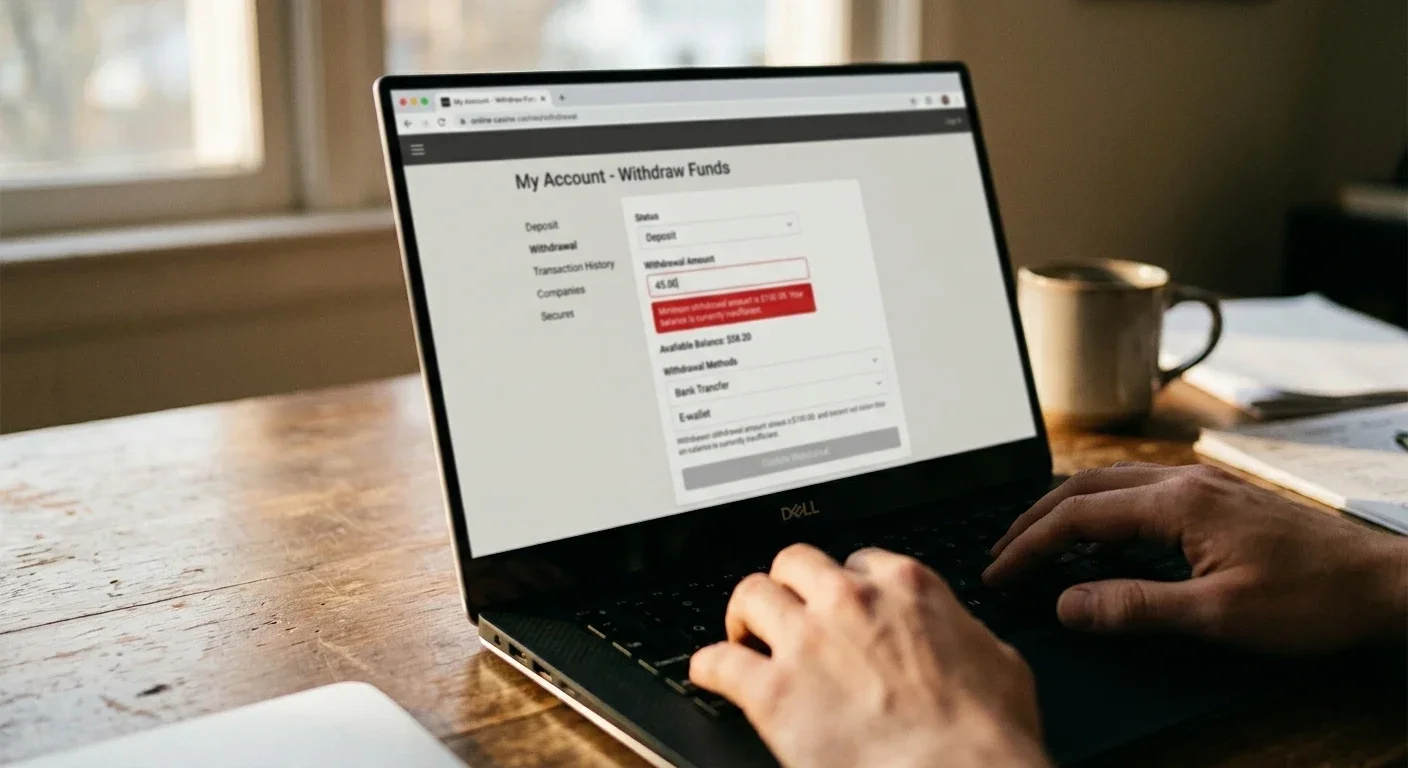
Withdrawal minimums vary by operator and payment method. PayID and bank transfer minimums tend to be lower ($20–$50 AUD) because the processing cost is flat per transaction. Crypto minimums can be lower ($10–$20 equivalent) but fluctuate with network fees. E-wallet minimums sit in the middle ($30–$50). The table below shows withdrawal minimums for the eight operators on this list, plus estimated verification time (first withdrawal only).
| Operator | Withdrawal Minimum | Verification Time | Practical Cashout Path from $1 Deposit |
|---|---|---|---|
| Ricky Casino | $20–$30 (informal) | 24 hours | Win $20+, verify, withdraw via PayID |
| Neospin | $50 | 12–24 hours | Win $50+, verify, withdraw via PayID |
| SkyCrown | $100 | 24–48 hours | Win $100+, or deposit $10–$20 more and cash combined balance |
| Bizzo Casino | $50 | 6–12 hours | Win $50+, verify (fastest KYC), withdraw via PayID |
| 7Bit Casino | $20 AUD or crypto equivalent | 24 hours (fiat), optional (crypto under threshold) | Win $20+, withdraw via crypto or PayID |
| Katsubet | $50 | 24 hours | Win $50+ from free spins, clear 50x wagering, cash max $50 |
| King Billy | $20 | 24–48 hours | Win $20+, verify, withdraw via PayID |
| Playfina | $50 | 24–48 hours | Win $50+, verify, withdraw via PayID |
The practical cashout path from a $1 deposit is narrow. At operators with $20 minimums (Ricky, 7Bit, King Billy), you need to turn $1 into $20—a 20x return. That’s achievable on a lucky run with high-volatility pokies but statistically rare. At operators with $50 minimums (Neospin, Bizzo, Katsubet, Playfina), you need a 50x return. At SkyCrown with a $100 minimum, you need a 100x return. For most players, the realistic outcome is: deposit $1, play until it’s gone, then either walk away or deposit $10–$20 to get a proper session. The $1 deposit functions as a trial, not a cashout-viable bankroll.
Verification (KYC) adds time but not cost. Every offshore casino requires identity verification before the first withdrawal: passport or driver’s license, plus proof of address (utility bill, bank statement, government letter dated within three months). Some casinos request a selfie holding your ID. Verification processing time ranges from 6 hours (Bizzo) to 48 hours (SkyCrown, Playfina). Until verification clears, your withdrawal request sits in pending status. The documents themselves are free to provide, but the delay can frustrate players expecting instant cashouts. If you’re testing a platform with a $1 deposit, submit KYC documents immediately after signup—that way, if you do hit a win worth withdrawing, verification is already done.
What is the minimum withdrawal amount at $1 deposit casinos?
Between $20 and $100 AUD depending on the operator and payment method. Ricky Casino, 7Bit, and King Billy have the lowest thresholds ($20–$30), which makes them the most practical for players starting at $1. Neospin, Bizzo, Katsubet, and Playfina sit at $50. SkyCrown is $100. The withdrawal minimum is independent of your deposit amount—the casino doesn’t care that you started with $1, it applies the same minimum to all withdrawals. For micro-deposit players, the trap is turning $1 into a withdrawable balance before the session ends. Unless you hit a feature or multiplier early, the $1 evaporates long before reaching the withdrawal floor.
Mobile Pokies on a $1 Bankroll
Every operator on this list runs a mobile-optimised site or dedicated app. For $1 deposits, mobile access matters because micro-deposit sessions are short—three to ten minutes on average—and mobile lets you play during downtime (commute, lunch break, waiting room) without sitting at a desktop. The experience differs by platform. Browser-based mobile sites (Ricky, Neospin, SkyCrown, Bizzo, 7Bit, Katsubet, King Billy, Playfina) load directly in Safari or Chrome without downloads. Navigation is stripped to essentials: cashier, game lobby, search. Pokies load slower than desktop due to mobile asset optimisation, but playability is identical. Dedicated apps (uncommon among offshore operators serving Australians) offer slightly faster load times and offline game demos but require App Store or APK installation, which adds friction.
For a $1 deposit, mobile’s main advantage is convenience, not functionality. You’re spending one dollar for a few minutes of entertainment, not a marathon session—mobile makes that feasible without firing up a computer. PayID deposits work identically on mobile (open your bank app, confirm the PayID transfer, return to the casino app or browser). The downside: mobile screens make it harder to read paytables, track bonus features, or manage bet sizes on complex pokies. If you’re testing a new pokie for the first time on a $1 deposit, desktop gives you better visibility. If you’re killing five minutes on a familiar pokie, mobile is fine.
Why Australia Has No Licensed $1 Deposit Pokies—The Offshore Reality
The Interactive Gambling Act 2001 prohibits Australian-licensed operators from offering online casino games or pokies to Australian residents. That ban covers all states and territories. The Australian Communications and Media Authority (ACMA) enforces the IGA by maintaining a Register of Licensed Interactive Gambling Providers, but that register covers only sports betting and racing wagering—not casinos. No state or territory issues licenses for online pokies. Land-based casinos operate under state licenses (Crown Melbourne, The Star Sydney, etc.), but their licenses don’t extend to online casino games. The offshore casinos in this guide (Ricky, Neospin, SkyCrown, Bizzo, 7Bit, Katsubet, King Billy, Playfina) all operate under Curaçao licenses or similar offshore frameworks, which are not recognised or regulated by any Australian authority.
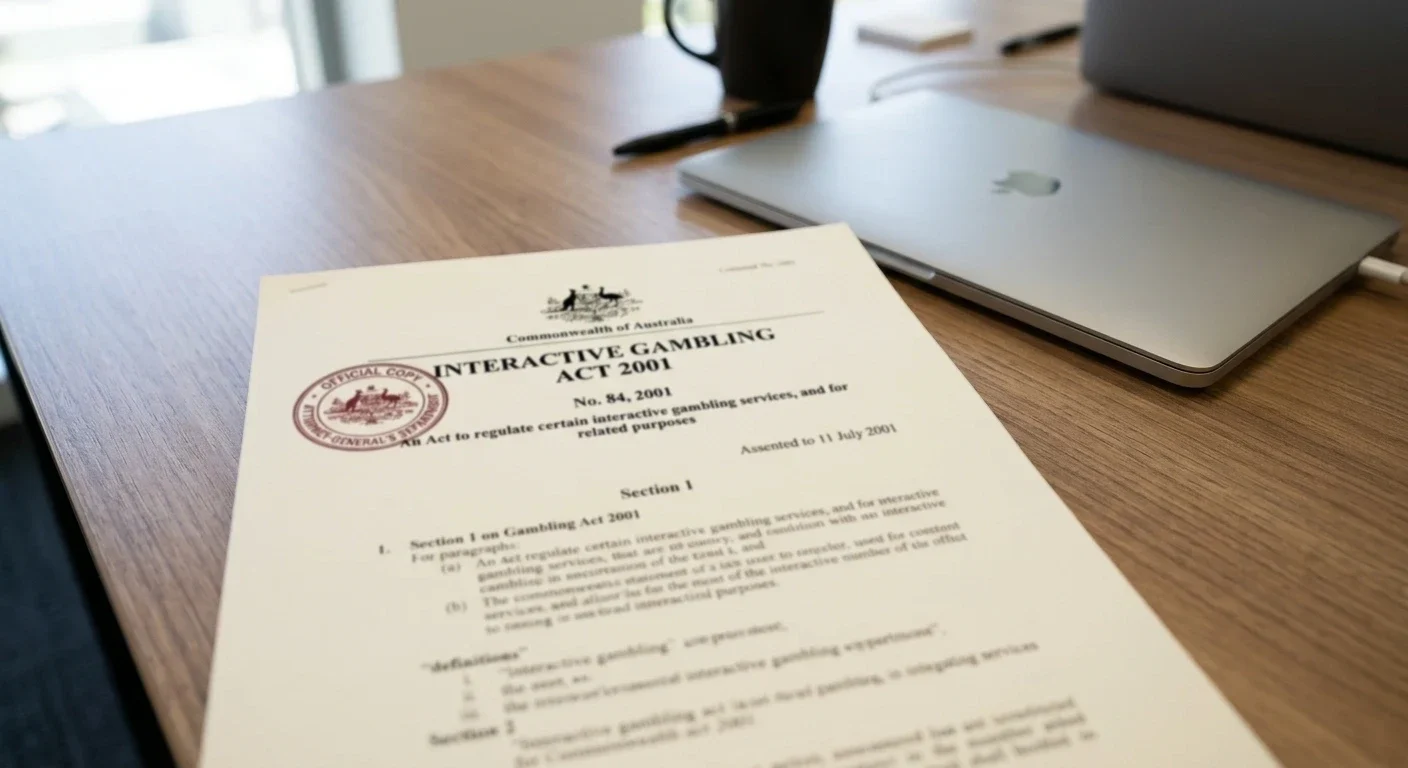
The legal grey zone works like this: the IGA targets operators, not individual players. An Australian depositing at an offshore casino isn’t breaking the law—the offshore operator is the one violating the Act by offering services to Australians. In practice, ACMA doesn’t prosecute individual players. It focuses on blocking offshore domains (hence the mirror sites and frequent URL changes among offshore casinos) and disrupting payment processing. Banks are encouraged to block gambling transactions to offshore merchants, which is why card deposits increasingly fail. The lack of local licensing means players have no recourse if an offshore casino refuses to pay. Australian courts won’t hear disputes against Curaçao-licensed operators. Your bank won’t reverse a deposit as a fraudulent charge if the transaction was authorised. Complaints to ACMA or state regulators go nowhere because those bodies don’t oversee offshore operators.
The trade-off: offshore casinos offer $1 to $10 deposit thresholds, instant PayID deposits, and game libraries that Australian land-based casinos can’t match. The cost is zero consumer protection and no legal recourse. If an offshore casino slow-pays a withdrawal, alters terms without notice, or closes your account and confiscates your balance, your only leverage is public complaints (forums, review sites) and hoping the casino’s reputation matters enough for them to resolve it. For most players on $1 to $20 deposits, the risk is low in dollar terms—you’re risking $1 to $20, not $1,000. For players scaling up to $100+ deposits or $500+ withdrawals, the lack of recourse becomes material. Treat offshore casinos as unregulated businesses with no safety net, then choose only operators with multi-year track records of paying Australian players (Ricky, 7Bit, King Billy fit that profile; newer brands are higher-risk).
Are $1 deposit casinos legal in Australia?
No Australian-licensed $1 deposit casino exists—the Interactive Gambling Act prohibits online casinos entirely. The $1 deposit options are offshore operators (Curaçao-licensed or similar) that accept Australian players despite the IGA. The legal grey zone: the Act targets operators, not players, so an Australian depositing at an offshore site isn’t criminally liable. However, players have no legal recourse if the offshore casino refuses to pay, alters terms, or confiscates funds. ACMA blocks offshore domains and pressures banks to decline gambling transactions, but it doesn’t prosecute individual players. If you deposit $1 at an offshore casino, you’re operating outside Australian consumer protection laws.
How to Start Playing—Deposit, Verify, and First Spin
The process takes five to ten minutes for first-time users, two minutes for returning players. Step one: create an account. The registration form asks for email, password, username, and basic details (date of birth, country, sometimes mobile number). No credit check, no identity verification at this stage—that comes before the first withdrawal. Step two: navigate to the cashier and select your deposit method. For PayID, the casino displays its PayID identifier (usually a phone number or email). Open your bank app, create a new PayID payment, enter the identifier, confirm the amount ($1 or $10 depending on the offer), and authorise the transfer. The deposit clears in under 60 seconds.
Step three: claim the bonus if applicable. Some casinos auto-apply bonuses, others require you to enter a promo code (Katsubet’s “1BET” for the $1 free spins offer) or tick an opt-in box during deposit. If you’re unsure whether the bonus is worth the wagering requirement, skip it—you can always deposit again later with the bonus. Step four: choose a pokie. Beginners should filter by low volatility and $0.10 minimum bet. High-volatility pokies burn through micro-deposits too fast to evaluate the game. Low-volatility pokies pay frequently enough to stretch the session. Pragmatic Play’s Wolf Gold, NetEnt’s Starburst, and similar medium-low volatility titles are safer starting points than high-volatility Megaways or bonus-buy pokies.
Step five: set your bet and spin. Most pokies default to $0.20 or $0.50 per spin—manually lower it to $0.10 if your balance is $1 or $10. Watch your balance, not the timer. A $1 deposit at $0.10 per spin gives you ten spins; if no wins land, you’re done in three minutes. If small wins trickle in, you might stretch to fifteen or twenty spins over five minutes. Don’t chase losses by raising your bet—that drains the balance faster. If you’re testing the platform (withdrawal speed, customer service, game selection), submit KYC documents immediately after your first deposit. That way, if you win enough to cash out, verification is already in progress.
Responsible Gambling on a Micro Budget
A dollar isn’t a lot to lose, but the behaviour pattern around micro-deposits can become problematic if it turns into habitual redepositing. The psychological hook: $1 feels inconsequential, so depositing ten times in a row ($10 total) doesn’t register the same way as depositing $10 once. The outcome is identical—you’ve spent $10—but the framing tricks the brain. Offshore casinos lean into this by making deposits frictionless (instant PayID, no cooldown between deposits) while adding friction to withdrawals (minimums, verification delays, processing times). The structure nudges you toward depositing repeatedly rather than cashing out small wins.
Set a loss limit before you start. If your entertainment budget for the week is $10, decide whether you’re depositing $10 once or $1 ten times—but don’t exceed $10 either way. Most offshore casinos offer deposit limits in the account settings (daily, weekly, monthly caps). Use them. A $10 weekly deposit limit prevents impulse redeposits after a losing session. Self-exclusion is also available: you can lock your account for 24 hours, seven days, or permanently. If you’re depositing $1 multiple times a day, that’s a signal to pause. The low dollar amount doesn’t mean the behaviour is harmless.
BetStop is Australia’s national self-exclusion register for online wagering. It covers sports betting and racing wagering licensed in Australia, but it does not cover offshore casinos because those operators aren’t under ACMA jurisdiction. If you self-exclude via BetStop, offshore casinos won’t see it—they’re not connected to the register. For offshore casinos, self-exclusion is per-site (you contact the casino’s support and request account closure), and it’s not enforceable across multiple operators. If you close your account at Ricky Casino, Neospin and SkyCrown won’t know—you can still sign up there. The fragmented nature of offshore gambling makes self-exclusion less effective than it is for Australian-licensed sports betting.
Gambling Help Online (1800 858 858) offers free 24/7 support for Australians experiencing gambling harm. The service covers all gambling types, including offshore online casinos. If $1 deposits are turning into $50 or $100 weekly losses and you’re regretting it afterward, call. The conversation is confidential, and counselors can help you set boundaries or refer you to in-person services if needed. Micro-deposit gambling looks low-risk because each transaction is small, but small transactions add up quickly. If you’re tracking your spending and staying within your entertainment budget, $1 deposits are harmless. If you’ve lost track of how many $1 deposits you’ve made this week, it’s time to review.
Final Word
A dollar gets you through the door. Whether it’s worth the walk depends on your goal. Testing a new platform before committing real money? A $1 deposit does that. Sampling a few spins on a pokie you’ve never tried? Also valid. Expecting to turn $1 into withdrawable cash? The withdrawal minimums, wagering requirements, and raw mathematics say no. Most $1 deposits are gone within five to ten spins. The rare session that stretches to $20 or $50 still faces withdrawal floors that require either sustained luck or additional deposits to cross. The $1 deposit is a trial, not an investment. Treat it accordingly, and you’ll avoid the traps (redepositing to reach withdrawal thresholds, chasing bonuses with 50x wagering, burning through $10 in $1 increments without noticing). Ignore the frame, and you’ll spend more than you intended before realising the $1 wasn’t the real cost.
Min Deposit Casinos Australia 2026 — $1, $5, $10, $20 Guide
Content created by the «AussiePay» team