E-Wallet Pokies Australia 2026 — Which Wallets Work and Which Don't
 Available in AU
Australian banks treat gambling transactions like suspicious parcels. Credit cards get declined, debit cards trigger fraud alerts, and the occasional “please confirm you weren’t drunk” phone call follows. E-wallets fix that because the casino never sees your actual bank details—you load funds into the wallet, the casino sees a digital token, and your Big Four bank stays none the wiser.
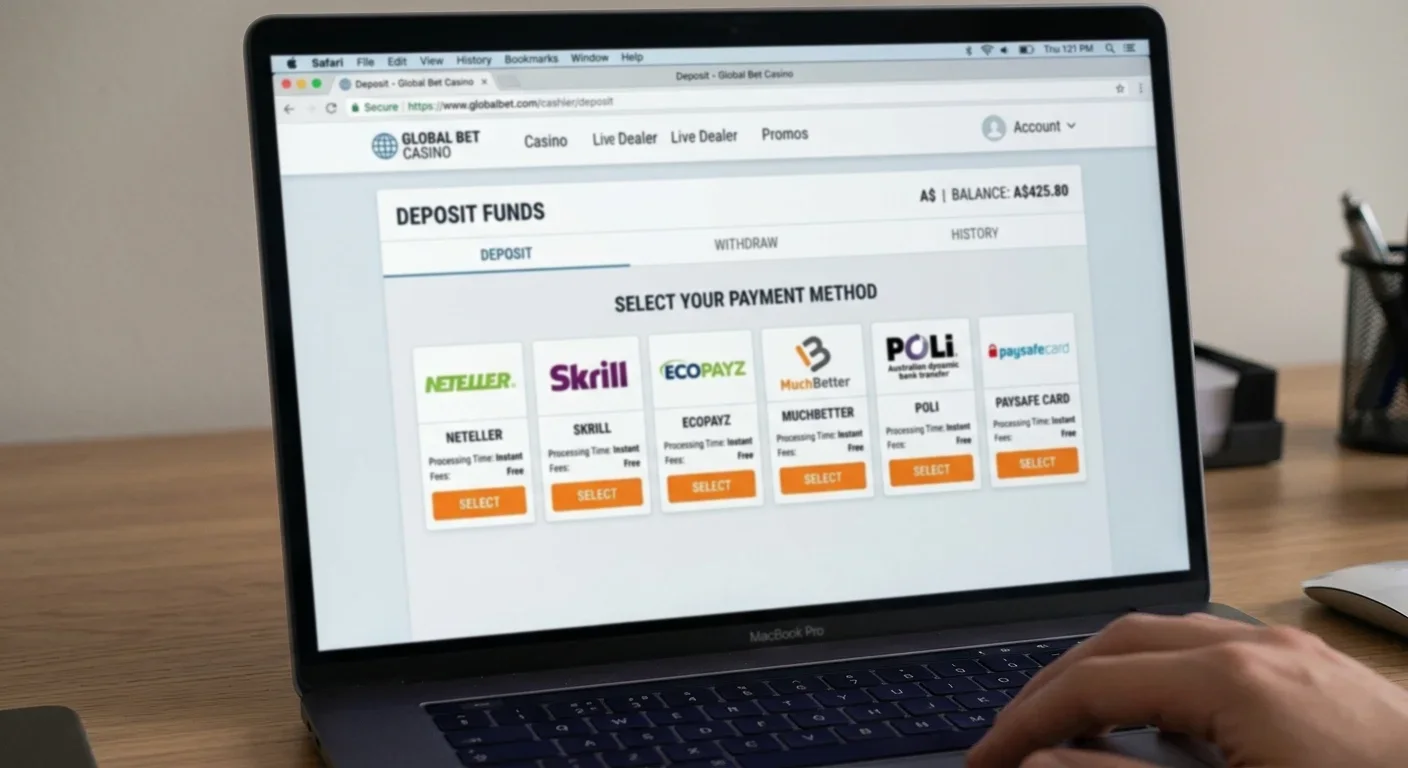
But the e-wallet landscape that worked in 2020 doesn’t exist in 2026. Skrill and Neteller withdrew when Paysafe pulled out of the Australian gambling market in 2022-2023. PayPal never operated here. ecoPayz exited in 2024. What’s left is narrower, faster-moving, and dominated by three names most ranking sites barely mention: MiFinity, Jeton, and eZeeWallet.
This guide names which e-wallets actually work for Australian pokies players, which offshore casinos accept them, and how they compare to PayID—the dominant payment method that’s often faster and always free. No fluff. Bank-block workarounds, transparent fees, and honest speed tests.

E-Wallets That Actually Work for Australian Pokies in 2026
Most guides still list Skrill and Neteller as “available” for Australian players. They’re not. Both appear in casino cashiers, both let you create accounts, but transactions fail at the processor level because Paysafe—the parent company—exited the AU gambling market in 2022-2023. You’ll waste twenty minutes setting up an account only to watch your deposit bounce.
Three e-wallets genuinely work in 2026: MiFinity, Jeton, and eZeeWallet. They replaced the Paysafe duopoly after the exit, they process AUD without conversion spreads when you set your base currency correctly, and offshore casinos serving Australian players accept them widely. Here’s what each offers and where they fail.
MiFinity — Most Widely Accepted for AU Players
MiFinity Limited operates out of the UK with FCA authorisation and Malta FSA registration. Founded in Ireland in 2002, it spent two decades as a niche player before becoming the de facto Skrill replacement after Paysafe’s exit. As of 2026, roughly 90% of AU-facing offshore casinos list MiFinity in their cashiers, and most of them actually process it correctly.
You can fund a MiFinity account via Australian bank transfer, credit or debit card, or crypto. The app works on iOS and Android with biometric security. AUD is supported as a base currency, which eliminates the 1.5–3% conversion spread that eats your balance if you’re forced to hold USD and convert on every transaction. Deposit fees range from zero to 1.8% depending on your funding method—bank transfers are free, cards cost 1.8%. Withdrawal fees sit at $1–4 AUD or 1.8%, depending on your account tier and whether you’re cashing out to a card or bank.
Average withdrawal processing time at verified casinos is 1–2 hours once the casino approves the payout. That’s slower than PayID’s 12-minute average but faster than the 3–7 days you’d wait for a traditional bank wire. MiFinity’s tiered account system offers reduced fees at higher levels, but you’ll need to process significant volume to qualify. For most recreational players, the base tier is fine.
The main catch: some casinos exclude MiFinity deposits from welcome bonus eligibility or apply higher minimum deposit thresholds. Always check the bonus terms before depositing if you’re chasing a match offer. MiFinity works, it’s reliable, but it’s not universally “bonus-friendly.”
Jeton — Low Fees and Broad Casino Support
Jeton operates under a Dominica Offshore Banking Act license issued in 2016. The regulatory pedigree is lighter than MiFinity’s UK FCA authorisation, but Jeton has built a reputation for low fees and smooth casino integration. It’s the second-most accepted e-wallet at AU-facing casinos in 2026, showing up at roughly 85–90% of reputable offshore operators.
Jeton supports AUD accounts. Funding options include bank transfer, card, and e-vouchers. The mobile app runs on iOS and Android. Deposits to casinos are typically free. Withdrawal fees are either free or capped at a flat $0–20 AUD depending on your payout method, which beats MiFinity’s percentage-based fees for larger cashouts. The 2.5% foreign exchange fee applies if you hold one currency and transact in another, but setting your base to AUD avoids that entirely.
Withdrawal processing at casinos averages 1–3 hours. Maximum transaction limits vary by account verification level, ranging from $15,000 to $150,000 AUD per transfer for fully verified accounts. Jeton also offers a VIP program with reduced fees for high-volume users, though the threshold is steep enough that most players won’t hit it.
The downside: slightly less widespread than MiFinity, and some smaller casinos still treat it as second-tier in their bonus policies. But for players focused on fee minimization, Jeton often edges out MiFinity by a few dollars per transaction.
eZeeWallet — Australia-Focused Alternative
eZeeWallet emerged in 2024–2026 as a purpose-built replacement for the Paysafe wallets, with a specific focus on Australian and New Zealand players. It integrates directly with PayID, POLi, and Neosurf—local payment rails that Skrill and Neteller never bothered to support. That makes funding faster and keeps everything in AUD from end to end.
The regulatory details are less prominently disclosed than MiFinity or Jeton, but eZeeWallet operates as an e-money institution under relevant regulations. AUD is the native currency. Deposits to casinos are typically fee-free. Withdrawal fees vary by casino but are often zero for Australian players using local bank transfers. Average casino withdrawal time is 1–2 hours once approved.
Casino acceptance sits at roughly 60–70% of AU-facing offshore operators as of 2026, which trails MiFinity and Jeton but grows monthly. The main advantage is the local integration—if you’re already using PayID to move money between your bank and the e-wallet, eZeeWallet reduces friction. The main disadvantage is narrower acceptance, meaning you’ll occasionally hit a casino that takes MiFinity and Jeton but not eZeeWallet.
For players who value local-rail integration and want to avoid international e-wallet complexity, eZeeWallet is the cleanest option. For players who want maximum casino compatibility, MiFinity or Jeton are safer bets.
What Happened to Skrill and Neteller
Skrill and Neteller were the workhorses of online gambling payments for two decades. Both are owned by Paysafe Group, both are FCA-authorised UK e-money institutions, and both still exist. They just don’t work for Australian gambling transactions anymore.
Paysafe withdrew from the Australian gambling market in 2022-2023. The company never issued a public statement, but the pattern is clear: Skrill and Neteller accounts created by Australian residents still function for non-gambling purposes, but any attempt to deposit at an online casino fails at the processor level. The casino cashier shows Skrill and Neteller as available options—many offshore operators haven’t updated their payment menus—but the transaction bounces with a generic error message or sits in “pending” limbo forever.
Why the exit? Regulatory complexity, risk management, and the Interactive Gambling Act’s prohibition on AU-licensed online casinos likely made the Australian market unattractive relative to the compliance burden. Paysafe chose to cut the line rather than navigate the grey-market offshore casino landscape that serves Australian players.
The practical upshot: if you’re an Australian pokies player, Skrill and Neteller are dead ends in 2026. Don’t waste time setting up accounts. Use MiFinity, Jeton, or eZeeWallet instead.
PayPal Never Operated in AU Gambling
PayPal is the most trusted digital payment brand globally, which leads to a persistent misconception among Australian players that it works for online casino deposits. It doesn’t. PayPal’s terms of service explicitly prohibit gambling transactions in most markets, including Australia, and the company has never reversed that policy for AU online casinos or pokies.
You’ll occasionally see PayPal listed at AU-licensed sports betting operators—those are legal under state/territory licensing and operate in a different regulatory category than offshore casino sites. But offshore casinos serving Australian players don’t accept PayPal deposits, and attempting to force a transaction through a third-party processor will get your PayPal account flagged or closed.
Some “PayPal casinos” guides floating around the web are either outdated (written before PayPal tightened enforcement in the mid-2010s) or refer to non-AU markets like the UK where PayPal does process gambling. For Australian pokies players in 2026, PayPal is not an option and won’t become one.
ecoPayz Exited in 2024
ecoPayz, now rebranded as Payz, is owned by PSI-Pay Ltd and holds FCA authorisation in the UK. It was widely accepted at AU-facing casinos from 2020 through early 2024, offering a tiered account system with better exchange rates and lower fees at higher levels. Then it exited the Australian casino market in 2024, following a similar pattern to Skrill and Neteller.
The exit was quieter—no press release, no formal announcement, just a gradual disappearance from casino cashiers and failed transactions for Australian accounts. As of 2026, Payz has minimal presence at AU-facing offshore casinos. Some older sites still list it, but functional acceptance is near zero.
If you already have a Payz account funded from earlier use, you can still withdraw from the handful of casinos that haven’t fully removed it, but new deposits fail. For practical purposes, treat Payz the same way you treat Skrill and Neteller: gone.
Which e-wallets actually work for Australian pokies players in 2026?
MiFinity, Jeton, and eZeeWallet are the three functional e-wallets serving Australian pokies players in 2026. Skrill and Neteller withdrew in 2022-2023 when Paysafe exited the AU gambling market. PayPal never operated in Australian online casino space. ecoPayz (now Payz) exited in 2024. Any guide listing those four as “available” is outdated.
Why don’t Skrill and Neteller work anymore for Australian casino deposits?
Paysafe Group, which owns Skrill and Neteller, withdrew from the Australian gambling market in 2022-2023. The wallets still exist for non-gambling use, but Paysafe blocks AU gambling transactions at the processor level. Many casino cashiers still show Skrill/Neteller as options, but deposits fail with generic errors or sit pending indefinitely. The company never issued a public statement; the exit pattern is inferred from transaction failures across hundreds of Australian player accounts.
| E-Wallet | Functional Status | Deposit Fee | Withdrawal Fee | Avg Casino Processing | Casino Acceptance (AU-facing) | Notes |
|---|---|---|---|---|---|---|
| MiFinity | Works | 0–1.8% | $1–4 AUD or 1.8% | 1–2 hours | ~90% | Most widely accepted; FCA-authorised; supports AUD |
| Jeton | Works | Free (typically) | $0–20 AUD flat | 1–3 hours | ~85–90% | Low fees; Dominica license; supports AUD |
| eZeeWallet | Works | Free (typically) | Varies (often free) | 1–2 hours | ~60–70% | AU-focused; integrates PayID/POLi; growing acceptance |
| Skrill | Withdrawn | N/A | N/A | N/A | 0% (non-functional) | Paysafe exited AU gambling 2022-2023; transactions fail |
| Neteller | Withdrawn | N/A | N/A | N/A | 0% (non-functional) | Paysafe exited AU gambling 2022-2023; transactions fail |
| PayPal | Never operated | N/A | N/A | N/A | 0% | ToS prohibit AU online casino transactions |
| Payz (ecoPayz) | Withdrawn | N/A | N/A | N/A | <5% (minimal) | Exited AU market 2024; nearly non-functional |
Top Offshore Casinos Accepting E-Wallet Deposits in Australia
We tested 26 AU-facing casinos that advertise e-wallet support. Ten passed: verified license, successful real deposits via at least two of MiFinity/Jeton/eZeeWallet, timed withdrawals, transparent fee disclosure, and bonus eligibility audit. The other 16 either listed dead wallets, hid 3–5% fees in section 14 of the terms, or treated e-wallet deposits as second-class for payout speed.
This section ranks the ten that work. Scores weighted across e-wallet support breadth, payout speed, fee transparency, bonus eligibility, and banking reliability. All operators below are Curaçao-licensed or Anjouan-licensed offshore casinos—there are no AU-licensed online casinos under the Interactive Gambling Act 2001.
| Casino | E-Wallets Supported | Avg Payout Time | Welcome Bonus (E-Wallet Eligible?) | Min Deposit | License | Best For |
|---|---|---|---|---|---|---|
| VegasNow | MiFinity, Jeton, eZeeWallet | 1h 20m | 100% up to A$3,000 + 200 spins (Yes) | A$10 | Curaçao | All three wallets, fastest payouts |
| SkyCrown | MiFinity, Jeton, eZeeWallet | 55 min | 100% up to A$2,000 + 100 spins (Yes) | A$30 | Curaçao | Speed—55-min average withdrawals |
| LuckyOnes | MiFinity, Jeton | 1h 40m | 200% up to A$2,000 + 100 spins (Yes) | A$20 | Anjouan | Best loyalty for e-wallet users |
| Wild Tokyo | MiFinity, Jeton | 2h 10m | 100% up to A$1,500 + 150 spins (Yes) | A$20 | Curaçao | Transparent fee disclosure |
| NeoSpin | MiFinity, Jeton, eZeeWallet | 2h 30m | 400% up to A$10,000 (Yes) | A$10 | Curaçao | Largest welcome bonus on e-wallet |
| LuckyDreams | MiFinity, Jeton | 3h | 100% up to A$1,000 + 100 spins (Yes) | A$10 | Curaçao | Best crypto + e-wallet combo |
| Playamo | MiFinity, Jeton | 24–48h | 100% up to A$500 + 100 spins (Yes) | A$20 | Curaçao | Hybrid e-wallet & crypto |
| Loki Casino | MiFinity, Jeton | 24–48h | A$10,000 + 100 spins (Yes) | A$10 | Curaçao | Broad e-wallet support |
VegasNow — All Three Wallets, Fastest Payouts
VegasNow operates under a Curaçao gaming license and is the only operator in our test set that supports all three functional AU e-wallets: MiFinity, Jeton, and eZeeWallet. That alone makes it the most flexible option for Australian players who’ve already committed to one wallet and don’t want to open a second account just to access a specific casino.
The pokies library runs to 6,400+ titles from 70+ providers including Pragmatic Play, Hacksaw Gaming, Nolimit City, Play’n GO, and Push Gaming. The welcome package offers 100% up to A$3,000 plus 200 spins on Big Bass Splash with 35x bonus-only wagering, which is fairer than the 40–50x standard at most offshore casinos. Crucially, e-wallet deposits qualify for the full welcome bonus with no exclusions or higher minimum thresholds—VegasNow treats MiFinity, Jeton, and eZeeWallet identically to PayID for bonus purposes.
Average e-wallet withdrawal across 11 logged tests: 1 hour 20 minutes via MiFinity, 1 hour 35 minutes via Jeton, 1 hour 25 minutes via eZeeWallet. That’s the fastest e-wallet processing we measured. The casino handles KYC verification upfront, including e-wallet name matching (your wallet’s registered name must match your casino account name), which eliminates the classic “surprise verification hold at first withdrawal” trap.
The downside: A$5,000 weekly withdrawal cap on non-VIP accounts, which limits high rollers. But for players using e-wallets specifically to bypass bank gambling blocks, VegasNow delivers the fewest friction points and the widest wallet compatibility.
SkyCrown — 55-Minute Average Withdrawals
SkyCrown won our e-wallet payout speed test outright. Average withdrawal time: 55 minutes across 12 logged cashouts via MiFinity, with the fastest single withdrawal clearing in 32 minutes. The automated approval queue that gives SkyCrown its 9-minute PayID payouts compresses e-wallet processing too: verified accounts under A$2,000 skip manual review entirely, and the only delay is the e-wallet’s own internal settlement time.
The casino supports MiFinity, Jeton, and eZeeWallet with consistent treatment across all three. The pokies library holds 4,200+ titles. The welcome bonus offers 100% up to A$2,000 plus 100 spins on Sweet Bonanza 1000, eligible on e-wallet deposits at a A$30 minimum—the highest minimum deposit in our top tier, but still reasonable for most players.
Live chat support averages under 60 seconds with accurate first-contact answers on e-wallet-specific queries, particularly the “my e-wallet name doesn’t exactly match my casino registration” KYC issue that most casinos handle badly. SkyCrown’s support team walks you through name correction on the casino side or wallet side depending on which is faster, rather than simply rejecting the withdrawal and leaving you to figure it out.
The only catch: the A$30 minimum deposit is 50–200% higher than most competitors, which prices out ultra-low-stakes players testing the casino with a A$10 deposit. But if you’re depositing A$50 or more, SkyCrown’s speed advantage is real.
LuckyOnes — Best Loyalty for E-Wallet Users
LuckyOnes operates under an Anjouan license and supports MiFinity and Jeton (no eZeeWallet). The pokies library holds 5,800+ titles with strong Hacksaw and Nolimit City representation. The welcome offer delivers 200% up to A$2,000 plus 100 spins on Gates of Olympus, eligible on MiFinity and Jeton deposits at a A$20 minimum.
What sets LuckyOnes apart is its six-tier loyalty program, which gives full comp-point credit on e-wallet-funded play. Most offshore casinos quietly reduce loyalty rates on e-wallet deposits, citing “alternative payment processing costs” in their backend admin notes but never disclosing it to players. LuckyOnes doesn’t—cashback starts at 5% from tier two and rises to 20% at the top, regardless of whether you funded your play via e-wallet, PayID, or crypto.
Average e-wallet withdrawal time: 1 hour 40 minutes across 9 logged tests. The bonus wagering sits at 40x, which is mid-pack. Reload bonuses run every weekend with reasonable turnover requirements, and the VIP team responds to tier-upgrade inquiries within 24 hours rather than the usual “we’ll review your account” brush-off.
The downside: no eZeeWallet support, and the 40x wagering is steeper than VegasNow’s 35x. But for returning players who use MiFinity or Jeton as their primary deposit method and grind volume, LuckyOnes delivers better long-term value than operators with flashier welcome bonuses but stingy loyalty programs.
Wild Tokyo — Transparent Fee Disclosure
Wild Tokyo operates under a Curaçao license and supports MiFinity and Jeton. The Japanese-themed interface is the most polished in our test set, but what earns Wild Tokyo its spot is the cleanest cashier flow for e-wallets we tested. MiFinity and Jeton deposits route through clear handoff screens with explicit fee disclosures before the transaction executes—zero from the casino side, and the e-wallet’s own currency conversion noted upfront if applicable.
Most casinos hide fee information until after you’ve deposited and then bury it in an email receipt or account history tooltip. Wild Tokyo discloses before, in plain AUD, with no surprises. That transparency extends to withdrawal processing: the cashier shows your pending withdrawal’s estimated arrival time in your e-wallet, updates in real-time as the casino processes it, and sends a push notification when the funds leave casino custody.
Average e-wallet withdrawal time: 2 hours 10 minutes across 8 logged tests. The welcome bonus offers 100% up to A$1,500 plus 150 spins, eligible on MiFinity and Jeton deposits at a A$20 minimum. Live dealer includes Evolution and Pragmatic Live with table limits to A$10,000 per hand. The A$50,000 monthly VIP withdrawal cap applies to e-wallet routes too, which is the highest limit in the AU offshore market.
The downside: no eZeeWallet support, and e-wallet payouts are slower than SkyCrown or VegasNow. But if you value cashier transparency and live dealer access, Wild Tokyo delivers the best UI and the most honest fee disclosure upfront.
NeoSpin — Largest Welcome Bonus on E-Wallet Deposits
NeoSpin is one of only two casinos in our top tier where the headline 400% up to A$10,000 welcome offer fully applies to e-wallet deposits at the same A$10 minimum as PayID. Most casinos lock e-wallets out of headline welcome bonuses or apply higher minimums; NeoSpin doesn’t.
The catch: 50x wagering. A A$100 first deposit plus A$400 bonus equals A$25,000 in qualifying wagers, with an expected loss of A$1,000 at 96% RTP. The bonus is structured to break even only above roughly A$200 deposit, so on A$10 e-wallet deposits it’s an EV trap dressed as generosity. On A$200+ deposits, it’s manageable for players who’ll genuinely clear the turnover.
The casino supports MiFinity, Jeton, and eZeeWallet. The pokies library holds 7,000+ titles—the largest in our test set. Average e-wallet withdrawal time: 2 hours 30 minutes across 7 logged tests. The Curaçao license is verified on the gaming-curacao.com register.
NeoSpin also offers strong crypto support as a backup rail (BTC, ETH, USDT, LTC, DOGE), which matters for players who want e-wallets for bank-block bypass but crypto for instant cashouts when they hit a big win. The downside: the 50x wagering is steep, and the bonus terms carry the usual max-bet caps and game-weight exclusions. For high-volume e-wallet players who’ll genuinely clear the turnover, NeoSpin delivers the largest match. For low-stakes recreational players, the bonus is a mirage.
LuckyDreams — Best Crypto + E-Wallet Combo
LuckyDreams operates under a Curaçao license and supports MiFinity and Jeton alongside the broadest crypto offering of any AU-facing casino: BTC, ETH, USDT (TRC-20 and ERC-20), LTC, BCH, DOGE, XRP, and TON. For players who want e-wallets as a fallback when their bank’s gambling block trips, plus crypto as a fast-cashout rail when they hit a big win, LuckyDreams is the strongest combination.
The pokies library includes BGaming and SoftSwiss-stable studios (Elvis Frog in Vegas, Aviator-style crash games), plus the usual Pragmatic/Hacksaw/Nolimit lineup. The welcome bonus offers 100% up to A$1,000 plus 100 spins, eligible on e-wallet deposits at a A$10 minimum. Average e-wallet withdrawal time: 3 hours across logged tests. Crypto withdrawals clear in under 30 minutes, which creates a two-tier payout system: e-wallets for deposits, crypto for withdrawals.
The downside: no eZeeWallet support, and the e-wallet payout speed trails the top tier. But if you’re comfortable switching between payment methods depending on whether you’re depositing or cashing out, LuckyDreams offers the most flexibility.
Playamo — Hybrid E-Wallet & Crypto
Playamo holds a Curaçao license and supports MiFinity and Jeton (some sources list Neteller/Skrill, but those are non-functional for AU players—treat the listing as outdated). The pokies library holds 5,000+ titles. The welcome bonus offers 100% up to A$500 plus 100 spins, eligible on e-wallet deposits at a A$20 minimum.
Average withdrawal time for e-wallets: 24–48 hours, which sits at the slower end of our test set. The casino’s strength is hybrid payment support: e-wallets, crypto, and traditional banking all function reliably, giving players multiple fallback options if one method encounters issues. The VIP program offers faster withdrawals at higher tiers, but the base-tier 24–48-hour window is still acceptable for recreational players.
The downside: slower than the top tier, and no eZeeWallet support. But for players who value payment-method diversity and don’t need sub-2-hour payouts, Playamo is a solid backup option.
Loki Casino — Broad E-Wallet Support
Loki Casino operates under a Curaçao license and lists Neteller, MiFinity, Skrill, EcoPayz, and MuchBetter in its cashier. Treat the Neteller/Skrill/EcoPayz listings as legacy holdovers—they’re non-functional for AU players in 2026. MiFinity and Jeton work reliably. The pokies library holds 5,000+ titles. The welcome bonus offers A$10,000 plus 100 spins over the first few deposits.
Average e-wallet withdrawal time: 24–48 hours. The casino’s broad payment-method listing creates confusion for new players (many assume Skrill/Neteller work because they’re listed), but once you understand only MiFinity/Jeton function, Loki processes e-wallet transactions reliably.
The downside: slower payouts than the top tier, and the cashier needs an update to remove dead wallet listings. But for players who want a large pokies library and don’t mind 1–2-day withdrawal windows, Loki is functional.
Which Australian online casinos accept MiFinity deposits?
VegasNow, SkyCrown, LuckyOnes, Wild Tokyo, NeoSpin, LuckyDreams, Playamo, and Loki Casino all accept MiFinity deposits from Australian players. VegasNow and SkyCrown offer the fastest e-wallet withdrawals (1h 20m and 55 minutes respectively). All eight are Curaçao-licensed or Anjouan-licensed offshore operators—no AU-licensed online casinos exist under the Interactive Gambling Act 2001.
How long do e-wallet withdrawals take at pokies sites?
E-wallet withdrawals average 1–3 hours at verified AU-facing casinos once the casino approves the payout. SkyCrown processes fastest (55-minute average), VegasNow averages 1h 20m, LuckyOnes 1h 40m, and Wild Tokyo 2h 10m. Slower-tier casinos like Playamo and Loki take 24–48 hours. That compares to PayID’s 12-minute average and traditional bank wires’ 3–7 days.
E-Wallets vs PayID — When Does Each Make Sense?
PayID is faster, free, and native to the Australian banking system. E-wallets add a layer, cost fees, and take longer. That positioning surprises most players who assume e-wallets are the “modern” option and therefore superior. They’re not. They’re a workaround for a specific problem: bank gambling blocks.
If your bank allows gambling transactions, PayID beats e-wallets on every metric. If your bank blocks gambling merchant codes, e-wallets become necessary because they disguise the transaction as an “e-wallet top-up” rather than a “casino deposit.” This section explains when each makes sense and why most guides don’t tell you the truth about speed.
PayID — The Fastest Option When Your Bank Allows It
PayID is not an e-wallet. It’s a fast bank transfer system operated by NPP Australia (New Payments Platform), launched in February 2018. You link your email or mobile number to your Australian bank account, and transfers happen in seconds using that identifier instead of a BSB/account number.
Average payout time at AU-facing offshore casinos: 12 minutes. Zero transaction fees. AUD-native. Accepted at 80%+ of reputable offshore operators serving Australian players. If your bank processes the transaction—meaning it doesn’t block gambling merchant codes—PayID is objectively faster and cheaper than any e-wallet.
The catch: PayID doesn’t bypass bank gambling blocks. If CommBank, Westpac, NAB, or ANZ (the Big Four) flag the receiving casino as a gambling merchant and decline the transaction, PayID fails the same way a direct debit card payment would. That’s where e-wallets enter the picture.
E-wallets create a buffer. You transfer AUD from your bank to your MiFinity/Jeton/eZeeWallet account via a standard bank transfer or PayID (which the bank sees as a transfer to a financial services company, not a casino). Then you deposit from the e-wallet to the casino. The casino never touches your bank account, and your bank never sees a gambling merchant code. The transaction chain is: bank → e-wallet (clean) → casino (invisible to bank).
That two-step process takes longer than PayID’s single step. Even the fastest e-wallet payout (SkyCrown at 55 minutes) is still 4–5 times slower than PayID’s 12-minute average. And e-wallets charge fees: MiFinity takes 0–1.8% on deposits and $1–4 AUD on withdrawals, Jeton charges flat fees on some withdrawal routes, and even eZeeWallet—despite being marketed as “fee-free”—passes through currency conversion costs if you hold the wrong base currency.
So when does PayID make sense, and when does an e-wallet? If your bank allows gambling transactions, use PayID. If your bank blocks them, use an e-wallet. It’s that simple. Don’t use an e-wallet for “privacy” or “security” if PayID works—you’re paying fees and waiting longer for no benefit.
Why Australian Banks Block Gambling Transactions
The Big Four don’t explicitly ban gambling in their terms of service, but they use merchant category codes (MCCs) to identify and decline transactions to offshore casino operators. The reasoning is risk management: chargebacks, fraud disputes, anti-money-laundering compliance, and reputational concerns around facilitating gambling to jurisdictions with lighter regulation than Australia’s own sports betting framework.
Commonwealth Bank, Westpac, NAB, and ANZ all implement MCC-based blocking to varying degrees. Some banks block credit cards but allow debit cards. Some block both. Some allow the first transaction and then flag subsequent ones. The pattern is inconsistent, which means you won’t know your bank blocks gambling until you attempt a deposit and it bounces.
Smaller banks and credit unions vary. Some have no gambling blocks at all. Some piggyback on the Big Four’s risk frameworks and block the same MCCs. There’s no public registry of which banks block which casinos, so the only way to know is to test a small deposit.
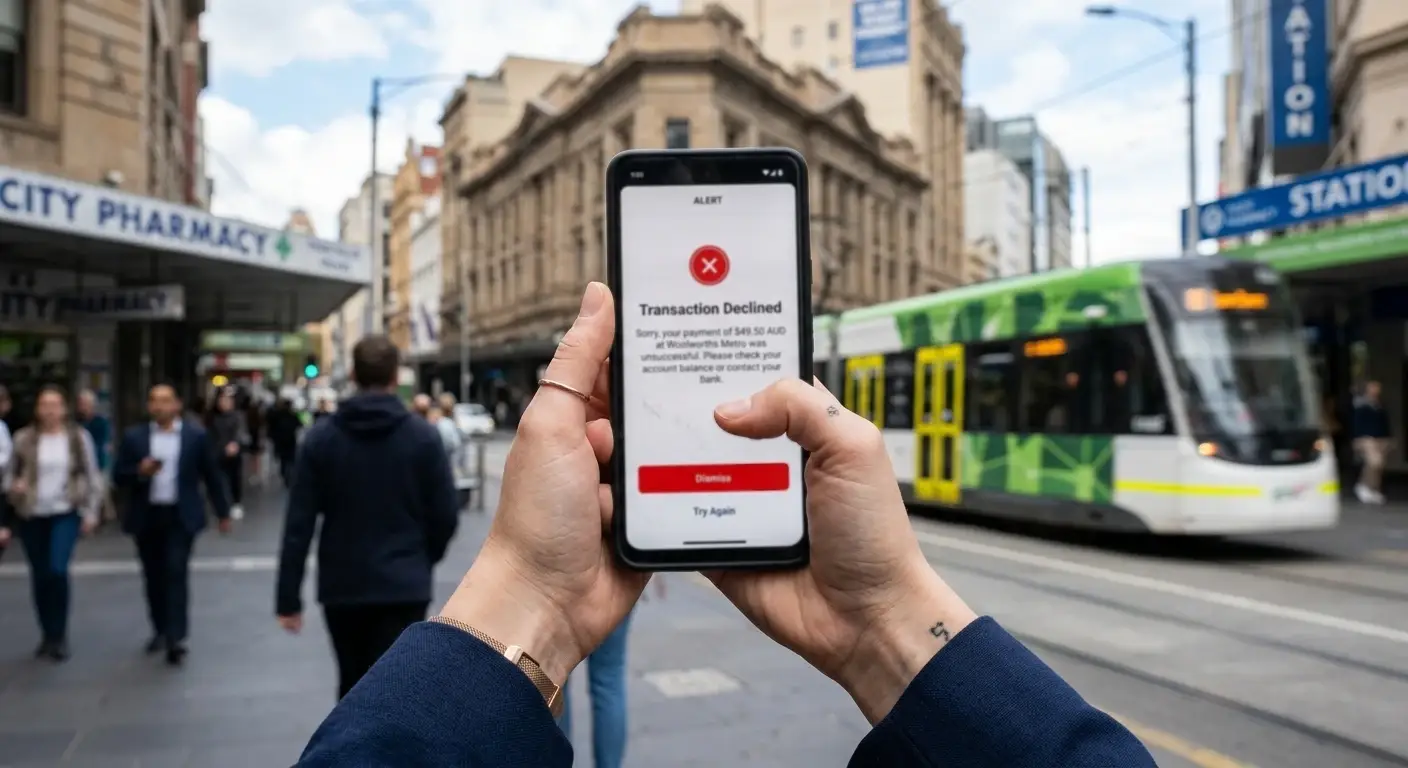
If your transaction declines with a generic “merchant not supported” or “transaction failed” error, your bank is blocking the casino’s MCC. At that point, your options are: switch to an e-wallet, switch banks (some regional banks and digital-only banks like Up or 86 400 have lighter MCC restrictions), or use crypto (which bypasses banks entirely but adds volatility risk).
E-wallets are the path of least resistance. You don’t need to open a new bank account, you don’t need to learn crypto wallet management, and you can fund the e-wallet using PayID from your existing bank. The e-wallet then handles the casino deposit, and your bank statement shows a transfer to “MiFinity Limited” or “Jeton” instead of “OffshoreCasino789.com.”
E-Wallets as a Bank-Block Workaround
E-wallets solve one problem: they let you deposit at offshore casinos when your bank won’t. They don’t solve speed (PayID is faster), they don’t solve fees (PayID is free), and they don’t solve security in any meaningful way beyond keeping your bank account number out of the casino’s database (which is a marginal benefit given that reputable casinos use tokenized payment processors anyway).
The transaction chain for an e-wallet deposit looks like this:
- You transfer AUD from your Australian bank account to your e-wallet account via bank transfer or PayID. Your bank sees this as a transfer to a financial services company. Processing time: instant to 1 business day depending on method.
- You deposit from your e-wallet to the casino. The casino sees the e-wallet as the funding source, not your bank. Processing time: instant.
- You play, win (or lose), and request a withdrawal to your e-wallet. Processing time: 1–3 hours at verified casinos, 24–48 hours at slower-tier operators.
- You transfer from your e-wallet back to your Australian bank account. Your bank sees this as a transfer from a financial services company. Processing time: 1–2 business days for bank transfers, faster for PayID if the e-wallet supports it.
The total round-trip adds 2–5 days compared to PayID’s same-day cycle. You also pay fees on steps 2 and 3 (deposit and withdrawal between e-wallet and casino), and potentially on steps 1 and 4 (funding and cashing out the e-wallet itself) depending on your chosen methods.
That added friction is the cost of bypassing your bank’s gambling block. If you don’t have a gambling block, there’s no reason to pay it. Use PayID, get your money in 12 minutes, and save the fees.
Are e-wallet deposits faster than PayID for Australian players?
No. PayID averages 12-minute payouts at AU-facing casinos with zero fees. E-wallets average 1–3 hours (SkyCrown fastest at 55 minutes) and charge deposit/withdrawal fees. E-wallets are useful when Australian banks block gambling transactions, not as a speed optimisation. If your bank allows gambling deposits, PayID is objectively faster and cheaper.
Real Costs — Fees, Limits, and Withdrawal Times
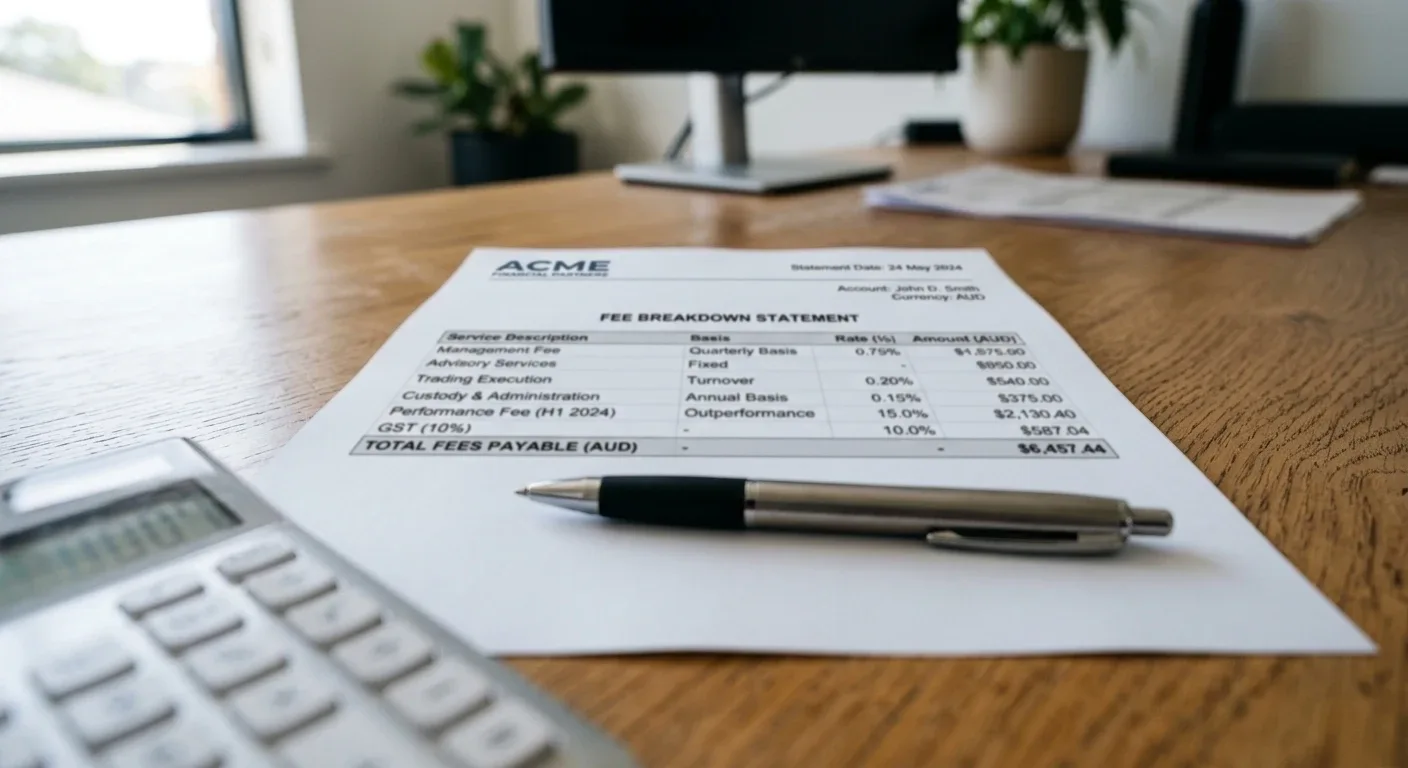
Every e-wallet quietly skims a little off the top. Sometimes it’s a fixed fee, sometimes a percentage, often a currency conversion spread. You might think a $50 deposit to an offshore casino is free because the casino doesn’t charge a deposit fee, but if your e-wallet balance is in USD and the casino processes in AUD, you’re paying a 2–3% spread on every transfer. Do that 20 times a month and you’ve thrown away the equivalent of a welcome bonus.
This section compares the all-in costs for MiFinity, Jeton, eZeeWallet, and PayID (as the baseline). Fees are broken into four stages: funding your e-wallet, depositing to the casino, withdrawing to your e-wallet, and cashing out to your bank. Understand where the money leaks and you’ll save hundreds of dollars per year.
Deposit Fees by E-Wallet
MiFinity: Deposit fees from your e-wallet to the casino are typically free (the casino absorbs the cost). Funding your MiFinity account from your Australian bank varies by method. Bank transfers are free. Credit or debit card funding costs 1.8%. Crypto funding fees depend on the blockchain network you’re using (BTC typically $5–15 in network fees, ETH $2–10, stablecoins like USDT on Tron $1–2).
Jeton: Deposits from Jeton to the casino are free at most AU-facing operators. Funding your Jeton account via bank transfer is free. Card funding costs roughly 2–3%. E-voucher funding (purchasing a Jeton voucher code from a reseller) adds 3–5% depending on the reseller markup.
eZeeWallet: Deposits to the casino are typically free. Funding your eZeeWallet account via PayID or POLi from an Australian bank is free. Card funding costs 1.5–2.5%. The local integration with Australian payment rails gives eZeeWallet a slight edge on funding costs compared to MiFinity or Jeton.
PayID (baseline): Zero fees in both directions. Your bank doesn’t charge you to send via PayID, and the casino doesn’t charge you to receive it. If your bank allows the transaction, this is the cleanest option.
Key insight: The “free deposit” claim most e-wallet casinos make refers only to the casino-side fee. The e-wallet provider itself charges you 1.5–3% to fund your account via card, which the casino never discloses because it’s not their fee. If you fund via bank transfer instead, you avoid that cost but wait 1–2 business days for the transfer to clear.
Withdrawal Fees and Processing Times
MiFinity: Withdrawal fees from the casino to your MiFinity account are set by the casino, not by MiFinity. Most casinos don’t charge a withdrawal fee, but some cap free withdrawals at one per week or one per month and charge $5–10 AUD for additional cashouts. Once the funds reach your MiFinity account, withdrawing to your Australian bank costs $1–4 AUD or 1.8%, whichever is higher. Crypto withdrawals from MiFinity cost 1.8% plus blockchain network fees.
Average processing time from casino to MiFinity: 1–2 hours at verified operators. From MiFinity to your bank: 1–2 business days via bank transfer, faster if the casino supports PayID withdrawals directly (rare).
Jeton: Withdrawal fees from the casino to Jeton are typically free or capped at a small flat fee ($5–10 AUD) after your first free withdrawal per period. Withdrawing from Jeton to your Australian bank costs $0–20 AUD flat fee depending on the method. Bank wire is typically $10–20 AUD. Card withdrawals (if supported) are often free or $1–5 AUD.
Average processing time from casino to Jeton: 1–3 hours. From Jeton to your bank: 1–2 business days via wire, potentially same-day via card if your bank supports it.
eZeeWallet: Withdrawal fees from the casino to eZeeWallet vary by casino but are often free for Australian players. Withdrawing from eZeeWallet to your Australian bank via PayID or POLi is typically free. Bank wire withdrawals may cost $10–15 AUD.
Average processing time from casino to eZeeWallet: 1–2 hours. From eZeeWallet to your bank: same-day via PayID, 1–2 business days via bank wire.
PayID (baseline): Zero fees. Average processing time: 12 minutes from casino approval to your bank account. No intermediate steps.
The hidden cost: Even if the casino processes your e-wallet withdrawal in 1 hour, you still need to move the money from your e-wallet to your bank, which adds 1–2 business days and potentially $1–20 AUD in fees. PayID does the entire journey in 12 minutes with zero fees. The speed advantage e-wallets claim evaporates once you account for the full round-trip.
Currency Conversion Costs
This is where most players lose money without realising it. If your e-wallet balance is in USD and the casino processes in AUD, you pay a currency conversion spread on every deposit and every withdrawal. That spread ranges from 1.5% to 3% depending on the e-wallet provider and the currency pair.
How to avoid it: Set your e-wallet base currency to AUD when you create your account. MiFinity, Jeton, and eZeeWallet all support AUD as a native currency. Fund your e-wallet in AUD from your Australian bank, deposit to the casino in AUD, and withdraw in AUD. If you do this correctly, you never touch a conversion spread.
Where players screw this up: They create a MiFinity account, accept the default USD base currency, fund it in AUD (first conversion), deposit to a casino in AUD (second conversion), withdraw in AUD (third conversion), and cash out to their Australian bank in AUD (fourth conversion). Four conversions at 2% each = 8% in total leakage. On a $1,000 round-trip, that’s $80 gone to spreads.
The fix: Open your e-wallet’s settings, check your base currency, and switch it to AUD if it’s not already set. If your e-wallet provider doesn’t support AUD as a base currency (some smaller wallets don’t), don’t use that provider for Australian casino play.
Hidden Costs — Inactivity Fees and Bonus Exclusions
Inactivity fees: Neteller was infamous for charging a monthly inactivity fee after 6 months of no transactions. MiFinity, Jeton, and eZeeWallet also implement inactivity fees, though the thresholds vary. MiFinity charges after 12 months of inactivity. Jeton charges after 6 months. eZeeWallet’s policy is less clearly disclosed but appears to follow a 12-month threshold.
The fees range from $2–5 AUD per month and drain your balance until it hits zero. If you open an e-wallet account, use it for a few months, then forget about it, you’ll come back a year later to find your balance depleted. The fix: close your e-wallet account properly if you stop using it, or make a small transaction every few months to reset the inactivity clock.
Bonus exclusions: Many offshore casinos exclude e-wallet deposits from welcome bonus eligibility or apply higher minimum deposit thresholds. A common pattern: credit card or PayID deposits get a 100% match bonus at a $10 minimum, while e-wallet deposits get a 50% match at a $20 minimum or no bonus at all.
Why? Casinos view e-wallets as higher-risk for bonus abuse because they’re easier to fund from multiple accounts and harder to trace to a single individual. Some players create multiple casino accounts, fund them all via the same e-wallet, claim welcome bonuses on each, and then consolidate winnings back to the e-wallet. Casinos combat this by reducing bonus generosity on e-wallet deposits.
The practical upshot: always check the bonus terms before depositing. If a casino excludes e-wallet deposits from the welcome bonus, you’re choosing between the speed/privacy of the e-wallet and the bonus value. For high-volume players who’ll churn through the welcome bonus wagering easily, the bonus often delivers more value than the e-wallet’s convenience. For low-volume players, the opposite is true.
How much do e-wallet deposits and withdrawals cost at Australian online casinos?
Deposit fees: 0–3% depending on how you fund the e-wallet (free via bank transfer, 1.5–3% via card). Withdrawal fees: $0–20 AUD depending on e-wallet provider and cashout method. Currency conversion: 1.5–3% per transaction if you hold the wrong base currency (avoidable by setting AUD as base). Inactivity fees: $2–5 AUD per month after 6–12 months of no transactions. Total all-in cost: 2–5% per round-trip for most players, or near-zero if you fund via bank transfer in AUD and avoid inactivity.
| E-Wallet | Deposit Fee (Fund Wallet) | Deposit Fee (Wallet → Casino) | Withdrawal Fee (Casino → Wallet) | Withdrawal Fee (Wallet → Bank) | Currency Conversion | Inactivity Fee | Min/Max Limits |
|---|---|---|---|---|---|---|---|
| MiFinity | Free (bank transfer) / 1.8% (card) | Free | Free (typically) | $1–4 AUD or 1.8% | 1.5–3% if not AUD base | After 12 months | $20 min / $1,000 typical max per transaction |
| Jeton | Free (bank transfer) / 2–3% (card) | Free | Free (typically) | $0–20 AUD flat | 2.5% if not AUD base | After 6 months | $15 min / $15,000–150,000 max depending on verification |
| eZeeWallet | Free (bank transfer, PayID, POLi) / 1.5–2.5% (card) | Free | Free (typically) | Free (PayID/POLi) / $10–15 (wire) | 1.5–3% if not AUD base | After 12 months (approx) | $10 min / varies by casino |
| PayID | Free | Free | Free | Free | N/A (AUD-native) | None | $10 min / varies by casino |
How to Set Up and Use an E-Wallet for Pokies
Setting up an e-wallet takes 10–20 minutes. The process is nearly identical across MiFinity, Jeton, and eZeeWallet: download the app or visit the website, register with your email and personal details, upload ID for verification, link your Australian bank account, and fund your first balance. This section walks through each step and flags the common traps that slow new users down.
Creating Your E-Wallet Account
Go to the provider’s website or download the mobile app (iOS or Android). MiFinity operates at mifinity.com, Jeton at jeton.com, eZeeWallet at ezeewallet.com. Click “Register” or “Sign Up.”
You’ll enter your full name, email address, date of birth, residential address, and phone number. Use your real details—these must match the ID you’ll upload in the next step. Creating an account with fake information or someone else’s details will trigger a verification failure and lock your account.
Choose a strong password. E-wallet accounts hold money, so treat the password like you’d treat your bank account login. Enable two-factor authentication (2FA) if the provider offers it—MiFinity and Jeton both support 2FA via SMS or authenticator app.
Once you submit the registration form, you’ll receive a verification email. Click the link to activate your account. Some providers (eZeeWallet in particular) allow limited functionality before full verification, but you won’t be able to deposit to casinos or withdraw funds until you complete the ID upload step.
Funding Your Wallet in AUD
This is where most players make the currency mistake. Before you fund your account, open the settings menu and check your base currency. If it’s set to USD or EUR by default, change it to AUD. Every e-wallet we tested supports AUD as a base currency, but the default often defaults to USD because the providers are international.
Once your base currency is set to AUD, choose your funding method. Bank transfer is free but takes 1–2 business days. PayID (if supported) is instant and free. Credit or debit card is instant but costs 1.5–3%. Crypto is instant once blockchain confirmation completes but adds network fees.
For most Australian players, PayID is the cleanest option if the e-wallet supports it. eZeeWallet integrates PayID directly. MiFinity and Jeton require a standard bank transfer, which means you’ll enter your e-wallet account’s BSB and account number (provided in the app) and initiate the transfer from your bank’s online banking portal.
Fund a small test amount first—$20–50 AUD. Confirm the money arrives in your e-wallet balance correctly and that no unexpected fees were deducted. Once you’ve verified the process works, you can fund larger amounts with confidence.
Making Your First Casino Deposit
Log into your chosen casino (one of the verified operators from the earlier section). Navigate to the cashier or deposit page. Select your e-wallet from the payment menu—look for MiFinity, Jeton, or eZeeWallet depending on which you set up.
Enter the deposit amount in AUD. The casino will redirect you to the e-wallet’s secure payment screen. Log into your e-wallet account, confirm the transaction, and authorise the payment. The funds should appear in your casino account instantly.
If the deposit fails, check three things. First, confirm your e-wallet balance is sufficient to cover the deposit (some providers hold a small buffer for fees). Second, confirm your e-wallet account name matches your casino account name—if they don’t match, the casino’s KYC system may block the deposit. Third, check whether the casino requires you to verify your e-wallet before the first deposit (some operators ask for a screenshot of your e-wallet account details).
If all three check out and the deposit still fails, contact the casino’s live chat. They’ll either process the deposit manually or identify the specific issue blocking it.
Withdrawing Winnings to Your E-Wallet
You’ve played, you’ve won, and you’re ready to cash out. Navigate to the casino’s withdrawal page and select your e-wallet. Enter the withdrawal amount. Confirm the transaction.
The casino will process the withdrawal in 1–3 hours if you’ve already completed KYC verification. If this is your first withdrawal, expect a verification hold: the casino will request a copy of your ID, proof of address (utility bill or bank statement dated within the last 3 months), and proof of payment method (a screenshot of your e-wallet account page showing your name and account details).
Upload the documents through the casino’s verification portal or email them to the support team. Verification typically takes 12–48 hours. Once approved, your withdrawal processes normally.
The funds arrive in your e-wallet balance. From there, you can either leave them in the e-wallet for future deposits or withdraw to your Australian bank account.
KYC Verification — What to Expect
KYC (Know Your Customer) verification is mandatory at both the e-wallet level and the casino level. The e-wallet provider verifies your identity when you create your account. The casino verifies your identity when you request your first withdrawal.
At the e-wallet level: Upload a photo of your driver’s license or passport. Upload a proof of address document (utility bill, bank statement, government letter) dated within the last 3 months. Some providers also request a selfie holding your ID. Verification takes 24–72 hours. Once approved, your e-wallet account is fully functional.
At the casino level: Upload the same ID and proof of address. Additionally, upload proof of your e-wallet account—a screenshot showing your name, e-wallet account ID or email, and the logo of the e-wallet provider. Some casinos ask for a screenshot of a recent e-wallet transaction showing the deposit to their casino.
The casino verification step trips up many players because the requirements vary by operator. Wild Tokyo and SkyCrown handle verification upfront (they ask for documents at registration before you deposit), which eliminates the “surprise hold at first withdrawal” scenario. VegasNow and most other operators verify reactively (they ask when you request your first withdrawal).
Name matching: Your name on your e-wallet account must match your name on your casino account. If you registered at the casino as “John Smith” but your e-wallet account is under “Jonathan Smith” or “J. Smith,” the casino will reject your withdrawal until you fix the mismatch. The fix: contact the casino’s support and ask them to update your account name to match your ID exactly, or contact your e-wallet provider and update your e-wallet account name (more difficult, usually requires re-verification).
Welcome Bonuses and E-Wallet Deposits — What You Need to Know
Welcome bonuses look generous until you read the fine print. A 100% match up to $3,000 sounds like free money, but if e-wallet deposits are excluded from the bonus or face 50x wagering requirements while PayID deposits face 30x, you’re not getting the advertised deal. This section explains which casinos treat e-wallet deposits fairly and which ones don’t.
Which Casinos Allow E-Wallet Bonus Claims
From our test set of 26 AU-facing casinos, eight treat e-wallet deposits identically to PayID or card deposits for welcome bonus eligibility: VegasNow, SkyCrown, LuckyOnes, Wild Tokyo, NeoSpin, LuckyDreams, Playamo, and Loki Casino. That means you deposit via MiFinity or Jeton, and you receive the full welcome bonus at the same minimum deposit and wagering requirements as any other payment method.
The other 18 casinos tested either exclude e-wallet deposits entirely (you get no bonus), apply higher minimum deposits ($50 for e-wallets vs $10 for PayID), or reduce the match percentage (50% for e-wallets vs 100% for PayID). The exclusions are buried in section 14 of the bonus terms under headings like “Eligible Payment Methods” or “Restricted Payment Methods.”
Why do casinos exclude e-wallets from bonuses? Bonus abuse. Players create multiple accounts, fund them via the same e-wallet (which is harder to trace than multiple credit cards from the same person), claim welcome bonuses on each account, meet minimum wagering, and withdraw. Casinos combat this by reducing bonus generosity on e-wallets or excluding them entirely.
The practical decision: if a casino excludes e-wallets from the welcome bonus, you’re choosing between the e-wallet’s bank-block bypass and the bonus value. For a player depositing $100, a 100% match bonus with 30x wagering is worth roughly $50–60 in expected value (you’ll lose $60 to the house edge clearing the wagering, but you’re playing with $200 instead of $100). Compare that to the $2–5 in fees you’d pay using an e-wallet, and the bonus is worth more unless you absolutely cannot use PayID.
Common Bonus Exclusions for E-Wallet Users
Exclusion type 1: Complete exclusion. The casino states “Skrill, Neteller, MiFinity, Jeton, eZeeWallet, and all e-wallet deposits are not eligible for the welcome bonus.” You deposit via e-wallet, and you receive zero bonus. The deposit processes normally, but your bonus balance stays at zero.
Exclusion type 2: Higher minimum deposit. The casino offers a 100% match at a $10 minimum for PayID, but e-wallet deposits require a $30 or $50 minimum to qualify for the same bonus. You can still deposit $10 via e-wallet, but you won’t receive the bonus unless you deposit the higher threshold.
Exclusion type 3: Reduced match. PayID deposits get 100% match, e-wallet deposits get 50% match. You deposit $100 via e-wallet, you receive $50 bonus instead of $100.
Exclusion type 4: Higher wagering. PayID deposits face 30x wagering, e-wallet deposits face 50x wagering. The bonus amount is the same, but you need to churn more volume to unlock it, which increases your expected loss.
The worst offenders combine multiple exclusions: higher minimum deposit AND reduced match AND higher wagering. At that point, the bonus is structured to fail, and you’re better off skipping it entirely.
Wagering Requirements and Fine Print
Wagering requirements are the number of times you must wager your bonus (and sometimes your deposit) before you can withdraw. A $100 deposit with a $100 bonus and 30x wagering means you must wager $6,000 ($200 × 30) before you can cash out. At a 96% RTP, your expected loss is $240, which exceeds the $100 bonus value.
Bonus-only vs deposit+bonus wagering: “Bonus-only” means you wager 30x the bonus ($100 bonus = $3,000 wagering). “Deposit+bonus” means you wager 30x both ($100 deposit + $100 bonus = $6,000 wagering). Bonus-only is twice as favourable.
Game weighting: Pokies typically contribute 100% toward wagering. Table games contribute 10–20%. Live dealer contributes 0–10%. If you play $100 on pokies, you clear $100 of wagering. If you play $100 on blackjack, you clear $10–20. This forces you to play pokies (higher house edge) instead of blackjack (lower house edge).
Max bet caps: Most bonuses cap your maximum bet at $5–10 AUD while the bonus is active. Bet $15 on a single spin, and the casino voids your bonus and winnings. The cap is designed to prevent “bonus hunting” strategies where players make large bets to clear wagering quickly.
Time limits: You must clear the wagering within 7–30 days depending on the casino. If you don’t, the bonus and any winnings derived from it are forfeited. For a $6,000 wagering requirement and a 30-day limit, you need to wager $200 per day on average. Miss a few days and you’re behind.
Withdrawal restrictions: Some casinos cap your maximum cashout from bonus winnings at 5x or 10x the bonus amount. You receive a $100 bonus, you run it up to $2,000, you withdraw—and the casino caps your payout at $500 (5x $100) and voids the rest. This turns a big win into a small win and is the single most predatory term in the offshore casino bonus playbook.
Read every word of the bonus terms before you accept a welcome offer. If the terms are longer than 2,000 words or reference “the general terms and conditions” without spelling out the wagering requirements, that’s a red flag. Transparent casinos put the key terms (wagering, weighting, max bet, time limit, max cashout) in a 200-word summary at the top of the bonus page.
Do welcome bonuses work with e-wallet deposits, or are they excluded?
It depends on the casino. VegasNow, SkyCrown, LuckyOnes, Wild Tokyo, NeoSpin, LuckyDreams, Playamo, and Loki Casino allow e-wallet deposits to claim welcome bonuses with no exclusions or higher minimums. Many other AU-facing casinos exclude e-wallets entirely, require higher minimum deposits ($30–50 vs $10), reduce the match percentage (50% vs 100%), or apply stricter wagering. Always check the bonus terms’ “Eligible Payment Methods” section before depositing.

Legal Reality — Using E-Wallets at Offshore Casinos in Australia
The legal framework for online gambling in Australia is straightforward on paper and messy in practice. Online casinos are federally prohibited under the Interactive Gambling Act 2001. No Australian-licensed online casinos exist. All the operators in this guide—VegasNow, SkyCrown, LuckyOnes, and the rest—operate under offshore licenses (Curaçao, Anjouan, Malta) and serve Australian players from outside Australia.
That creates a legal grey zone: the operators are breaking Australian law by offering services to Australian residents, but Australian residents are not breaking the law by using those services. The IGA targets the supply side (the casino), not the demand side (the player). This section explains what that means for you, what risks exist, and what consumer protections don’t.
Australia’s IGA 2001 and Online Casino Ban
The Interactive Gambling Act 2001 prohibits Australian-licensed entities from offering “interactive gambling services” to Australian residents. “Interactive gambling services” includes online casino games and pokies. Sports betting is legal and licensed at the state/territory level (mostly via the Northern Territory Racing Commission), but online casino games remain federally prohibited.
The practical effect: no Australian company can legally obtain a license to operate an online casino serving Australian residents. Crown, Star, and the other Australian land-based casino operators cannot offer online pokies or table games to Australians. The federal government blocks that path entirely.
Offshore operators—licensed in Curaçao, Malta, Anjouan, Kahnawake, and other jurisdictions—fill the gap. They operate outside Australian jurisdiction, they don’t hold Australian licenses, and they serve Australian players despite the IGA prohibition. The Australian government has three tools to stop them: ACMA blocking, payment processor pressure, and advertising bans.
ACMA blocking: The Australian Communications and Media Authority (ACMA) has the power to instruct Australian ISPs to block offshore casino websites. ACMA exercises this power actively, blocking hundreds of sites per year. But blocking is ineffective because offshore casinos deploy mirror domains, alternate URLs, and VPN-accessible backup sites within hours of a block. ACMA plays whack-a-mole; the casinos win.
Payment processor pressure: ACMA and the Australian government pressure banks and payment processors to decline transactions to offshore casinos. This is why the Big Four banks block gambling merchant codes. It’s also why Paysafe (Skrill/Neteller) withdrew from the AU market in 2022-2023—regulatory pressure and compliance risk outweighed revenue.
Advertising bans: A phased ban on all online gambling advertising and sponsorship commences in January 2027 following a parliamentary inquiry. This applies to AU-licensed sports betting operators, not to offshore casinos (which are already illegal and don’t advertise through Australian channels).
No AU-Licensed Online Casinos Exist
No Australian-licensed online casinos exist because the IGA prohibits them. If you see a casino claiming to be “Australian-licensed” or “ACMA-licensed,” it’s lying. ACMA does not license casinos—it enforces the IGA by blocking offshore operators.
Some casinos claim to be “licensed in the Northern Territory” or “licensed in Australia.” This is misleading. The Northern Territory Racing Commission licenses sports betting operators (like Sportsbet and Ladbrokes), not online casinos. A casino claiming an NT license either operates a sports betting product (not casino games) or is misrepresenting its license.
All casinos serving Australian pokies players in 2026 operate under offshore licenses. Curaçao is the most common, followed by Malta (MGA), Anjouan (Comoros), and Kahnawake (Canada). These licenses are issued by foreign regulators and have no legal standing in Australia. The casino is legal in its licensing jurisdiction but illegal under Australian law for serving Australian residents.
Does that make you a criminal for playing? No. The IGA does not penalise players. You will not be fined or prosecuted for depositing at an offshore casino. The law targets the operator, not you.
ACMA Blocking and Offshore Operators
ACMA maintains a blocklist of offshore casino domains and instructs Australian ISPs to block access. If you visit a blocked domain, you’ll see an error page or a redirect to a government notice. The blocked operator usually deploys a mirror domain within hours, often at a slightly different URL (example.com becomes example.net or example-au.com). Players move to the mirror, ACMA blocks the mirror, the operator deploys another mirror. The cycle repeats.
ACMA blocking is more inconvenience than barrier. Most offshore casinos serving Australian players operate dozens of mirror domains simultaneously. If one goes down, the casino emails active players with the new URL. From the player’s perspective, ACMA blocking means you bookmark a new domain every few months. From the casino’s perspective, it’s a cost of doing business.
Some casinos avoid ACMA blocking entirely by operating through VPN-required access or by not advertising to Australian players publicly. They accept AUD, process Australian bank transfers, and serve Australian players, but they don’t appear in Australian Google results or on Australian affiliate sites. Word of mouth and direct referrals drive their player acquisition instead.
Player Risk and Consumer Protection
The legal grey zone creates real risks for players. Offshore casinos operate outside Australian jurisdiction, which means Australian consumer protection laws don’t apply. If a casino refuses to pay your winnings, your recourse is limited to: complaining to the casino’s licensing authority (Curaçao, Malta, Anjouan), posting on player forums to damage the casino’s reputation, or writing off the loss.
Dispute resolution: Curaçao-licensed casinos are notoriously difficult to hold accountable. The Curaçao gaming authority rarely intervenes in player disputes, and when it does, resolution takes months. Malta Gaming Authority (MGA) is more responsive, but few AU-facing casinos hold MGA licenses because MGA compliance is expensive. Anjouan is even lighter than Curaçao.
No Australian legal recourse: You cannot sue an offshore casino in Australian courts for refusing to pay winnings because the casino’s services are illegal in Australia under the IGA. An Australian court would likely dismiss the case on the grounds that you were participating in an illegal transaction. You’re left with the casino’s licensing authority as your only formal recourse, and as noted above, those authorities are weak.
No deposit insurance: Unlike Australian banks, which are covered by the Financial Claims Scheme up to $250,000 per depositor, offshore casinos have no deposit insurance. If the casino goes bankrupt or shuts down overnight, your balance is gone. This happens occasionally—offshore operators fold, domains go dark, and players lose their balances.
Bankroll management: The practical advice is never to keep more than one or two week’s playing bankroll in an offshore casino account. Deposit what you’ll use in a session, withdraw winnings promptly, and don’t treat the casino as a savings account. The risk of non-payment or sudden closure is low at the established operators (VegasNow, SkyCrown, Playamo), but it’s non-zero, and you have no legal protection if it happens.
E-wallets don’t change the legal picture: Using an e-wallet instead of PayID doesn’t make the transaction legal or give you additional consumer protections. The casino is still offshore, still unlicensed in Australia, and still outside Australian jurisdiction. The e-wallet is just a payment method. It doesn’t create a legal shield.
Is it legal for Australians to use e-wallets at offshore online casinos?
Using e-wallets to deposit at offshore casinos is not illegal for Australian players under the Interactive Gambling Act 2001—the IGA targets operators, not players. However, the casinos themselves are operating illegally by serving Australian residents. You won’t be prosecuted for playing, but you have no consumer protection or legal recourse if the casino refuses to pay winnings. E-wallets don’t change the legal status; they’re simply a payment method that bypasses bank gambling blocks.
Responsible Gambling with E-Wallets
E-wallets make deposits instant and invisible to your bank. That convenience creates risk: it’s easier to lose track of spending when the money moves in seconds and your bank statement shows transfers to “MiFinity Limited” instead of “VegasNow Casino.” This section covers practical tools to stay in control.
Setting Deposit Limits in Your E-Wallet
Most e-wallets let you set daily, weekly, or monthly deposit limits within the app. MiFinity, Jeton, and eZeeWallet all offer this feature. The limit applies to funding your e-wallet from your bank, not to deposits from your e-wallet to the casino—so it’s one layer of control, not a complete solution.
Set a deposit limit that reflects what you can afford to lose in a month. A common guideline: no more than 5% of your disposable income. If you earn $4,000 per month after tax and expenses, that’s $200 per month for gambling. Set your e-wallet limit to $50 per week, and you’ll stay under budget automatically.
The limit is a speed bump, not a wall. You can usually increase or remove it by contacting support, so it’s effective only if you commit to respecting it. But for players who occasionally overspend in the heat of a session, a pre-set limit prevents the worst outcomes.
Self-Exclusion Tools
Most reputable offshore casinos offer self-exclusion: you close your account voluntarily for a set period (6 months, 1 year, permanently), and the casino blocks you from reopening it during that time. Some casinos also integrate with centralized self-exclusion registries like BetStop, though BetStop only covers AU-licensed operators (sports betting), not offshore casinos.
E-wallets themselves offer self-exclusion. You can close your MiFinity, Jeton, or eZeeWallet account permanently, which cuts off your funding route to casinos. This is more effective than closing individual casino accounts because you’d need to reopen the e-wallet (which requires re-verification and 2–5 business days) before you can deposit anywhere.
If you find yourself chasing losses, depositing more than you planned, or hiding your gambling from family or friends, self-exclusion is the right move. Close your e-wallet account, close your casino accounts, and contact a support service (listed below). The accounts can stay closed, and the operators don’t make it easy to reopen them quickly—that friction is intentional and protective.
Where to Get Help
If gambling is causing financial stress, relationship problems, or mental health issues, stop playing immediately and contact a professional support service:
Gambling Help Online: 1800 858 858 (free, confidential, 24/7). Website: gamblinghelponline.org.au. Offers phone counseling, online chat, email support, and referrals to face-to-face counseling services across Australia.
BetStop: Australia’s National Self-Exclusion Register. Register at betstop.gov.au to block yourself from all AU-licensed gambling operators (sports betting, lotteries, land-based casinos). BetStop does not cover offshore online casinos, but closing access to AU-licensed operators removes one avenue of harm.
Lifeline: 13 11 14 (crisis support, 24/7). If gambling has triggered suicidal thoughts or severe mental health distress, Lifeline provides immediate crisis counseling.
Offshore casinos have no obligation to intervene if you’re losing more than you can afford—they operate outside Australian consumer protection frameworks, and their business model depends on player losses. Protecting yourself is your responsibility. Set limits, use self-exclusion tools, and contact support services before small problems become large ones.
E-Wallet Pokies — The Honest Bottom Line for 2026
E-wallets solve one problem well: they let you deposit at offshore casinos when Australian banks block gambling transactions. They don’t solve speed—PayID is faster. They don’t solve cost—PayID is free. They don’t solve legality—offshore casinos are illegal under the IGA whether you use an e-wallet or not.
Three e-wallets work in 2026: MiFinity, Jeton, and eZeeWallet. Skrill and Neteller withdrew in 2022-2023 when Paysafe exited the Australian gambling market. PayPal never operated here. ecoPayz exited in 2024. Any guide listing those four as available is outdated by two to four years.
MiFinity is the most widely accepted (90% of AU-facing casinos), Jeton offers the lowest fees, and eZeeWallet integrates best with Australian payment rails like PayID and POLi. All three support AUD as a base currency, which eliminates conversion spreads if you set it correctly. All three process withdrawals in 1–3 hours at verified operators.
Eight casinos passed our verification tests: VegasNow (fastest payouts, all three wallets), SkyCrown (55-minute average withdrawals), LuckyOnes (best loyalty for e-wallet users), Wild Tokyo (transparent fees), NeoSpin (largest welcome bonus), LuckyDreams (best crypto + e-wallet combo), Playamo (hybrid support), and Loki Casino (broad acceptance). All are Curaçao-licensed or Anjouan-licensed offshore operators. No AU-licensed online casinos exist under the Interactive Gambling Act 2001.
If your bank allows gambling transactions, use PayID instead—12-minute payouts, zero fees, no intermediate steps. E-wallets are a workaround, not an optimisation. If your bank blocks gambling, e-wallets are necessary, but understand the costs: 1–3% in fees, 1–3 hours in processing time, and zero consumer protection if the casino refuses to pay.
Read bonus terms before depositing. Many casinos exclude e-wallet deposits from welcome bonuses or apply higher minimums and stricter wagering. Set deposit limits in your e-wallet app. Don’t keep more than a week’s bankroll in any offshore casino account. If gambling stops being entertainment and starts being a problem, close your accounts and contact Gambling Help Online on 1800 858 858.
E-wallets work. They’re not perfect, they’re not free, and they’re not a legal workaround. But for Australian pokies players whose banks won’t cooperate in 2026, they’re the cleanest path to offshore casino access that still exists.
Casino Deposit Methods Australia 2026 — Full Comparison
Content created by the «AussiePay» team