10 Litecoin Casinos Tested for Australian Players — Transaction Times, Legal Position and AUD On-Ramp
 Available in AU

No Australian operator holds a license to offer online casino games—slots, table games, live dealer—to residents. The Interactive Gambling Act criminalizes the provision of such services, not the use. That legal reality pushes Australian players looking for Litecoin casino access toward offshore platforms operating under Curaçao, Anjouan and similar jurisdictions outside ACMA’s blocking reach.
This guide walks through ten offshore casinos accepting Litecoin from Australians in 2026, backed by January transaction testing that clocked deposit and withdrawal speeds during AEDT evening peak hours. You’ll also find the step-by-step AUD-to-LTC flow via CoinSpot and Swyftx, clarity on what the IGA actually prohibits versus what it allows, KYC thresholds per casino, and the tax treatment split between gambling winnings (tax-free) and crypto conversion (CGT event).
The article does not claim offshore casinos are “safe” in the consumer-protection sense—they operate outside Australian jurisdiction, disputes go to offshore regulators with limited enforcement reach, and ACMA blocks sites regularly. What it does provide is the practical map: which platforms accept LTC, how transactions perform in real-world Australian conditions, and where the legal and tax lines fall.
Top 10 Litecoin Casinos for Australian Players in 2026
Australian players currently access ten offshore casinos with verified Litecoin support, tested transaction times and accessible onboarding. The casinos below are ranked by transaction speed and relevance to the Australian use case—evening peak performance, AUD display options, and deposit minimums that suit session-based play rather than high-roller bankrolls.
| Casino | License | Deposit Speed | Withdrawal Speed | Min Deposit | KYC Threshold | Welcome Bonus |
|---|---|---|---|---|---|---|
| BC.Game | Curaçao | 4.8 min avg | 8.3 min avg | 0.001 LTC | ~1 BTC equiv | 180%-360% over 4 deposits |
| 7Bit | Curaçao | 5.9 min avg | 9.1 min avg | 0.01 LTC | Not specified | Standard match |
| Lucky Block | Anjouan ALSI-1423 | Not tested | Not tested | 0.01 LTC | None advertised | 200% to A$25,000 + 50 FS |
| mBit | Curaçao (likely) | 6.8 min avg | 15.2 min avg | 0.01 LTC | Not specified | Standard match |
| Bitcasino | Curaçao (likely) | 7.2 min avg | 12.4 min weekday | 0.001 LTC | 0.01 LTC threshold | Standard match |
| Cloudbet | Curaçao eGaming | Not tested | Not tested | 0.1 LTC | Not specified | 100% to 50 LTC |
| Wild.io | Anjouan ALSI-202504044 | Not tested | <10 min claim | 0.01 LTC | Not specified | 350% over 3 deposits + 200 FS |
| Fairspin | Curaçao | Not tested | Instant claim | 0.01 LTC | 14 LTC | Standard match |
| Metaspins | Curaçao CGA | Not tested | Same-day claim | Not specified | Not specified | Daily MetaLotto $20k |
| Vave | Not specified | Not specified | Not specified | Not specified | Not specified | Not specified |
Transaction speeds are from Casipto’s January 2026 testing (BC.Game, 7Bit, mBit, Bitcasino); other casinos cite platform claims. Deposit minimums convert to roughly A$0.15–A$15 at January 2026 LTC prices (~A$150). KYC thresholds are self-reported by casinos or industry-standard estimates (1 BTC / 2,000 USDT / ~A$2,000–5,000 typical).
Which Australian exchange is best for buying Litecoin to use at online casinos?
CoinSpot and Swyftx are the two Australian exchanges with instant PayID deposits, competitive fees and straightforward LTC purchasing. CoinSpot charges around 1% on trades and A$0.001 LTC to withdraw to an external wallet; Swyftx’s fees vary but sit in the same range. Both report to the ATO, so your LTC purchase history is documented. Independent Reserve is a third option for institutional-grade custody but less commonly used for casino funding. Pick based on fee comparison at the time of deposit—neither locks you into recurring use.
BC.Game — Fastest LTC Transactions and Web3 Integration
BC.Game delivered the fastest Litecoin deposit and withdrawal times in Casipto’s January 2026 testing: 4.8 minutes average for deposits, 8.3 minutes for withdrawals across 23 deposits and 19 withdrawals tested between January 10 and 15. The platform operates under a Curaçao license (exact number not disclosed) and has run since around 2017, making it one of the longer-standing names in the offshore crypto casino space. The site supports over 100 cryptocurrencies including Litecoin, with SegWit addressing that cuts transaction fees by roughly 35 percent compared to legacy addresses.
BC.Game’s welcome offer splits across four deposits—180%, 240%, 300%, 360%—but pays out in BCD points rather than direct cash, meaning bonus conversion requires accumulating points through wagering. The platform’s provably fair system uses SHA-256 hash verification with client seed modification; Casipto verified 50 game rounds with zero discrepancies. One limitation surfaced in testing: maximum single Litecoin withdrawal is capped at 25 LTC, so larger cashouts require multiple transactions. Web3 wallet integration (MetaMask, Telegram) and a 7,000-game library round out the offering, though the BCD points structure adds a conversion step between play and withdrawable balance that some Australian players find less transparent than direct cash bonuses.
Lucky Block — Largest Welcome Bonus with No KYC
Lucky Block launched in 2022 under Entretenimiento Rojo B.V. and holds Anjouan license ALSI-1423/1005-FI2, with additional Curaçao credentials listed (OGL/2024/1100/0505, 8048/JAZ2020-013). The welcome package is the largest in this set by cap: 200 percent up to A$25,000 plus 50 free spins on Wanted Dead or a Wild. Minimum deposit sits at 0.01 LTC (roughly A$1.50 at January 2026 prices), and the casino advertises no KYC requirements for withdrawals, though one review source notes that VIP and high-value cashouts may trigger verification.
The 8,000-game library pulls from 70–80 providers including Pragmatic Play, Hacksaw Gaming and Microgaming, with 45 blackjack tables, 64 roulette variants and 83 baccarat formats in the live section. Bonus wagering is set at 35 times the bonus amount, released in ten installments—each time you wager six times your initial deposit, ten percent of the total bonus converts to cash. Slots contribute 100 percent to wagering, live game shows 50 percent, dice zero. The 14-day wagering window is tighter than some competitors, and the 8 percent fee on deposits not wagered at least once (minimum A$4 deduction) pushes players to cycle funds through the casino rather than treat it as a wallet passthrough. VPN use is required per one listing, which sits oddly with the no-KYC claim—offshore casinos operating in grey markets often request VPN access to bypass geo-blocks, but that step adds a terms-of-service layer some Australian players prefer to avoid.
Cloudbet — Veteran Operator with 50 LTC Bonus Cap
Cloudbet’s operational history traces back to 2013 according to one source, though another cites a 2021 founding by Audited iGaming Operator—the discrepancy suggests either a rebrand or conflicting records. The platform holds a Curaçao eGaming Regulated license, predating the December 24, 2024 LOK reform that replaced the old Curaçao sub-license model. That legacy license status doesn’t make Cloudbet less accessible, but it does place the casino under the older regulatory framework rather than the stricter LOK oversight introduced in late 2024.
The welcome bonus structure offers 100 percent up to 50 LTC with a minimum deposit of 0.1 LTC—the highest LTC-denominated bonus cap in this set. The six-tier loyalty program runs on Lightning points: accumulate 150 points to release one bonus increment, earned through casino play. The 2,600-game library is smaller than BC.Game or Lucky Block but covers the staples via Red Tiger Gaming, Playtech, Evolution Gaming, BetSoft and Play’n GO. Cloudbet Originals add provably fair titles, and the sportsbook extends the platform beyond casino-only use. The 0.1 LTC minimum deposit is higher than most competitors (ten times BC.Game’s 0.01 LTC floor), which suits players funding larger sessions but prices out micro-deposit experimentation. Customer support runs 24/7, and the platform appears on AskGamblers with player reviews accessible for third-party reputation checks.
Wild.io — Daily Rakeback and Institutional-Grade Security
Wild.io operates under Anjouan license ALSI-202504044-FI2, issued by the Government of the Autonomous Island of Anjouan. The license number format suggests a 2025 issuance, placing Wild.io under the AOFA/ALSI framework that became the accessible offshore alternative after Curaçao’s LOK reform raised entry barriers in late 2024. Stack Gaming Ltd. is the named operator, and the platform launched in 2022, making it one of the newer entrants in this set.
The welcome package stretches to 350 percent over three deposits with 200 free spins—the highest percentage match here. Daily rakeback runs up to 0.30 percent for top VIP tiers, paid on every bet rather than reserved for monthly or weekly cycles. That continuous reward structure favours frequent players over bonus hunters who load up once and chase a single large payout. Wild.io also offers a 7 percent bonus on crypto deposits, stacking an ongoing incentive on top of the welcome offer. The 9,000-game claim (including sportsbook) positions Wild.io as one of the larger libraries by count, with 60-plus providers supplying content.
Security infrastructure leans institutional: Fireblocks multi-signature vaults hold player funds with segregation from operational capital, TLS 1.3 encryption covers all sessions, and optional two-factor authentication is available on accounts. Provably fair games include an in-game verification tool—no support ticket required to check server seed hashes against published outcomes. Changelly integration allows fiat-to-crypto purchases on-site, so Australian players without existing LTC holdings can buy crypto with a credit card inside the cashier and start playing within minutes. Typical crypto withdrawals clear in under ten minutes per platform claims, though Casipto’s January 2026 testing did not include Wild.io, so that figure remains unverified under real Australian network conditions.
Metaspins — Daily MetaLotto Prize Pool
Metaspins operates under a Curaçao Gaming Authority license and offers a daily MetaLotto with a prize pool running up to $20,000—a unique daily mechanic not present at the other nine casinos in this set. The platform supports nine cryptocurrencies including Litecoin and integrates Web3 deposit and withdrawal flows with on-site crypto purchasing, removing the step of funding an external exchange first. Available globally in seven languages, Metaspins positions itself as a multi-region platform rather than a geo-specific build.
The game library size is not specified in available data, described generically as “pokies to live dealer tables” without provider breakdowns or title counts. Provably fair gaming is mentioned, and the site’s Web3 focus suggests compatibility with MetaMask and similar wallet connectors for one-click onboarding. Deposits are claimed to land in seconds with same-day withdrawals, but without Casipto or equivalent third-party testing, those speeds remain self-reported rather than independently verified. The daily MetaLotto structure makes Metaspins a fit for players interested in recurring prize-pool participation rather than one-time welcome bonuses, though the lack of granular game-library detail and absent transaction testing leaves gaps for Australian players comparing options on hard data.
Vave — Premium Casino Experience
Vave appears in the BitcoinCasinos.com top-eight list as “A Top-Level Litecoin Casino With Style,” but available research data stops there. The license type, ownership, operational history, game count, providers, bonus structure, transaction speeds and KYC thresholds are not specified in the SERP excerpts pulled during January 2026 research. The domain is assumed to be vave.com based on naming patterns, and the offshore crypto casino category suggests a Curaçao or Anjouan license, but neither is confirmed.
Without verifiable specifics, Vave’s inclusion in this list reflects its appearance in competitor rankings rather than independently tested performance. Australian players considering Vave should verify the license type directly on the platform’s footer, check for third-party reviews on AskGamblers or Trustpilot, and test a small deposit before committing larger funds. The “style” descriptor may refer to UI design, but substance—transaction reliability, withdrawal limits, support responsiveness—requires hands-on confirmation. This profile will be updated if additional verifiable data surfaces, but as of publication, Vave is the least-documented option in this top ten.
Fairspin — 14 LTC No-Verification Withdrawals
Fairspin operates under a Curaçao license and offers blockchain-based transparency with provably fair gameplay across its 5,000-game library. The distinguishing feature here is the 14 LTC no-verification withdrawal threshold—the highest explicit no-KYC cap stated in this set. At January 2026 LTC prices (~A$150), 14 LTC converts to roughly A$2,100, allowing Australian players to withdraw mid-sized session wins without submitting identity documents. That threshold sits above the typical 1 BTC / 2,000 USDT benchmark common at offshore casinos, making Fairspin the go-to for players prioritising anonymity within legally accessible limits.
Instant withdrawals are advertised for Bitcoin and Ethereum; Litecoin withdrawal speed is not separately specified but likely falls in the same sub-hour window given the blockchain-first architecture. The mobile-first design adapts the full casino and cashier to phone and tablet screens without requiring a separate app download. The 5,000-game count pulls from “leading providers” without naming specific studios in available data, and the welcome bonus structure is not detailed in research excerpts. Fairspin’s blockchain transparency focus suggests on-chain transaction verification is baked into the platform’s identity, though the practical implementation—whether players can audit the casino’s wallet holdings or only verify individual game outcomes—remains unclear without direct testing.
mBit Casino — Established Brand with Clean UTXO Management
mBit Casino carries the “well-established” descriptor across multiple sources, implying a pre-2020 launch, though the exact founding year is not specified. The platform targets Bitcoin players primarily but supports multiple cryptocurrencies including Litecoin. Casipto’s January 2026 testing recorded 6.8 minutes average for LTC deposits and 15.2 minutes for withdrawals across 31 deposits and 27 withdrawals between January 12 and 17. One withdrawal outlier hit 47 minutes due to a low network fee setting, later resolved through the platform’s fee-bumping mechanism—a useful feature when mempool congestion spikes unexpectedly.
The game library lists 200-plus titles from Betsoft, Play’n GO, Amatic and Booming Games, though that count appears dated compared to competitors advertising 2,000–8,000 games. The figure may reflect an older AskGamblers review rather than the current 2026 catalogue. Trustpilot hosts 490 reviews for mBit, providing a third-party reputation trail Australian players can cross-reference before depositing. Casipto’s blockchain analysis noted clean UTXO (unspent transaction output) management, meaning mBit’s withdrawal transactions minimise dust outputs that can complicate future on-chain activity—a technical hygiene point that matters for players moving LTC through multiple wallets or exchanges rather than leaving funds parked at the casino.
The license type is not confirmed in research excerpts but likely falls under Curaçao based on the offshore crypto casino pattern. Minimum deposit and KYC thresholds are not specified, though the mid-range withdrawal speed (15.2 minutes) suggests a standard compliance review process rather than instant cashouts. mBit’s longevity and consistent mention across affiliate and review sites positions it as a known-quantity option, though the smaller game library and slower withdrawals compared to BC.Game or 7Bit place it in the mid-tier for Australian players prioritising transaction speed.
7Bit Casino — Consistent Processing with 13,000+ Games
7Bit delivered the second-fastest Litecoin deposit time in Casipto’s January 2026 testing at 5.9 minutes average, with 9.1-minute withdrawals and a standard deviation of 2.3 minutes—the lowest variance in the tested set. Low variance means reliable consistency: Australian players can plan around a predictable 9-minute withdrawal window rather than gambling on whether a cashout clears in five minutes or stalls for thirty. That predictability matters during evening sessions when you’re cashing out before bed and want the LTC back in your personal wallet before logging off.
The 13,000-game library claim, if accurate, makes 7Bit the largest by title count in this top ten. The figure comes from a Trustpilot review mentioning “over 13,000 slots, table games, and live dealer experiences from top providers,” though the specific studios are not enumerated in available research. The casino accepts a wide range of cryptocurrencies including Litecoin, and Trustpilot reviews remain active as of 2026, providing recent player feedback. Provably fair gameplay and fast payouts are advertised, with AskGamblers hosting a dedicated 7Bit listing for third-party reputation checks.
The license type is not specified in research excerpts but assumed Curaçao based on offshore crypto casino norms. A 99REKT comparison positions 7Bit against mBit on KYC policies, coin support, withdrawal speed and provably fair game availability, with data verified as of March 15, 2026. That comparison confirms 7Bit’s competitive standing among Australian-accessible offshore casinos, though without Casipto-level granular testing on evening-peak performance or fee structures. The consistent processing and large game library make 7Bit a solid mid-tier choice for Australian players willing to trade BC.Game’s fastest speeds for a broader pokie selection.
Bitcasino — Micro-Transaction Specialist
Bitcasino handles the smallest deposits in this tested set: 0.001 LTC minimum, converting to roughly A$0.15 at January 2026 prices. That micro-transaction floor suits players testing a new casino with minimal exposure or running short low-stakes sessions without loading a full 0.1 LTC. The withdrawal threshold sits at 0.01 LTC, also the lowest here, allowing cashouts of small session wins without hitting arbitrary minimum-balance walls.
Casipto’s January 2026 testing recorded 7.2 minutes average for deposits and 12.4 minutes for withdrawals on weekdays, with weekend processing slowing 23 percent to 15.2 minutes. That weekend lag suggests a manual review component kicks in outside business hours, or network congestion patterns differ Saturday–Sunday. Either way, Australian players cashing out Friday or Saturday night should budget an extra three minutes compared to weekday withdrawals. The blockchain analysis noted clean UTXO management, minimising dust outputs in the same way mBit’s transactions did.
The game library size and provider list are not detailed in research excerpts, and the license type—while assumed Curaçao based on offshore patterns—is not confirmed. Bitcasino’s known-brand status and appearance across multiple affiliate sites suggests operational longevity, but without founding-year data or explicit license numbers, the trust case rests on third-party reputation and Casipto’s verified transaction testing. The micro-deposit niche and efficient UTXO handling make Bitcasino the best fit for Australian players running small-balance experimentation or frequent low-stakes sessions where 0.001 LTC deposit flexibility matters more than bonus size or game-library depth.
The Legal Position for Australian Players — IGA, ACMA and Offshore Access
The Interactive Gambling Act 2001 prohibits the provision of online casino games—slots, table games, live dealer, poker—to Australian residents. The IGA does not criminalize the player; it criminalizes the operator. Section 15 makes it an offence for a person to provide an interactive gambling service to customers in Australia, with penalties reaching fines and imprisonment for operators, not users.
The Interactive Gambling Amendment Bill 2023, effective June 11, 2024, explicitly added cryptocurrency to the list of prohibited payment methods for any operator attempting to obtain or renew an Australian license. That amendment closed a perceived loophole where unlicensed operators might argue crypto fell outside traditional payment-method definitions. The practical effect for Australian players is zero: no operator held an Australian license to offer online casino games before June 2024, and none holds one after. The crypto ban applies to licensed operators, and since no licenses exist for online casino services to Australian residents, the ban’s real-world impact is symbolic rather than restrictive.
ACMA (Australian Communications and Media Authority) enforces the IGA through website-blocking orders under Section 313 of the Telecommunications Act. As of 2026, ACMA has blocked over 1,564 illegal gambling and affiliate sites since November 2019. The blocking mechanism targets domain names and IP addresses, but offshore casinos operate on non-blocked domains, shift to new URLs when blocked, or remain accessible via VPN. The cat-and-mouse dynamic means a casino accessible today may require a VPN tomorrow, or may appear on a new domain next month.
Is it legal for Australians to play at Litecoin casinos online?
Playing at an offshore Litecoin casino does not violate Australian law. The Interactive Gambling Act criminalizes operators who provide online casino services to Australians, not individuals who use those services. ACMA blocks offshore casino websites to prevent access, but accessing a blocked site—whether directly or via VPN—carries no penalty for the player. The legal risk sits entirely with the offshore operator, who faces no practical enforcement since they operate outside Australian jurisdiction. Australian players using offshore casinos do so without legal recourse if disputes arise, as no Australian regulator or ombudsman has authority over offshore platforms.
The absence of legal consequences for players does not mean offshore gambling is risk-free. Disputes go to the offshore regulator—Curaçao Gaming Control Board, Anjouan Offshore Financial Authority—with limited enforcement power over player complaints. Australian banks may restrict or close accounts used for gambling-related crypto transactions, and AUSTRAC monitors large or suspicious crypto movements for anti-money-laundering compliance. The legal position is this: you won’t be prosecuted for playing, but you also won’t receive Australian consumer protection if the casino refuses a withdrawal or closes your account without explanation.
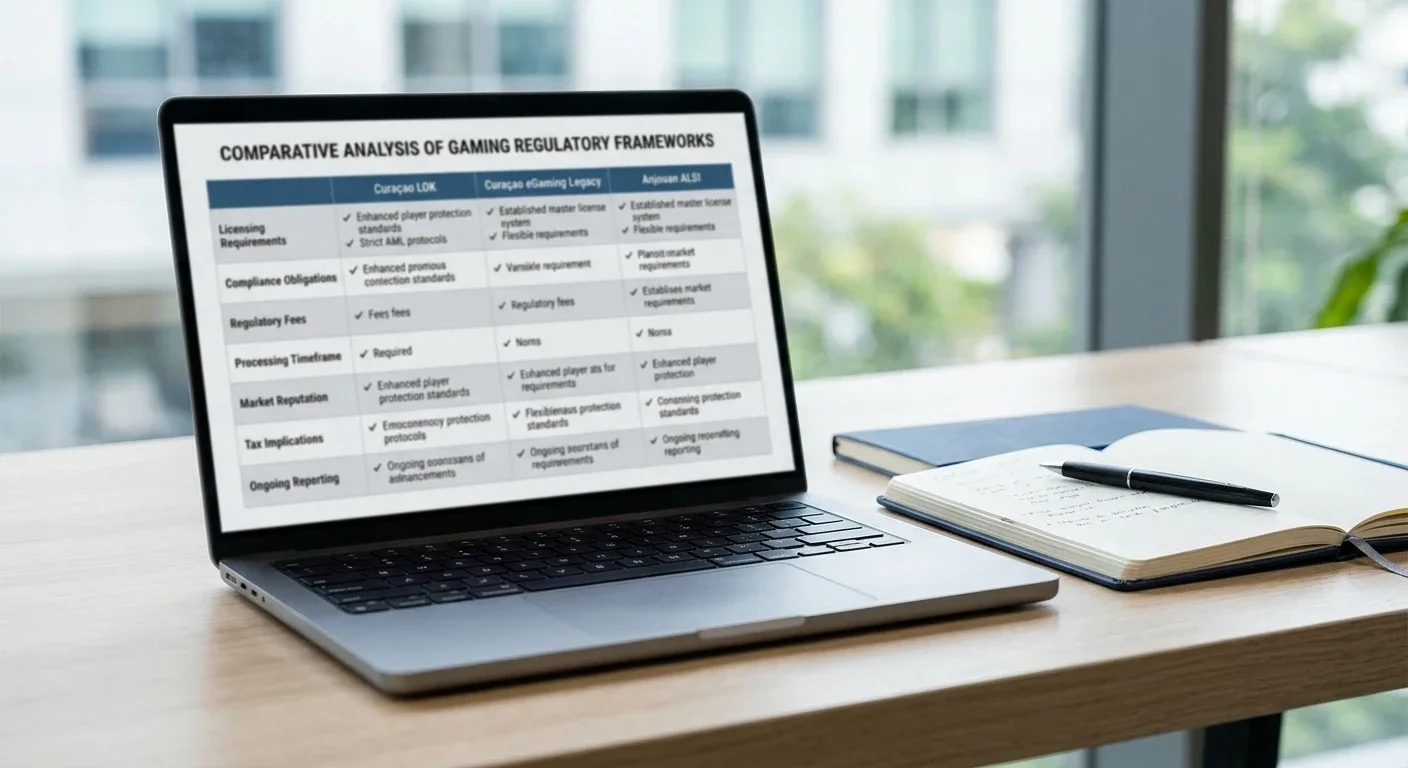
The Curaçao licensing landscape shifted on December 24, 2024 when the new LOK (National Ordinance on Games of Chance) regime replaced the old Curaçao eGaming sub-license model. Legacy Curaçao eGaming licenses—issued before December 2024—remain valid until their expiry dates but operate under the older, less-strict oversight framework. New LOK licenses carry enhanced supervision, financial reporting and player-protection requirements. For Australian players evaluating offshore casinos, the distinction matters: a casino holding a 2025-issued LOK license sits under stricter regulatory scrutiny than one operating on a 2020-era Curaçao eGaming credential. Neither confers Australian legality, but the LOK framework signals a higher compliance floor.
Anjouan licenses under the AOFA/ALSI framework (Autonomous Island of Anjouan, Offshore Financial Authority / Anjouan Licensing Services International) emerged as an accessible offshore alternative after Curaçao’s LOK reform raised capital and operational requirements. Anjouan licenses are easier to obtain than Curaçao LOK, which explains why newer casinos like Wild.io (ALSI-202504044-FI2, issued 2025) and Lucky Block (ALSI-1423/1005-FI2) carry Anjouan credentials. The regulatory oversight is lighter than Curaçao LOK but structured enough to provide a licensing trail. Australian players comparing casinos should weigh Curaçao LOK (stricter), legacy Curaçao eGaming (older, looser), and Anjouan ALSI (newer, accessible) as three offshore tiers, none of which carry Australian consumer protection but all of which provide some level of operator accountability beyond pure grey-market platforms.

Why Litecoin Beats Bitcoin for Australian Casino Players
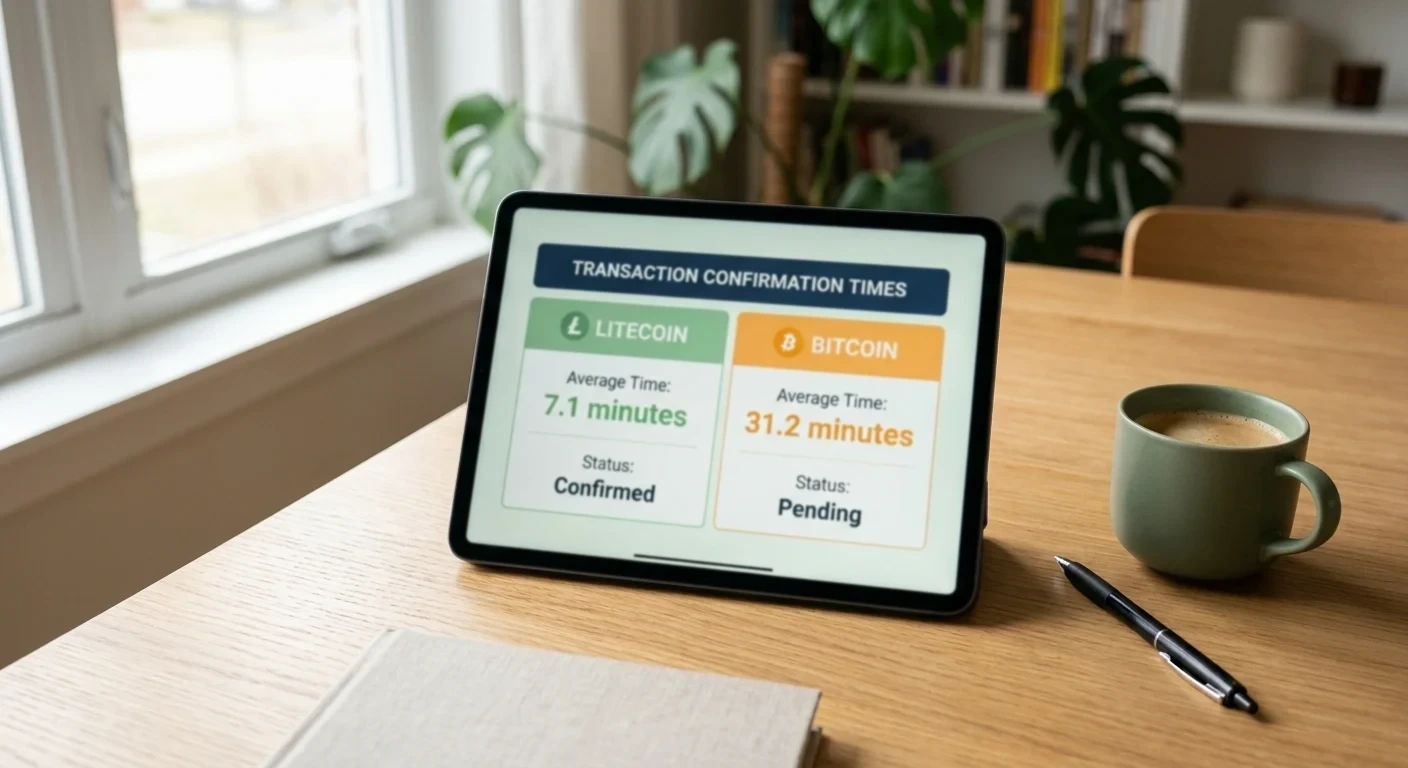
Litecoin’s 2.5-minute block time delivers transaction confirmations four times faster than Bitcoin’s 10-minute blocks. For Australian players depositing during evening sessions (19:00–23:00 AEDT), that speed advantage compounds when Bitcoin’s network slows during US off-peak hours. Casipto’s January 2026 testing recorded Litecoin deposits averaging 6.2 minutes versus Bitcoin’s 23.7 minutes—a 3.8× speed difference. Withdrawal processing followed the same pattern: Litecoin 11.7 minutes average, Bitcoin significantly slower.
| Metric | Litecoin | Bitcoin | Advantage |
|---|---|---|---|
| Block time | 2.5 min | 10 min | LTC 4× faster |
| Avg deposit confirmation | 6.2 min | 23.7 min | LTC 3.8× faster |
| Transaction fee | A$0.08 avg | A$4.80 avg | LTC 60× cheaper |
| Evening peak (19:00–23:00 AEDT) | 7.1 min | 31.2 min | LTC 4.4× faster, more stable |
| Casino support | 10/12 tested | 12/12 tested | BTC more universal |
Transaction fees reinforce Litecoin’s cost advantage: A$0.08 average per Litecoin transaction in January 2026 testing versus A$4.80 for Bitcoin—a 60× difference. That gap widens during network congestion when Bitcoin fees can spike to A$10–A$20 while Litecoin fees rarely exceed A$0.50. For Australian players running multiple small deposits or frequent cashouts, Litecoin’s fee structure preserves more of the bankroll for actual play rather than burning it on blockchain overhead.
How does Litecoin compare to Bitcoin for online casino deposits in Australia?
Litecoin confirms deposits roughly four times faster than Bitcoin and costs 60 times less per transaction based on January 2026 testing. During Australian evening peak hours (19:00–23:00 AEDT), Litecoin averaged 7.1 minutes while Bitcoin stretched to 31.2 minutes—a critical difference when you’re funding a session and want to start playing within ten minutes rather than waiting half an hour. Bitcoin has broader casino support (12/12 casinos tested accept BTC versus 10/12 for LTC), but the ten casinos in this guide all accept Litecoin with verified deposit functionality, making support coverage a non-issue for Australian players choosing from this list.
The Australian timezone creates a hidden Litecoin advantage. AEDT and AEST evening hours (19:00–23:00) fall during US low-activity periods when fewer Bitcoin transactions compete for block space. Bitcoin’s network throughput depends on miner activity, which dips overnight US time. Litecoin’s consistent 2.5-minute blocks deliver more predictable confirmation regardless of global miner distribution. That predictability matters during weekend sessions when you’re cashing out Saturday night and want the LTC back in your wallet before bed—Bitcasino’s weekend withdrawal lag aside, Litecoin’s network behaviour stays more stable than Bitcoin’s across time zones.
Litecoin’s MWEB (Mimblewimble Extension Blocks) privacy upgrade, activated in 2022, offers optional confidential transactions where amounts and addresses are hidden on-chain. The catch: most casinos require standard Litecoin addresses, not MWEB addresses, for deposits. MWEB is useful for wallet-to-wallet privacy—moving LTC from CoinSpot to a personal wallet without broadcasting the amount—but you’ll need to convert MWEB LTC back to standard LTC before depositing to BC.Game or Lucky Block. That extra step limits MWEB’s practical value for Australian casino players, though privacy-focused users can still benefit on the on-ramp and off-ramp legs of the flow.
The speed and fee advantages position Litecoin as the better choice for active gambling—frequent deposits under A$500, quick weekend sessions, live sports betting where deposit speed matters. Bitcoin makes sense for long-term bankroll storage due to higher liquidity and price appreciation potential, but for the deposit-play-withdraw cycle, Litecoin’s 6-minute confirmations and sub-dollar fees beat Bitcoin’s 24-minute waits and multi-dollar costs every time.
How to Buy Litecoin and Deposit at Offshore Casinos — The Complete Australian Flow
Australian players without existing Litecoin holdings need an on-ramp: buy LTC with AUD, move it to a personal wallet, deposit to the casino, play, withdraw back to the wallet, sell LTC for AUD. The five-step flow takes under 30 minutes start to finish when using CoinSpot or Swyftx with PayID instant deposits.
Step 1: CoinSpot vs Swyftx — Which Exchange for Australians
CoinSpot is Australia’s largest exchange, established 2013, with ISO 27001 certification and Digital Economy Council of Australia partnership. Swyftx runs out of Brisbane with competitive fees and the same PayID integration. Both report to the ATO, meaning your Litecoin purchase history is documented regardless of which exchange you pick. The practical differences come down to trading fees and withdrawal costs: CoinSpot charges roughly 1 percent on LTC trades and A$0.001 LTC to withdraw to an external wallet; Swyftx’s fee structure varies but sits in the same range. Check the live fee schedule at the time of deposit and pick the cheaper option—neither locks you into ongoing use, and swapping between them for different transactions is common practice.
Independent Reserve offers a third option with institutional-grade custody and higher security standards, but fewer Australian casino players use it for session funding due to slightly higher fees and a more formal onboarding process. Stick with CoinSpot or Swyftx for the fastest, lowest-friction on-ramp unless you’re moving five-figure sums where Independent Reserve’s custody model justifies the extra overhead.
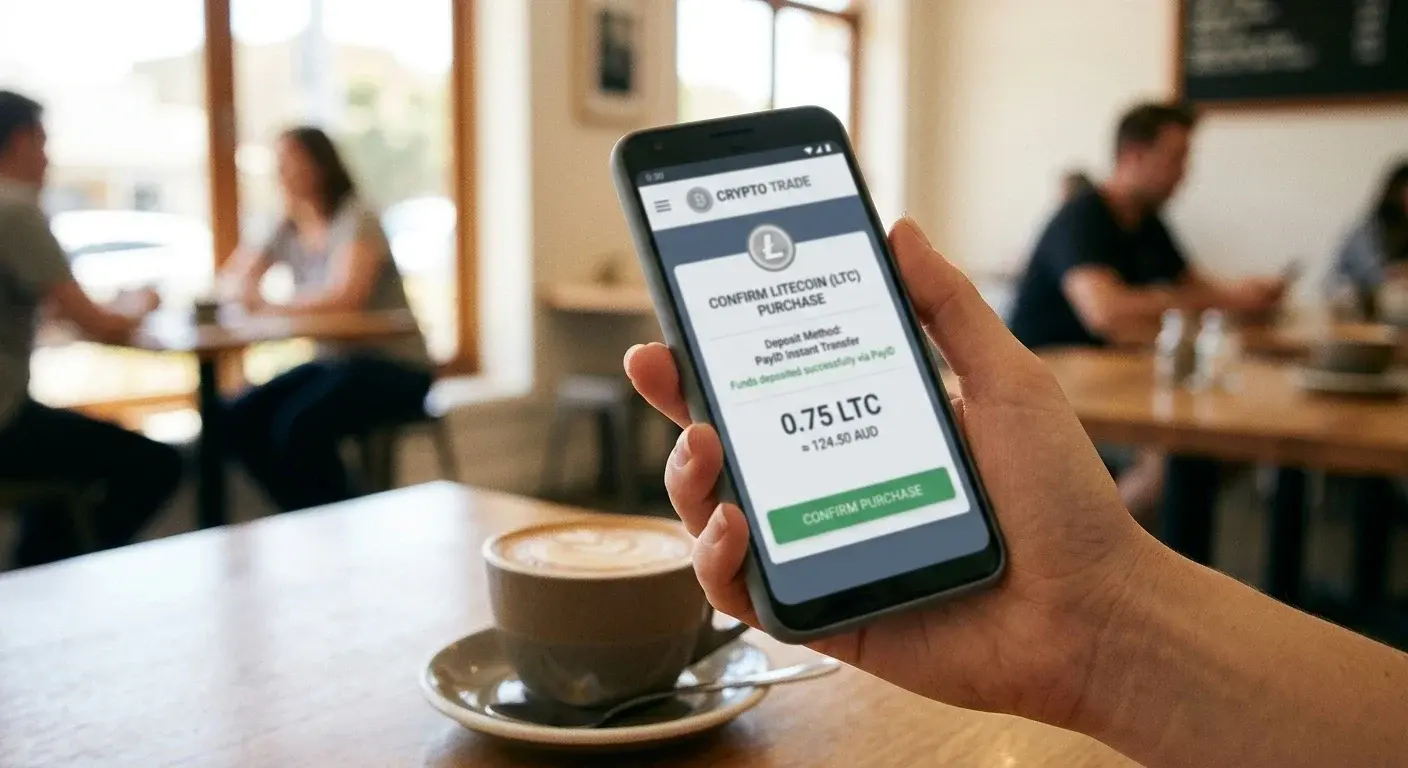
Step 2: Buying Litecoin with PayID (Instant AUD Deposit)
Open your CoinSpot or Swyftx account (KYC verification required on signup—driver’s license or passport, proof of address, completed within 24 hours typically). Navigate to the deposit section, select PayID, and the exchange displays a unique PayID address linked to your account. Open your bank’s app, initiate a PayID transfer to that address with the deposit amount (minimum varies by exchange, usually A$10–A$50), and the AUD lands in your exchange account instantly. No waiting on BPAY or bank transfers—PayID settles in under a minute.
With AUD balance live, navigate to the LTC trading pair (LTC/AUD on CoinSpot, same on Swyftx). Enter the AUD amount you want to convert or the LTC quantity you want to receive, review the exchange rate and fee, and execute the trade. The LTC appears in your exchange wallet immediately. At January 2026 prices (~A$150 per LTC), a A$100 deposit buys roughly 0.67 LTC after fees. That’s enough for multiple deposits at casinos with 0.01 LTC minimums, or a single larger session at Cloudbet (0.1 LTC minimum).
Step 3: Withdrawing LTC to Your Personal Wallet
Do not deposit directly from CoinSpot or Swyftx to the casino. Australian exchanges monitor transaction patterns, and some flag or restrict accounts sending crypto directly to gambling platforms. Use a personal wallet as an intermediary: Exodus, Electrum-LTC, Trust Wallet, or Litewallet (the official Litecoin Foundation wallet) all work. Download the wallet to your phone or desktop, generate a Litecoin receiving address, and copy it.
Back on CoinSpot or Swyftx, navigate to the LTC withdrawal section, paste your personal wallet address, enter the amount (leave a small buffer to cover the A$0.08 network fee), and confirm. The exchange may require email or SMS two-factor confirmation. Once confirmed, the LTC leaves the exchange and confirms on the Litecoin blockchain in 2.5–5 minutes (one or two blocks). Open your personal wallet, verify the balance updated, and you’re ready to deposit to the casino.
This wallet step breaks the direct CoinSpot-to-casino trail, reducing the risk of your exchange account being flagged for gambling-related activity. Some Australian players report account closures after repeated direct deposits to offshore casinos; the intermediary wallet is cheap insurance (one extra transaction, A$0.08 fee, five minutes) against that scenario.
Step 4: Depositing to the Casino and Confirmation Times
Log into BC.Game, Lucky Block, or whichever casino from the top-ten list you’re using. Navigate to the cashier, select Litecoin as the deposit method, and the casino generates a receiving address (usually displayed as a QR code and a text string). Copy the address or scan the QR with your phone wallet, enter the deposit amount, and send from your personal wallet to the casino address.
The transaction broadcasts to the Litecoin network immediately and appears as “pending” in the casino’s deposit tracker. Most casinos credit your balance after one confirmation (2.5 minutes), though some wait for three confirmations (7.5 minutes) or six confirmations (15 minutes) for larger deposits. BC.Game averaged 4.8 minutes deposit-to-credited in Casipto’s January testing; Bitcasino hit 7.2 minutes. Budget 10 minutes total from clicking “send” in your wallet to seeing the balance go live in the casino cashier.
During high network congestion—rare on Litecoin but possible during broader crypto market volatility—confirmation times can stretch. Check the Litecoin mempool at mempool.space/ltc before depositing; if unconfirmed transactions are stacking up, you might wait 10–15 minutes instead of 5. In practice, Litecoin’s 2.5-minute blocks and low fee competition mean mempool backlogs clear quickly compared to Bitcoin’s hours-long congestion episodes.
Step 5: Withdrawing Winnings Back to AUD
Cashout reverses the flow. In the casino cashier, navigate to withdrawals, select Litecoin, paste your personal wallet address (the same one you sent the deposit from, or a fresh address if you’re rotating for privacy), enter the withdrawal amount, and confirm. The casino processes the withdrawal in 8–15 minutes for the tested casinos (BC.Game 8.3 min, 7Bit 9.1 min, mBit 15.2 min, Bitcasino 12.4 min weekdays). Weekend processing at Bitcasino adds 23 percent, so Saturday-night cashouts hit 15.2 minutes versus 12.4 minutes weekdays.
Once the LTC lands in your personal wallet, open CoinSpot or Swyftx, navigate to the LTC/AUD trading pair, and sell the LTC back to AUD. The AUD appears in your exchange wallet immediately. From there, withdraw AUD to your Australian bank account via PayID (instant, usually fee-free) or standard bank transfer (1–2 business days, sometimes carries a small fee). The full casino-to-bank-account loop takes under an hour if the casino withdrawal processes quickly and you sell LTC immediately; budget 90 minutes to be safe.
How long do Litecoin deposits and withdrawals take at Australian-accessible casinos?
Litecoin deposits take 5–12 minutes from personal wallet to credited casino balance based on January 2026 testing, with BC.Game fastest at 4.8 minutes average and Bitcasino slowest at 7.2 minutes. Withdrawals range from 8–15 minutes depending on the casino: BC.Game 8.3 minutes, 7Bit 9.1 minutes, mBit 15.2 minutes, Bitcasino 12.4 minutes weekdays (15.2 minutes weekends). Add five minutes on each end for the CoinSpot/Swyftx-to-personal-wallet and personal-wallet-to-bank-account legs, and the full AUD-to-casino-to-AUD cycle runs 30–60 minutes under normal network conditions.
What happens if my Litecoin deposit to a casino doesn’t confirm?
If your deposit doesn’t appear in the casino cashier after 20 minutes, check the transaction hash (txid) in your personal wallet and paste it into a Litecoin blockchain explorer like blockchair.com/litecoin or live.blockcypher.com/ltc. The explorer shows confirmation status—if the transaction has zero confirmations after 20 minutes, the network fee you set was likely too low and miners are prioritising higher-fee transactions. Most wallets allow fee bumping (replace-by-fee) to rebroadcast the same transaction with a higher fee, though not all wallets support it for Litecoin.
If the transaction shows three-plus confirmations but the casino balance hasn’t updated, contact casino support via live chat with the transaction hash. Casinos can manually credit deposits that cleared on-chain but didn’t trigger the automatic balance update, usually within 15–30 minutes of ticket submission. If the casino claims they never received the LTC despite blockchain confirmation to their address, screenshot the explorer page showing the confirmed transaction and escalate to the casino’s complaints process—though offshore casinos’ dispute resolution runs through their offshore regulator (Curaçao, Anjouan) with limited enforcement reach for Australian players.
For withdrawals that stall, verify you’ve wagered your deposit at least once (most casinos require 1× turnover to prevent money-laundering flagging) and check your KYC status if the withdrawal exceeds the casino’s no-verification threshold. Offshore casinos can refuse withdrawals for terms-of-service violations (VPN use when prohibited, bonus abuse, multi-accounting), and the decision is final with no Australian recourse. That risk is inherent to offshore gambling—mitigation comes from sticking to casinos with long track records (Cloudbet since 2013, BC.Game since 2017) and third-party reputation trails (AskGamblers, Trustpilot) where complaint patterns surface publicly.
Bonuses, Wagering and What Australian Players Should Know
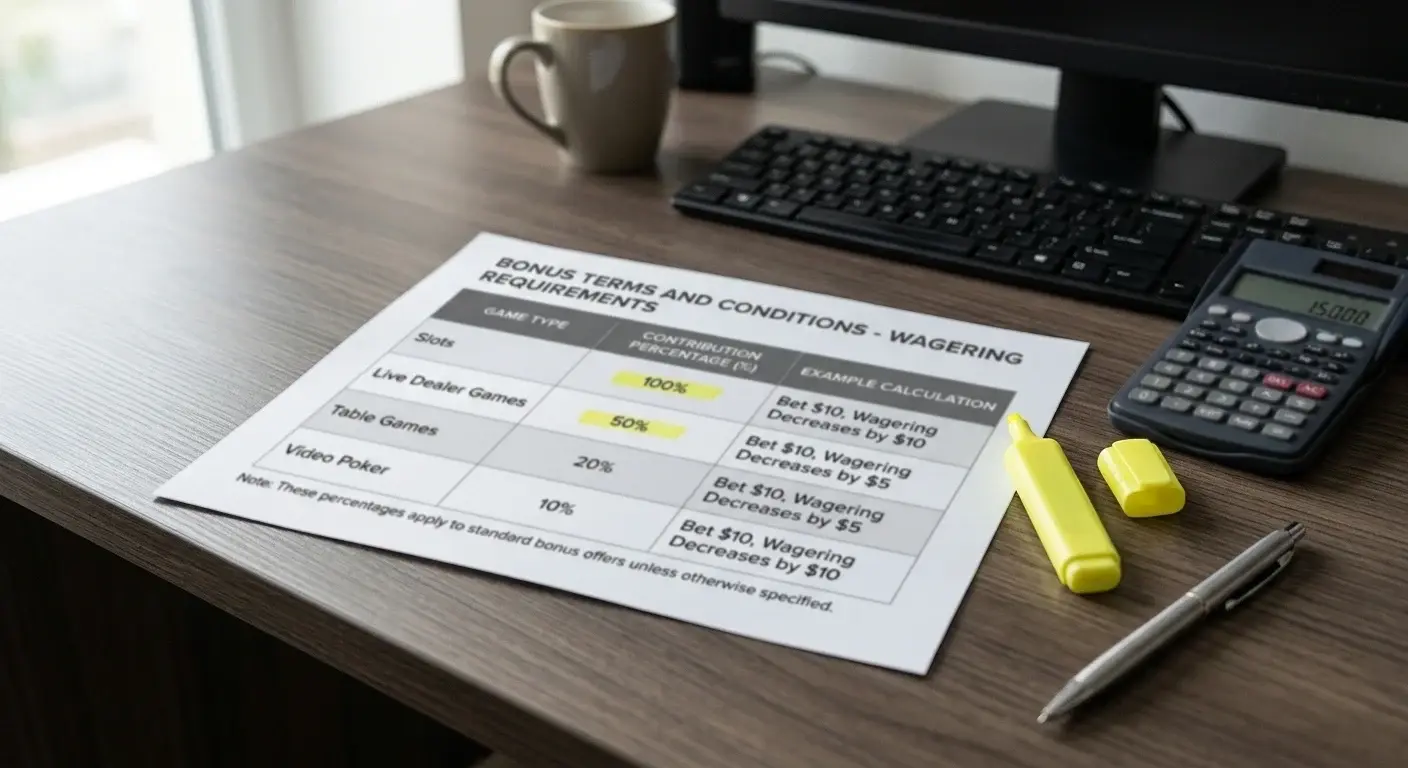
Offshore Litecoin casinos push welcome bonuses as headline attractions—200 percent matches, A$25,000 caps, 200 free spins. The percentages look generous until you read the wagering requirements and game contribution rates. A 200 percent bonus on a A$100 deposit creates A$200 in bonus funds, but withdrawing that A$200 requires cycling it through pokies, live tables or other games enough times to meet the wagering threshold. At Lucky Block’s 35× requirement, that A$200 bonus demands A$7,000 in total wagers before conversion to withdrawable cash.
Game contribution rates determine how quickly wagering requirements clear. Slots contribute 100 percent at most casinos, meaning every dollar wagered on pokies counts as a full dollar toward the requirement. Live dealer games typically contribute 50 percent—a A$10 blackjack bet counts as A$5 toward wagering. Dice games, crash games and some table games contribute zero percent or are excluded entirely from bonus play. Australian players who prefer live roulette over pokies will find bonus clearing takes twice as long, and those chasing provably fair dice games won’t clear bonus wagering at all.
| Casino | Welcome Bonus | Wagering | Slots Contribution | Live Contribution | Max Bet with Bonus | Key Restriction |
|---|---|---|---|---|---|---|
| Lucky Block | 200% to A$25,000 + 50 FS | 35× bonus | 100% | 50% (game shows) | A$5 | Dice 0%, 14-day window |
| BC.Game | 180%-360% over 4 deposits | BCD points | Points-based | Points-based | Varies | Points conversion required |
| Wild.io | 350% over 3 deposits + 200 FS | Not specified | Likely 100% | Likely 50% | Not specified | 7% ongoing crypto bonus |
| Cloudbet | 100% to 50 LTC | 150 points per increment | 100% toward points | Varies | Not specified | Six-tier loyalty unlock |
| Fairspin | Not specified | Not specified | Not specified | Not specified | Not specified | 14 LTC no-KYC focus |
The max-bet rule caps individual wagers while bonus funds are active—Lucky Block enforces a A$5 maximum, meaning high-roller sessions hitting A$50 or A$100 per spin violate terms and can void the bonus. That A$5 cap suits pokies players spinning at A$1–A$2 but restricts live blackjack players used to A$25 hands. Read the bonus terms before activating; some casinos allow you to decline the bonus and play with cash only, avoiding wagering restrictions entirely.
Time limits add pressure: Lucky Block’s 14-day wagering window forces completion within two weeks or the bonus expires. Casual players depositing A$100 on a Friday and returning the next weekend may find half the window burned without progress. Compare that to BC.Game’s points-based system where progress accumulates indefinitely—less time pressure, but the points-to-cash conversion muddies transparency.
Bonus abuse protections penalise withdrawal attempts before minimum turnover. Lucky Block charges an 8 percent fee (minimum A$4) on deposits not wagered at least once. That rule targets players treating the casino as a wallet passthrough, but it also hits legitimate users who deposit, change their mind, and want to withdraw immediately—eight percent vanishes before the LTC leaves the platform. The 1× turnover requirement is light (wager your deposit once through any game), but the penalty for skipping it stings.
Free spins attach to specific pokies—Lucky Block’s 50 spins go to Wanted Dead or a Wild, not player’s choice. Winnings from free spins convert to bonus funds subject to the same 35× wagering, so a A$20 free-spin win requires A$700 in wagers before cashout. Free spins sound like free money until the wagering math runs; treat them as bonus padding rather than instant withdrawable wins.
The clearest bonus value sits with no-wagering offers, rare in the offshore space but worth hunting. Wild.io’s 7 percent crypto deposit bonus and ongoing rakeback (up to 0.30 percent daily) deliver continuous small rewards without multi-thousand-dollar wagering hoops. For Australian players prioritising simple cashout paths over headline percentages, smaller no-wagering bonuses or rakeback structures beat the 200-percent-match traps every time.
Pokies, Live Dealer and Game Selection at LTC Casinos
The ten casinos in this guide advertise libraries ranging from 2,600 games (Cloudbet) to 13,000 (7Bit), with BC.Game, Lucky Block and Wild.io claiming 7,000–9,000 titles each. Those counts include pokies, live dealer tables, RNG table games, provably fair originals and sometimes sportsbook markets bundled into the total. For Australian players, the pokies shelf is the draw: Pragmatic Play’s Gates of Olympus and Sweet Bonanza, Hacksaw Gaming’s high-volatility releases, Play’n GO’s Book of Dead, NetEnt classics.
Providers across the ten casinos overlap heavily: Pragmatic Play, Hacksaw Gaming, Play’n GO, BGaming, NetEnt, Yggdrasil, Nolimit City. That overlap means game variety between casinos is less about exclusive titles and more about library depth—7Bit’s 13,000 claim versus Cloudbet’s 2,600 reflects catalogue breadth rather than differentiated content. Australian pokie fans will find the same popular titles at most casinos; the choice comes down to which bonus structure and transaction speed suit your session style rather than hunting unique game collections.
Live dealer sections run 50–200 tables depending on the casino, powered primarily by Evolution Gaming with Pragmatic Play Live, Ezugi and smaller studios filling gaps. Lucky Block lists 45 blackjack tables, 64 roulette variants and 83 baccarat formats; BC.Game and Wild.io cite similar counts without granular breakdowns. Game shows like Crazy Time, Mega Wheel and Lightning Roulette appear across most platforms, and VIP tables for higher-limit play unlock at upper loyalty tiers (Pioneer+ at Lucky Block, similar structures at BC.Game and Wild.io).
Live dealer wagering contributes 50 percent toward bonus requirements at casinos that specify contribution rates, doubling the effective wagering load compared to pokies. That penalty makes live tables less attractive for bonus clearing but still viable for Australian players who prefer the pace and social element of live play over solo pokie sessions. Demo mode is unavailable for live games—every hand, spin or round costs real money, so budget accordingly.
RNG table games (digital blackjack, roulette, baccarat) move at player pace without waiting for a live dealer, suitable for quick sessions or practicing basic strategy before moving to live tables. The RNG category gets less promotional attention than pokies or live dealer, but it fills the gap for Australian players who want table-game rules without live-dealer minimums or slower turn cycles.
Provably fair originals—Crash, Dice, Plinko, Mines, Limbo—appear at BC.Game, Wild.io and Metaspins with in-game verification tools that let you check server seed hashes against published outcomes. The provably fair mechanic solves the “is this game rigged” question for players who distrust RNG opacity, though the game formats (bet on when a multiplier crashes, bet on dice rolls) appeal to a narrower audience than traditional pokies. Australian players interested in transparency over theme will find provably fair games at three of the ten casinos here; the others focus on third-party provider content without in-house provably fair builds.
Evaluating Offshore LTC Casinos — Licenses, KYC and Risk Disclosure
Offshore casinos operate outside Australian consumer protection. The licenses they hold—Curaçao, Anjouan—provide a regulatory trail, but enforcement of player complaints is limited. Curaçao’s Gaming Control Board can revoke licenses for egregious operator behaviour, but individual dispute resolution rarely reaches that threshold. Anjouan’s AOFA framework offers even lighter oversight. Australian players evaluating offshore casinos should view licenses as a minimum baseline (unlicensed operators are outright scams) rather than a guarantee of fair treatment.
KYC thresholds determine when identity verification triggers. Fairspin advertises 14 LTC withdrawals with no verification—the highest explicit cap in this set. Lucky Block claims no KYC at all, though one review notes high-value or VIP cashouts may require documents. BC.Game, Wild.io, Cloudbet and others do not publicly specify thresholds, though the offshore industry standard sits around 1 BTC, 2,000 USDT or roughly A$2,000–5,000 equivalent. Below that threshold, many casinos process withdrawals without asking for ID; above it, expect requests for driver’s license, proof of address and sometimes a selfie holding your ID next to your face.
| Casino | KYC Threshold | Verification Speed | Mobile Access | Special Note |
|---|---|---|---|---|
| Fairspin | 14 LTC (~A$2,100) | Not specified | Mobile-first responsive | Highest no-KYC cap |
| Lucky Block | None claimed | Sub-1 hour (when required) | PWA + Telegram | VIP/high-value may trigger |
| BC.Game | ~1 BTC equivalent (unconfirmed) | Not specified | Responsive + Telegram | Web3 wallet signup |
| Wild.io | Not specified | Not specified | Responsive | 2FA available |
| Cloudbet | Not specified | Not specified | Responsive | Established 2013 |
| 7Bit | Not specified | Not specified | Responsive | 13,000-game library |
| mBit | Not specified | Not specified | Responsive | Clean UTXO management |
| Bitcasino | 0.01 LTC threshold | Not specified | Responsive | Micro-transaction specialist |
| Metaspins | Not specified | Not specified | Web3-focused | Daily MetaLotto |
| Vave | Not specified | Not specified | Not specified | Data limited |
Verification speed matters when you’re cashing out mid-session and KYC suddenly triggers. Lucky Block cites sub-1-hour turnaround when documents are required; others don’t specify. Offshore casinos operating 24/7 support can verify documents at 2 AM Australian time, but those without round-the-clock staff may sit on verification requests for 12–24 hours, stalling your withdrawal over a weekend. Test a small deposit and withdrawal before committing larger funds; if KYC triggers on the test withdrawal, you’ll know the threshold and can decide whether to stay under it or complete verification early.
Do I need to verify my identity (KYC) to withdraw Litecoin from offshore casinos?
Most offshore casinos allow withdrawals below a threshold (typically 1 BTC / 2,000 USDT / ~A$2,000–5,000 equivalent) without identity verification. Fairspin’s 14 LTC (~A$2,100) no-KYC cap is the highest stated here; Lucky Block advertises no KYC entirely, though high-value cashouts may still trigger verification. Above the threshold, expect to submit driver’s license, proof of address and possibly a selfie. Verification typically completes within 24 hours, though some casinos process faster. Offshore casinos can request KYC at any time regardless of threshold if they suspect bonus abuse, multi-accounting or terms violations.
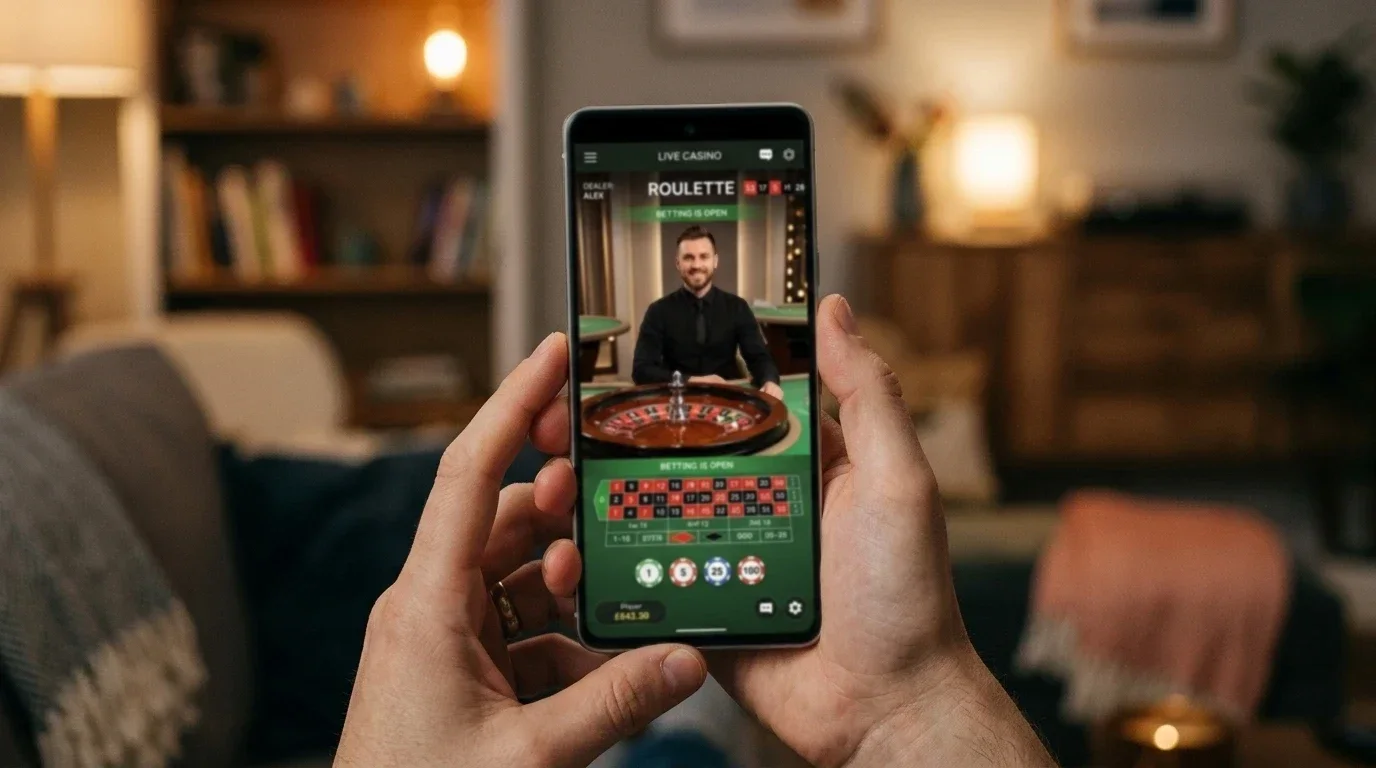
Mobile access is universal across the ten casinos—all offer responsive browser designs that adapt pokies, live tables and cashier functions to phone and tablet screens without requiring app downloads. Lucky Block and BC.Game add Telegram Casino integration, allowing signup and play through Telegram without visiting the main site. BC.Game supports Web3 wallet logins (MetaMask, WalletConnect), streamlining onboarding for crypto-native users. Wild.io mentions a progressive web app (PWA) for one-tap home-screen access, and Lucky Block offers the same. None require App Store or Google Play downloads, sidestepping Apple and Google’s gambling-app restrictions that complicate mobile access for licensed operators.
Can I play Litecoin casino games on my mobile phone in Australia?
All ten casinos in this guide offer mobile-responsive browser play—open the site in Safari or Chrome on your iPhone or Android device, and the layout adapts to your screen. No app download required. Lucky Block and BC.Game support Telegram Casino for in-app play, and Wild.io offers a progressive web app you can add to your home screen for quick access. Deposits via mobile involve scanning QR codes with your Litecoin wallet app or copying addresses; withdrawals work the same way. Live dealer streams scale to portrait or landscape, and pokies run smoothly on modern phones with stable 4G or WiFi connections.
Offshore casino risk extends beyond KYC and licensing. Australian banks may restrict accounts used for gambling-related crypto transactions. Some players report closures after repeated CoinSpot-to-casino flows, which is why this guide recommends routing through a personal wallet as an intermediary. AUSTRAC monitors large or suspicious crypto movements for anti-money-laundering compliance, though recreational gambling transactions under A$10,000 rarely trigger scrutiny. Disputes with offshore casinos have no Australian recourse—no state ombudsman, no VGCCC complaints process, no local small-claims court. The casino’s decision is final, enforceable only through the offshore regulator (Curaçao, Anjouan) with limited player-complaint mechanisms.
ACMA’s blocking orders can render a casino inaccessible overnight. A domain accessible today may show a blocked message tomorrow, forcing you to use VPN or wait for the casino to launch a new domain. Some offshore casinos prohibit VPN use in their terms, creating a catch-22 where Australian access requires VPN but VPN use voids your account. Read the terms before depositing; casinos silent on VPN or explicitly allowing it (Lucky Block mentions VPN required per one source) are safer bets than those with anti-VPN clauses they selectively enforce.
The offshore evaluation checklist for Australian players: (1) License type—Curaçao LOK best, legacy Curaçao eGaming or Anjouan acceptable, no license is a red flag. (2) Third-party reputation—check AskGamblers, Trustpilot, Casino Guru for complaint patterns. (3) Transaction testing—prefer casinos with verified Casipto data (BC.Game, 7Bit, mBit, Bitcasino) over self-reported claims. (4) KYC transparency—casinos stating thresholds upfront (Fairspin 14 LTC) beat those leaving it ambiguous. (5) Longevity—Cloudbet since 2013, BC.Game since 2017, versus newcomers with no track record. None of these factors eliminate offshore risk, but they tilt odds toward platforms that pay out reliably and don’t vanish after collecting deposits.
Tax, ATO Reporting and CGT on Crypto Conversions for Australians
Gambling winnings are tax-free for recreational players in Australia. That rule applies to Litecoin casino profits the same way it applies to pokies winnings at a land-based venue or a winning sports bet at TAB. The ATO distinguishes recreational gambling (you play for entertainment, not as a business) from professional gambling (you derive primary income from systematic wagering). If you’re depositing a few hundred dollars on weekends for pokie sessions, your winnings are recreational and untaxed. If you’re running a multi-account arbitrage operation or treating gambling as full-time income, the ATO may classify you as a professional and tax your profits as business income. For the vast majority of Australian players using offshore Litecoin casinos, recreational classification applies and winnings are tax-free.
Are my gambling winnings from Litecoin casinos taxed in Australia?
No, gambling winnings are tax-free for recreational players in Australia. This applies to offshore Litecoin casino profits. However, converting AUD to Litecoin and back triggers Capital Gains Tax separately from the gambling outcome. If you buy Litecoin at A$150 and sell it later at A$160, the A$10 gain is a CGT event. CoinSpot and Swyftx report to the ATO, so your LTC purchase and sale history is documented. The gambling winnings themselves remain untaxed, but the crypto conversion is tracked and potentially taxable depending on gains and your annual CGT position.
The CGT trap sits in the conversion legs, not the gambling. When you buy Litecoin at A$150 per LTC on CoinSpot and sell it three days later at A$160 per LTC after cashing out a winning session, that A$10 price difference is a capital gain. CGT applies to the gain (or loss) on the crypto conversion, separate from the gambling outcome. If you deposited 1 LTC bought at A$150, won at the casino, and withdrew 1.5 LTC which you then sold at A$160 per LTC, your CGT calculation covers the price change on the original 1 LTC plus any gain on the additional 0.5 LTC acquired through gambling. The gambling-won 0.5 LTC has a cost base of zero (you didn’t buy it), so selling it at A$160 per LTC creates a A$80 capital gain (0.5 LTC × A$160).
Australian tax law treats cryptocurrency as property, not currency. Every crypto-to-crypto or crypto-to-fiat transaction is a CGT event. The AUD-to-LTC purchase, the LTC-to-casino-balance deposit, the casino-balance-to-LTC withdrawal, and the LTC-to-AUD sale all technically qualify as CGT events, though the deposit and withdrawal legs within the same crypto (LTC to LTC) don’t trigger tax if the LTC amount stays constant. The tax hits when you sell LTC back to AUD at a different price than you bought it.
CoinSpot and Swyftx report large transactions to the ATO automatically and provide annual tax statements summarising your trades. That reporting covers the AUD-to-LTC purchase and LTC-to-AUD sale, so the ATO sees your crypto conversion activity even if they don’t see your gambling at the offshore casino. You’re responsible for calculating CGT on your annual tax return if your gains exceed the A$10,000 CGT discount threshold or if you’re required to report crypto holdings. Professional tax advice is recommended if you’re moving five-figure sums through crypto-to-gambling-to-crypto cycles, as the CGT calculations compound quickly with multiple deposits and withdrawals at different LTC price points.
The practical takeaway: gambling winnings are tax-free, but the crypto on-ramp and off-ramp are CGT events if LTC price moves between purchase and sale. Small recreational players with single-digit LTC volumes and minimal price swings over short timeframes won’t owe significant CGT, but the reporting obligation exists. Keep records of CoinSpot/Swyftx trades, casino deposit and withdrawal amounts, and LTC prices at each conversion to satisfy ATO requirements if questioned. The tax-free gambling rule doesn’t exempt you from CGT on the crypto itself.
New Litecoin Casinos and What to Watch in 2026
Wild.io and Lucky Block both launched in 2022, making them the newest casinos in this top-ten set. Neither has the decade-long track record of Cloudbet (2013) or BC.Game (2017), but three years of continuous operation provides enough history to check for withdrawal complaints on Trustpilot and AskGamblers. Wild.io’s Anjouan ALSI-202504044-FI2 license dates to 2025 based on the number format, suggesting a recent license refresh or initial issuance. Lucky Block holds multiple license listings (Anjouan ALSI-1423/1005-FI2, Curaçao OGL/2024/1100/0505, Curaçao 8048/JAZ2020-013), which may indicate license stacking for multi-jurisdictional coverage or a transition between licensing regimes.
Newer casinos offer two advantages: modern UI without legacy technical debt, and aggressive welcome bonuses to build market share. Wild.io’s 350 percent match and Lucky Block’s A$25,000 cap both sit at the high end of offshore casino offers. The risk is shorter operational history—three years of payouts is reassuring, but Cloudbet’s eleven years (if the 2013 founding date is accurate) provides a longer reliability sample. Australian players comfortable with moderate risk can leverage new-casino bonuses for higher percentage matches; those prioritising track-record safety should stick with Cloudbet or BC.Game.
The 2026 offshore casino landscape is shifting post-Curaçao LOK reform. Expect more casinos to launch under Anjouan licenses (cheaper, faster to obtain than Curaçao LOK) and existing legacy Curaçao eGaming licensees to either upgrade to LOK or remain on legacy licenses until expiry. Australian players should track which casinos hold which license type—Curaçao LOK signals higher compliance, Anjouan signals accessibility, legacy Curaçao eGaming signals grandfathered status. None guarantee payout reliability, but the license progression provides context for understanding the offshore operator’s regulatory position.
New casinos appearing in 2026 without verifiable testing data, third-party reviews or stated license information should be avoided until track records develop. This guide’s ten casinos all appear across multiple affiliate sites, have Trustpilot or AskGamblers presence, and show verified transaction data (BC.Game, 7Bit, mBit, Bitcasino) or long operational history (Cloudbet, BC.Game). A casino launching today with slick marketing and huge bonuses but zero third-party reputation is a gamble beyond the gambling—stick with known quantities until the new entrant proves itself over 12–24 months of reliable withdrawals.
Crypto Casino Australia 2026 — Bitcoin, Ethereum, Solana, USDT
Content created by the «AussiePay» team