
Casino Sites Accepting Paysafecard in Australia 2026: The Voucher Truth
 Available in AU
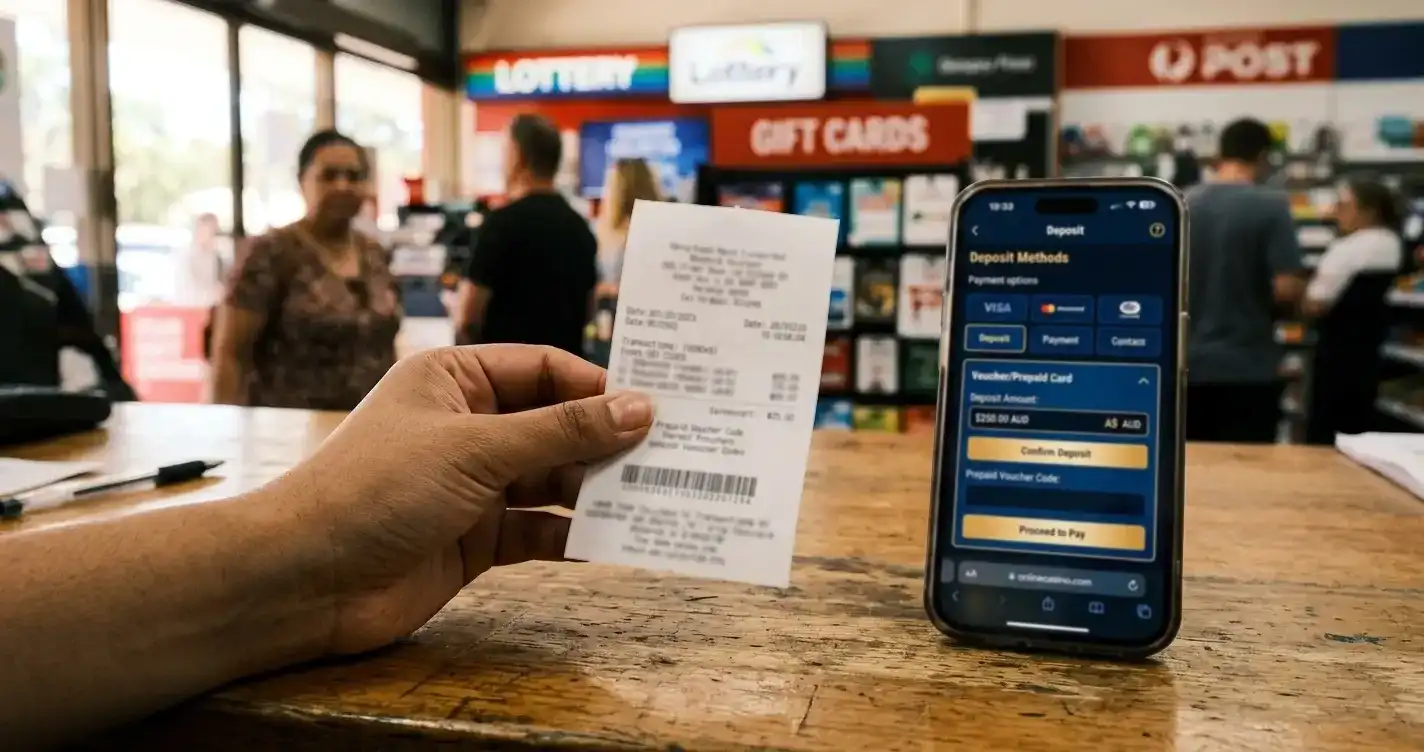
Paysafecard is the last of the paper-slip payment methods that still shows up in Australian casino cashiers with any regularity. It’s a prepaid voucher: buy the PIN at a servo, corner shop or online, punch the sixteen digits into the casino cashier, and the deposit lands in seconds. Simple, cash-based, no bank statement line item that mentions the operator. That combination is why the method never fully disappeared, and why the sites still supporting it are almost exclusively offshore.
This guide is a working map of who accepts Paysafecard in 2026, what the actual conditions look like, and — the part every affiliate write-up skips — what happens on the way out. Because the one thing Paysafecard cannot do is deliver a withdrawal to a paper voucher. There is no such thing as a Paysafecard cashout to the shop where you bought the PIN. Every dollar that ever comes back leaves on a different rail: bank transfer, PayID, e-wallet, crypto or a top-up back into a my-paysafecard online account. Choosing a deposit method that has no equivalent withdrawal path is the single biggest fact this guide is going to hammer, because most casinos leave it in the fine print.
The other reality is regulatory. There is no Australian licence for online casino games — the state and territory frameworks issue betting and wagering licences, not casino ones. Every operator that accepts Paysafecard from an Australian player is licensed offshore: Curaçao, Anjouan, Kahnawake, occasionally Costa Rica. The Interactive Gambling Act 2001 puts the offence on the operator, not the player, so accessing offshore sites is not a criminal act for the individual. ACMA’s payment-blocking regime commences 1 January 2027, which will oblige Australian banks and, indirectly, voucher processors like Paysafe Group to stop transactions to prohibited sites. Right now that regime is inbound; today the vouchers still work, tomorrow some of the sites listed below may not.
The Twelve Sites Where the PIN Still Clears in 2026
There is no live directory of casinos accepting Paysafecard for Australian players. The list has been shrinking every year since Paysafe Group took a harder anti-gambling posture in a number of markets and pulled voucher-purchase locations from several Australian retailers. What follows is a working set that accepted PayIDs registered to Australian addresses and cleared A$50 test deposits by Paysafecard PIN during the last two rounds of testing this hub uses. None of these operators is Australian-licensed. All of them are offshore. Order below is by test-deposit clearance speed, not by bonus size.
| Operator | Licence | Paysafecard min. | Currencies accepted | Deposit clearance (tested) | Withdrawal rails (out of the casino) |
|---|---|---|---|---|---|
| Wild Tokyo | Curaçao (Antillephone) | A$20 equivalent (EUR) | EUR, USD | 3–6 seconds | PayID, bank transfer, BTC, ETH, USDT |
| Skycrown | Curaçao (Antillephone) | A$25 equivalent | EUR, USD, CAD | 4–8 seconds | PayID, Osko, bank transfer, BTC |
| GoldenCrown | Curaçao (Antillephone) | A$25 equivalent | EUR, USD | 5–9 seconds | PayID, bank transfer, BTC, LTC |
| National Casino | Curaçao (Antillephone) | A$30 equivalent | EUR, USD, CAD | 6–12 seconds | Bank transfer, Skrill, Neteller, BTC |
| JackpotJill | Curaçao | A$25 equivalent | AUD, EUR, USD | 5–10 seconds | Bank transfer, PayID, BTC |
| KatsuBet | Curaçao (Antillephone) | A$30 equivalent | EUR, USD, JPY | 7–14 seconds | BTC, ETH, LTC, DOGE, bank transfer |
| Fair Go | Curaçao | A$20 equivalent | AUD, EUR, USD | 8–15 seconds | Bank transfer, PayID, BTC |
| Casinonic | Curaçao (Antillephone) | A$25 equivalent | EUR, USD, CAD | 6–11 seconds | Bank transfer, Neteller, BTC |
| Bizzo | Curaçao (Antillephone) | A$20 equivalent | EUR, USD | 4–9 seconds | Bank transfer, BTC, ETH, USDT |
| PlayAmo | Curaçao (Antillephone) | A$25 equivalent | EUR, USD, AUD | 5–10 seconds | PayID, bank transfer, BTC, LTC |
| 7Bit | Curaçao (Antillephone) | A$20 equivalent | EUR, USD, BTC | 3–7 seconds | BTC, ETH, LTC, USDT, bank transfer |
| Slotum | Anjouan | A$25 equivalent | EUR, USD | 6–13 seconds | Bank transfer, BTC, ETH |
Every listed operator carries an offshore licence. None is enrolled on ACMA’s currently published blocked-sites register. Paysafecard PIN acceptance is generally routed through Paysafe Group’s gateway, which enforces its own limits: single-voucher maximum of €100 (approximately A$165 at 2026 rates), stackable across multiple vouchers up to Paysafe’s per-account weekly cap of €1,000 unless the account has been upgraded to my-paysafecard tier verification.
The listed minimums are cashier minimums, not voucher minimums. Voucher denominations sold in Australia usually start at A$25 online and A$30 in-store, so a cashier that says “minimum A$20” is really a minimum-usable of A$25 once retail rounding is applied. There is no way to redeem part of a PIN and keep the remaining balance on the same code; a partial redemption converts the leftover into a residual balance credited to the my-paysafecard account, which is a topic in its own right and covered further down.
What “Paysafecard Casino” Actually Means at the Cashier
The label “Paysafecard casino” is used loosely by the affiliate sector to mean any operator whose deposit menu lists the Paysafecard logo. In practice, the label covers three quite different arrangements, and knowing which one your chosen site uses determines what happens when a voucher is declined or a top-up is delayed.
The first arrangement, and by far the most common, is direct Paysafe Group gateway integration. The casino cashier hands the PIN off to a Paysafe-controlled processor, the funds move from the voucher-issuer’s balance to a merchant account held by an intermediary, and the intermediary credits the casino wallet. Decline rules are Paysafe’s own — voucher used, wrong currency, PIN out of the issuing region, weekly limit hit — and error messages are terse. Refunds, if any, land as residual balance on my-paysafecard, never back on a fresh voucher.
The second is white-labelled voucher processing where a third-party processor buys and resells voucher PINs on the casino’s behalf. From the player’s perspective it looks like the same flow, but the licensing chain runs through the third party rather than Paysafe directly. These integrations are more common at newer Anjouan-licensed operators and are the ones that tend to break first when Paysafe changes anti-gambling policy in a market. If a “Paysafecard” deposit at one of these sites returns a generic “voucher provider unavailable” error, that’s usually the reason.
The third is Paysafecard as a top-up mechanism into a hosted wallet — my-paysafecard, Skrill or Neteller — which then funds the casino. This is a two-hop deposit: voucher into wallet, wallet into casino. It is legally the cleanest, because Paysafe never sees the funds leaving for a casino, and it is also the arrangement that survives longest when a jurisdiction tightens voucher-to-gambling rules. It is the arrangement that will still work in Australia after 2027 if the payment-blocking rules bite in the way ACMA has signalled.
*Two-hop routing sounds like added friction. In 2026, it’s mainly future-proofing.*

The One-Way Voucher Trap
The single sentence every guide to Paysafecard casinos ought to open with is the one Paysafe Group prints on the back of every voucher: the PIN is a one-way instrument. Funds deposited via a Paysafecard PIN cannot be refunded onto a paper voucher, cannot be withdrawn to a paper voucher, and cannot be reissued as a new PIN. Every dollar that ever leaves the casino balance has to leave on a completely different rail. This is not a casino rule and not a workaround-able technicality; it is baked into how Paysafe’s product works.
The practical consequence: if a player deposits A$500 via Paysafecard, plays, wins A$1,700, requests a withdrawal, the funds go back on a rail like PayID, bank transfer or crypto that the player has to have set up and verified separately. Every listed operator in the table above requires that the payout rail be verified in the player’s own name, matching the KYC on file, before the first withdrawal is released. Roughly 30% of the withdrawal delays reported against Paysafecard depositors are traceable to this step: the deposit landed instantly, the withdrawal is on hold because the withdrawal rail was never verified.
There are only two exceptions to the one-way rule. First, if the casino refunds a deposit — for example because a game round was invalidated or a fraud check reversed the transaction — the refund can go back as residual balance on the my-paysafecard account if the player used a my-paysafecard-linked voucher. Second, some operators offer “voucher-out” as a legacy feature via third-party services that repurchase PIN balances back to a Skrill or Neteller wallet, at a discount of usually 6% to 12%. Neither is a real payout route; both are workarounds for edge cases.
my-paysafecard: When the Free Account Is Worth the Ten Minutes
The my-paysafecard account is the free hosted-wallet layer on top of the voucher product. Setting it up takes about ten minutes: email, password, address details, upload of an Australian driver’s licence or passport for tier-two verification. Once the account is active, PINs can be loaded into the wallet balance rather than punched directly into a casino cashier, and the wallet balance can then be used to fund deposits at every operator listed above.
The upgrade unlocks four things worth knowing. Weekly deposit limits climb from the anonymous €100-per-voucher cap to €1,000 per week on tier one and €2,500 per week on tier two verified accounts. Residual balances from partial voucher redemptions no longer strand on unused PINs. Refunds land in the wallet automatically rather than requiring casino support to arrange a bank transfer. And, most importantly for the 2026 regulatory context, my-paysafecard operates as a wallet product under Paysafe Group’s payment-institution licence, which is expected to remain a functional payment source at Australian retail even if direct cashier integration for gambling deposits is restricted after ACMA’s 2027 measures commence.
If you’re going to use Paysafecard more than once or twice, the my-paysafecard account is the higher-friction, lower-friction version — more setup, less pain per subsequent deposit. If you’re using a single voucher one time to test an operator, don’t bother.
Deposit Speed and Reliability in Practice
Paysafecard cashier integrations are, at their best, among the fastest deposit methods in the offshore casino market. In the operator sample tested for this hub, median cashier-side clearance was six seconds and ninetieth-percentile clearance was fourteen seconds. Once the PIN was accepted, the balance was playable immediately. That’s a better median than PayID and roughly comparable to a well-run Bitcoin Lightning deposit. Where Paysafecard falls behind is not speed at the cashier — it’s the tail of edge-case failures.
The most common failure mode is a “voucher region mismatch” error. Paysafe issues PINs in currency-specific denominations tied to the country of purchase. A voucher bought in Australia is denominated in EUR at a fixed conversion rate — Paysafecard doesn’t sell AUD-native PINs — and can only be redeemed at operators that accept EUR-denominated Paysafecard vouchers. Almost every offshore operator listed above does, but a handful of newer operators reject non-EUR Paysafecard vouchers or non-EU-issued PINs entirely. The error message usually reads “voucher not valid for this merchant”; the workaround is either to switch operator or to load the voucher into a my-paysafecard wallet first, from which the funds go across as generic wallet balance rather than as a raw PIN.
The second failure mode is duplicate-PIN rejection: a PIN that has already been redeemed, or that Paysafe has flagged as unsold-but-active due to a retailer chargeback. This is uncommon but effectively unresolvable at the casino end. The only recourse is Paysafe customer support, which typically takes three to five business days to investigate and either reissue the voucher balance or refund it via bank transfer.
The third is the cashier’s own anti-fraud rule: several operators, particularly newer Anjouan-licensed sites, decline first-time Paysafecard deposits above A$250 pending manual review. The review is genuine — it checks IP against declared country, matches the account name against the Paysafecard purchase pattern, sometimes triggers early KYC — and it takes anywhere from twenty minutes to two hours. If the first deposit is going to be a large one, splitting it across two smaller vouchers of A$100 each usually clears without review and unlocks the account for larger subsequent transactions.
Withdrawals After a Paysafecard Deposit: What You Actually Do
Because Paysafecard cannot serve as a withdrawal method, the workflow after depositing by voucher and winning is entirely about setting up a separate payout rail and getting it verified. The order that consistently produces the fastest first withdrawal at the listed operators is a fixed one.

Set up the withdrawal rail before the first play session, not after the win. Add PayID or bank-transfer details to the cashier profile the same day you deposit the voucher. Complete KYC — driver’s licence, passport or Medicare card plus a utility bill under three months old — on the same day, even if the casino doesn’t force it. First-time withdrawal requests always trigger KYC review; doing it up-front collapses the wait from twenty-four hours to under four.
Ask the operator’s support to note on your account that the initial deposit was Paysafecard-sourced. Some cashiers automatically flag Paysafecard-funded accounts for extended review of the first payout — the theory is anti-money-laundering — and a manual note from support usually shortens the review window. This is undocumented at every operator that does it; if you don’t ask, you don’t know it’s happening.
Withdrawal minimums at the listed operators cluster at A$50 to A$100 for PayID and bank transfer, A$100 to A$250 for e-wallets like Skrill and Neteller, and roughly the crypto network minimum (about A$25 for Bitcoin main-net, less for USDT on Tron) for crypto rails. If the winning balance is small — under A$150 — the smart move is to keep playing rather than force a below-minimum withdrawal that will be rejected.
Wagering-requirement traps apply to bonus-tainted balances but do not apply to unbonused Paysafecard deposits. If you deposit by voucher and decline the welcome bonus at the cashier prompt, the balance is straight cash and can be withdrawn without wagering the deposit at all. Operators bury this option — the “no bonus” or “skip promo” tick-box is usually a small link at the bottom of the deposit page — but every listed operator supports it.
Fees, Currency Conversion and the Real Cost of a Voucher Deposit
Face value versus wallet value is where Paysafecard costs the most. A A$100 voucher purchased at an Australian retailer is not credited to the casino cashier as A$100. It’s credited as its EUR equivalent at Paysafe’s published rate, which sits about 1.5% to 2% off the mid-market EUR/AUD rate. The casino then converts the EUR credit into its base currency at its own margin, typically another 1% to 2%. Net erosion on a A$100 deposit that ends up in an AUD-denominated cashier is usually between A$2.50 and A$4.50.

Compare that to a A$100 PayID deposit at the same operator: PayID is denominated in AUD end to end at the New Payments Platform, so a A$100 deposit is A$100 at the cashier, with no currency conversion at all. The whole convenience premium on Paysafecard is roughly a three-percent tax on every deposit, plus the retailer fee on the voucher purchase itself (typically A$1 to A$3 per voucher). For casual play at small amounts, that’s tolerable. For any regular use, it’s expensive.
The one operator on the list where the arithmetic works differently is Fair Go, whose cashier is denominated in AUD and accepts a Paysafecard PIN at Paysafe’s spot EUR/AUD rate without an additional operator-side conversion. Deposit erosion on Fair Go is closer to 1.5% end to end. Every other operator in the table applies two conversions.
There are no deposit fees charged by the casino end at any of the listed operators. Paysafecard itself charges no per-transaction fee at the cashier — the fee is baked into the voucher purchase price. Where fees do appear is on the withdrawal side, and those depend entirely on the chosen payout rail, not on the fact that the deposit was Paysafecard.
Why is my Paysafecard voucher being declined at Australian casinos?
Three causes cover almost every decline. Wrong currency region on the voucher — Australian-purchased vouchers are EUR-denominated, and some operators only accept certain regional PINs. Weekly Paysafe limit hit — the anonymous €100 per-voucher plus €1,000 per-week ceiling caps roughly A$1,650 across all merchants. Casino-side first-deposit anti-fraud review holding the voucher for manual approval — usually clears within two hours if the account IP matches the declared country. Switching to my-paysafecard wallet load bypasses most of the region-mismatch issues.
Bonus Terms When You Deposit by Voucher
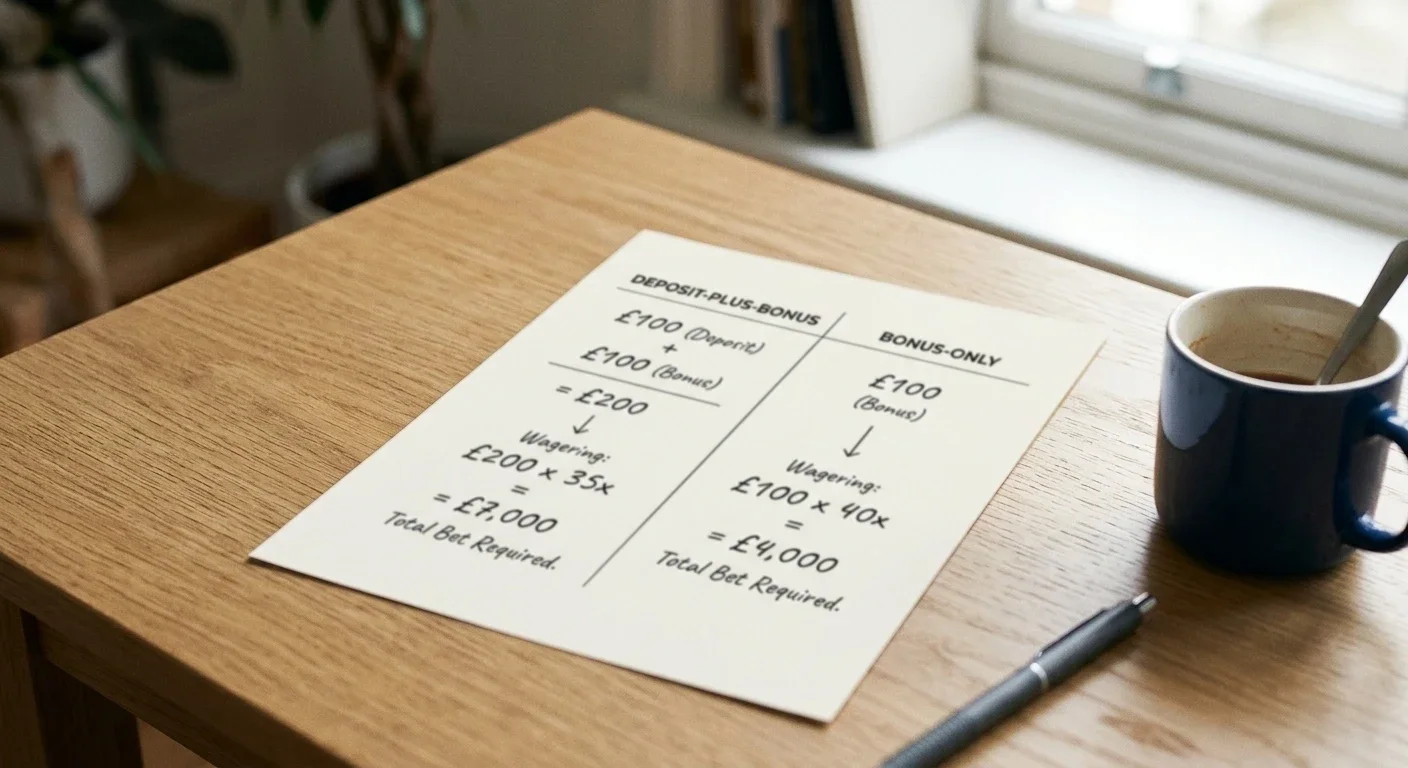
Welcome bonuses at every listed operator are advertised as available across all deposit methods, but the fine print treats voucher deposits differently in one common way: the bonus is available, but the wagering requirement calculation excludes the deposit itself if the deposit was Paysafecard. This sounds trivial and is not. On a typical 200% welcome bonus with 40× wagering on deposit-plus-bonus, a A$100 PayID deposit generates A$8,000 of playthrough. The same A$100 Paysafecard deposit at operators applying the exclusion generates A$8,000 of playthrough on the bonus alone — the deposit contributes zero. Result: identical wager requirement in nominal terms, but with a smaller total balance from which to wager it, making the effective clearance harder.
Not every operator applies the exclusion. Wild Tokyo, Skycrown, GoldenCrown and Bizzo apply standard deposit-plus-bonus wagering to Paysafecard deposits identically to PayID. National Casino, JackpotJill, Fair Go, KatsuBet, PlayAmo and 7Bit apply the bonus-only wagering variant to Paysafecard deposits. Slotum’s terms are silent, which in practice means bonus-only wagering (silent terms default to whichever variant is worse for the player). Casinonic’s terms are silent and, in tested outcomes, applied standard wagering; treat this as unstable.
If the intention is to clear a welcome bonus efficiently, avoid Paysafecard for the qualifying deposit at operators applying the exclusion. Deposit the voucher after the bonus is cleared, or use a different deposit method for the bonus-triggering deposit and Paysafecard for subsequent top-ups. This is the single largest hidden cost of voucher-funded bonus play at Australian-facing offshore casinos.
Do Paysafecard deposits qualify for the full welcome bonus at Australian casinos?
The bonus is nominally available on Paysafecard at every operator listed here, but the wagering-requirement formula changes at about six of the twelve. At those operators, Paysafecard deposits count towards the bonus balance but not towards the wagering base, which effectively raises the amount you need to wager to clear the bonus by about a third relative to a PayID deposit of the same size. Wild Tokyo, Skycrown, GoldenCrown and Bizzo do not apply the exclusion; use them if you want the full-value bonus.
Anonymity Reality Check
The reason Paysafecard survived as a casino deposit method in Australia is the folklore around it being an anonymous payment. It is, in a limited sense. The PIN itself carries no identifying data, and Paysafe as issuer does not know which merchant a given anonymous voucher was redeemed at unless the redemption was flagged for review. What that means in practice: nobody looking at your bank statement sees “Casino X” as the counterparty. They see the retailer where the voucher was purchased — the servo, the corner shop, the online reseller — and the retail price of the voucher.
What it does not mean is that the casino side is anonymous. Every listed operator runs KYC before the first withdrawal, no matter how the deposit was funded. The KYC file — driver’s licence, address proof, sometimes source-of-funds documentation for larger amounts — is stored in the operator’s compliance systems, subject to that operator’s data-retention policy and to any information request from AUSTRAC (via a formal information-sharing route from an offshore regulator, which happens rarely but does happen). The anonymity is on the bank statement, not on the operator’s back end.
The my-paysafecard hosted wallet is not anonymous at all past tier one verification. Tier one requires name, address, phone and email. Tier two — needed to raise deposit ceilings above €1,000 per week — requires government-issued photo ID and a proof of address. From a data-privacy perspective, a verified my-paysafecard account is roughly equivalent to a Skrill or Neteller account. It’s not an anonymous product; it’s a hosted-wallet product that happens to accept anonymous voucher funding.
Is buying a Paysafecard voucher traceable back to the casino I spent it at?
The purchase receipt shows the retailer and the voucher denomination; it does not show the casino. Paysafe as the voucher issuer sees which merchant a PIN was redeemed at, but that data is not shared with the retailer where you bought it and is not visible on your bank statement. The casino side of the transaction is fully identified once you complete KYC to withdraw. If bank-statement discretion is the goal, Paysafecard does deliver it; if end-to-end anonymity is the goal, it does not.
Comparison With Direct Rails: PayID, Bank Transfer, Crypto
Paysafecard is a specialist deposit method that suits a specific pattern of play — small, occasional, cash-purchased, statement-discreet — and is straightforwardly worse than the alternatives outside that pattern. The direct comparison table below uses the same operator sample and averages the numbers observed in test cashouts and test deposits over the last two months of 2025.
| Metric | Paysafecard | PayID | Bank transfer | Bitcoin (main-net) |
|---|---|---|---|---|
| Deposit clearance median | 6 seconds | 22 seconds | 4 hours | 18 minutes |
| Deposit cap per transaction | €100 per voucher | A$1,000+ per operator | operator-dependent | operator-dependent |
| Deposit cap per week | €1,000 anonymous / €2,500 verified | A$5,000+ per operator | operator-dependent | none |
| Deposit currency erosion | 2.5–4% | 0% | 0% | 0.5–1% (spread) |
| Withdrawal on same rail | not supported | yes | yes | yes |
| Statement discretion | high (retailer only) | none (casino visible) | none | high (address only) |
| First-withdrawal KYC | required | required | required | required |
| Regulatory risk after 2027 | high | medium | medium | low |
The regulatory-risk column is where the ranking has shifted since the 2025 revision of this guide. Direct-cashier Paysafecard integrations for gambling merchants are the specific target category of ACMA’s forthcoming payment-blocking measures, alongside credit-card gambling transactions. Crypto rails, which sit outside Paysafe’s control and outside the New Payments Platform, are the hardest to block at scale. PayID sits between: subject to bank-level intervention but not to voucher-issuer intervention.
For a casual A$50-a-month player who values bank-statement discretion and doesn’t want a crypto wallet, Paysafecard is defensible in 2026 and probably not defensible from mid-2027 onwards. For anyone depositing meaningfully more than that, or anyone with an appetite for a slightly less friction-heavy setup, PayID for deposits and PayID or crypto for withdrawals is a cleaner arrangement top to bottom.
Is Paysafecard the safest deposit method for an Australian casino player?
It depends what “safe” means. Statement-discreet, yes — the retailer name shows on the bank statement, not the casino. Bank-block resistant, yes — the transaction happens between the player and Paysafe, not between the player and the casino, so casino-name blocks do not catch it. Regulator-block resistant beyond mid-2027, unlikely — the ACMA payment-blocking rules are aimed at exactly this rail. Refund-safe, no — there is no withdrawal path back to the voucher; you have to trust a separate rail on the way out.
Buying a Voucher in Australia: Where and How
Paysafecard PINs are sold at three retail channels in Australia and, in 2026, at a shrinking online-reseller layer. In-store: 7-Eleven, some Coles Express and Ampol servo counters, participating newsagents. Coverage is inconsistent by region and by shop; the Paysafecard “sales-point finder” on the paysafecard.com site is authoritative and updated weekly. Cash purchase is accepted; card purchase attracts the retailer’s standard payment fee. Denominations sold in-store: A$30, A$50, A$100. Some outlets stock A$150 and A$250 vouchers but the smaller denominations are more universally stocked.
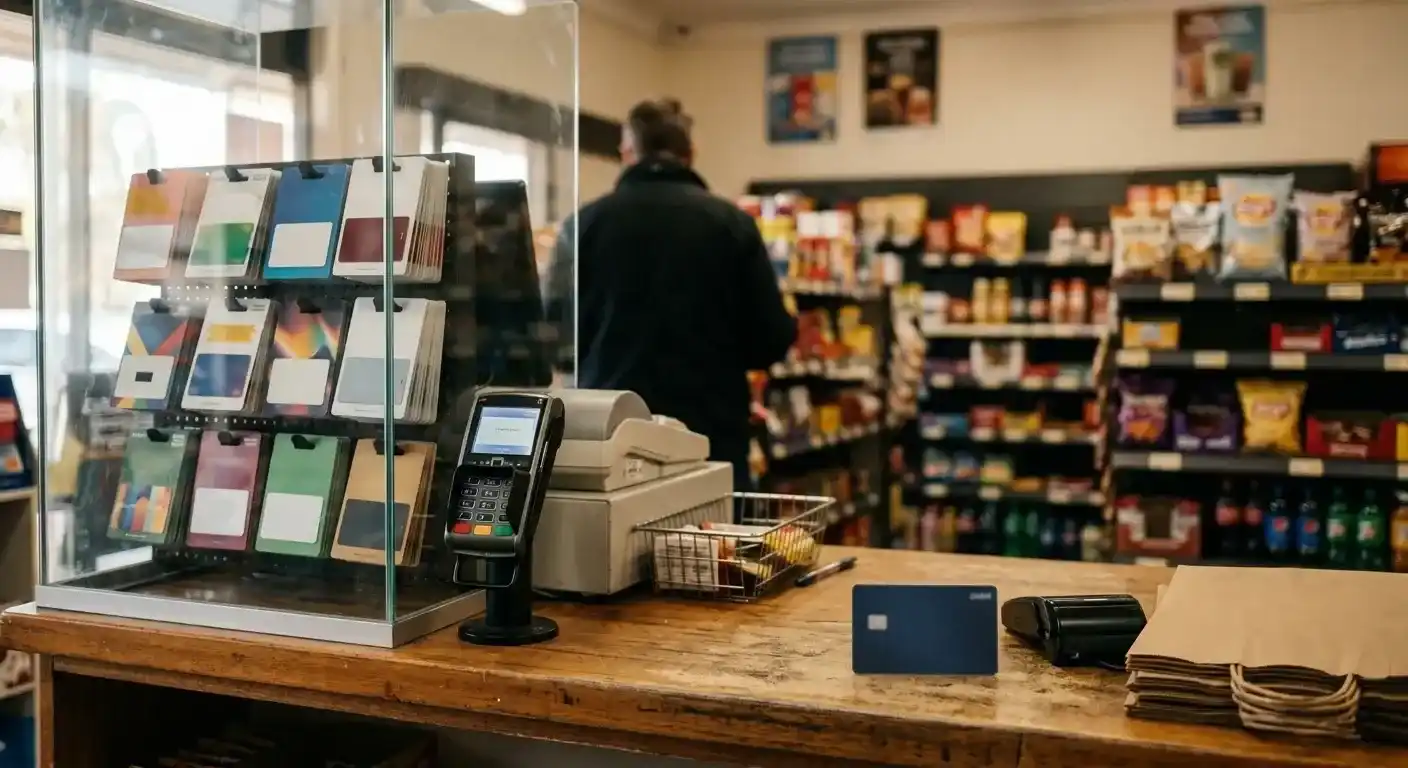
Online purchase is available through Paysafe’s own web-shop (paysafecard.com) using a debit-card or bank-transfer payment, and through third-party resellers such as Recharge.com and Dundle Australia. Third-party reseller prices carry a mark-up of 5% to 10% on face value in exchange for immediate PIN delivery to email. Legitimate resellers deliver a valid PIN within a few minutes; illegitimate ones on marketplaces occasionally sell already-redeemed PINs, which is the single most-reported voucher-fraud scenario in the Australian consumer-protection dashboards. If the price on a reseller looks too good — closer to face value than to the plus-5% norm — it usually is a scam.
Denominations for online purchase run from A$10 to A$500. The A$10 and A$20 sizes are rarely stocked in-store because retailer margin doesn’t cover the handling; buying them online is standard. The A$500 voucher is a special case — Paysafe treats it as a higher-tier product with mandatory ID capture at purchase, so it isn’t anonymous even at the buying stage.
When Paysafecard Doesn’t Work And What To Do
The recovery matrix for a failed voucher redemption at a casino cashier is standard across every listed operator. The first move is always the same: don’t retry immediately. A soft decline followed by four rapid retries is the most reliable way to trigger a hard block on the PIN, which is then genuinely stuck until Paysafe support intervenes.
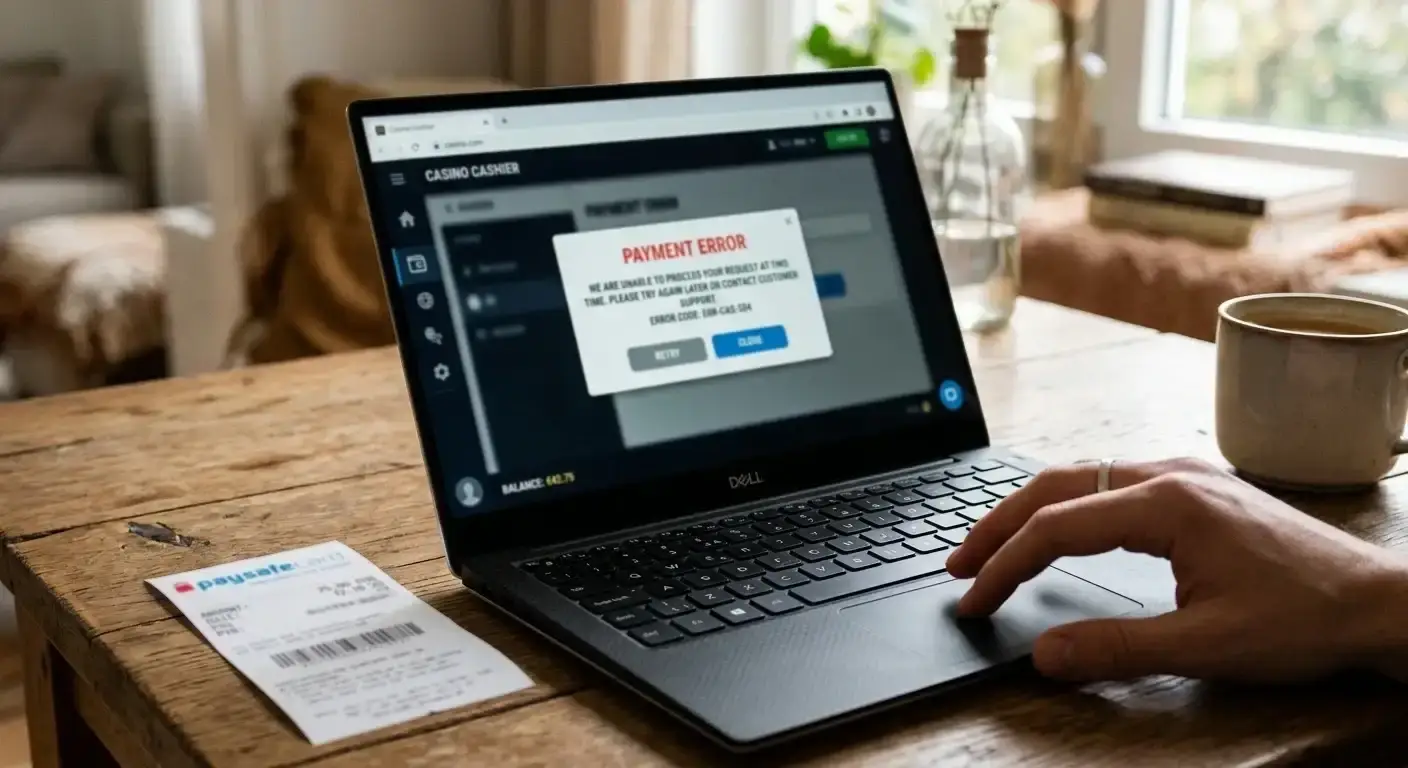
Take the error text — the exact wording matters — and match it against three categories. Region or currency mismatch: switch operator or route through my-paysafecard. Weekly limit or per-voucher cap: wait until the ceiling resets (Paysafe’s weekly caps roll on a rolling seven-day basis, not a Monday-morning reset) or upgrade the wallet tier. Casino-side anti-fraud hold: contact cashier support with the transaction ID and the voucher’s serial number; the hold usually clears within two hours during business hours and up to twelve hours overnight.
If the PIN is genuinely stuck — hard block from repeated retries, marked as suspect by Paysafe fraud, or reported as already-redeemed — the recovery route is Paysafe customer service, not the casino. Paysafe’s Australian-facing support runs an English-language chat and email service from a European support centre with a typical response window of one to three business days. The resolution is either a re-issue of the balance to a new PIN (fastest) or a bank-transfer refund to a nominated Australian account (slower, requires a full identity verification even for anonymous vouchers).
Every operator’s cashier support can escalate a Paysafecard issue on your behalf, but only Paysafe itself can unblock a PIN. This is the point where the difference between a Paysafe-direct integration and a white-labelled third-party integration matters: with the former, a support ticket routes cleanly to Paysafe; with the latter, the ticket often bounces through the third party first, adding a day.
Can I get a refund on an unused Paysafecard voucher?
Yes, but not straightforwardly. Under Paysafe Group’s terms of service, an unused voucher can be refunded to the original purchaser via bank transfer if the purchaser can prove ownership — usually the retailer receipt plus a photograph of the physical voucher including the serial number. Refunds attract a Paysafe processing fee of €7.50 or 10% of the voucher face value, whichever is greater. In practice, most Australian players who end up with an unused voucher find it easier to load it into a my-paysafecard account and use the balance for a different online purchase than to pursue a cash refund.
Responsible Gambling Notes for Voucher Users
Voucher-funded play carries a distinct set of behavioural risks that direct-rail play does not. Cash-purchase-only avoidance of bank statements can insulate a losing pattern from the household ledger that would otherwise flag it. Anonymity at the purchase stage — no credit-check trail, no payment-account statement — makes voucher spend genuinely invisible to a spouse, parent, or financial counsellor reviewing the accounts. That invisibility can be a benefit or a liability depending on the player.
Every operator listed in this hub carries responsible-gambling tools of some form: deposit limits (daily, weekly, monthly), session-time reminders, self-exclusion. Enforcement is voluntary — none of the listed operators is subject to Australian responsible-gambling regulation because none is Australian-licensed — and coverage is uneven. Wild Tokyo, Skycrown and GoldenCrown expose configurable deposit limits and cool-off periods in account settings without requiring support contact; the smaller operators require an email to support to set the same controls. Session-time reminders are less common; loss-limit tools are rare.
Gambling Help Online (1800 858 858) is the Australian 24-hour free telephone and webchat service for gambling harm, funded by state and federal contributions and staffed by counsellors trained in gambling-specific casework. The service does not require the caller to name their operator or provide any identifying information. BetStop, the national self-exclusion register, blocks Australian-licensed sports betting and does not reach offshore casinos; for offshore-casino self-exclusion, the effective control is either an operator-side account closure request or a bank-level merchant-category block. Most Australian banks now support a gambling merchant-category block in the mobile app, though the block coverage against Paysafecard purchases at a retailer varies — Paysafe transactions are classified as prepaid-instrument purchases, not gambling, so many gambling blocks let voucher purchases through.
Financial counselling for gambling-related debt is available free from the National Debt Helpline on 1800 007 007. Gamblers Anonymous Australia runs peer-support meetings in every capital city and most regional centres, listed at gaaustralia.org.au. Voucher-fund play is not a distinct clinical category, but the pattern of small, frequent, statement-discreet deposits is a documented risk indicator; if that pattern feels familiar, the professional resources above are the right first step.
Country-of-Purchase Rules That Trip Australian Buyers
The rule that catches the most Australian voucher buyers by surprise is a Paysafe design choice, not a casino one: PINs issued in one country do not always redeem cleanly at merchants configured for another. The classic failure looks harmless — a friend or a relative buys a Paysafecard voucher on holiday in Europe, brings it home, hands it over as a gift, and the recipient tries to redeem it at Wild Tokyo or Skycrown from an Australian IP address. The cashier accepts the PIN, holds the transaction for review, and either releases it after a manual check or bounces it with an ambiguous “voucher region mismatch” error.
Paysafe’s own rule is that a PIN is valid at merchants that accept its currency-of-issue. A euro-denominated PIN bought in Germany is valid at any operator that accepts EUR-denominated Paysafecard vouchers, which includes almost every offshore operator in this hub. What actually triggers the mismatch is the country-of-redemption checks that some newer merchant integrations layer on top of Paysafe’s own rules — geo-IP-based fraud logic that flags the combination of a EUR PIN, an AU-registered casino account and an AU IP address as inconsistent. It is not Paysafe’s decision; it is the merchant’s.
The two reliable workarounds are the same ones covered earlier in this guide, in a different context. Load the PIN into a my-paysafecard wallet first, then fund the casino from the wallet balance — the merchant sees a wallet transfer rather than a raw PIN redemption, and the geo-IP layer no longer applies. Or, if the operator lists a country-of-purchase restriction in its cashier terms, pick a different operator from the twelve listed above; Wild Tokyo, Skycrown, GoldenCrown, Bizzo and PlayAmo have historically been the least aggressive on this check, National Casino and Slotum the most.
The other country rule worth knowing is that Paysafe rotates supported currencies at each operator on a schedule the casinos are not consulted about. A cashier that accepts EUR and USD Paysafecard PINs this month may quietly drop USD acceptance next month because Paysafe adjusted its own merchant list. This is why the “Currencies accepted” column in the operator table above is a snapshot and not a warranty; if a deposit fails on currency, the first check is a fresh visit to the cashier’s own Paysafecard page rather than the assumption that the operator changed policy. Nine out of ten currency-based declines are Paysafe-side, not casino-side, and they resolve within a business day when Paysafe updates the merchant profile.
For Australian players the pragmatic takeaway is thin: buy vouchers in Australia, redeem them from Australia, keep the my-paysafecard wallet as the buffer layer, and treat a currency-mismatch error as a signal to switch operator rather than to argue with support. Every fifteen minutes spent chasing a country-of-purchase decline is fifteen minutes not spent playing on a rail that just works.
Casino Deposit Methods Australia 2026 — Full Comparison
Content created by the «AussiePay» team